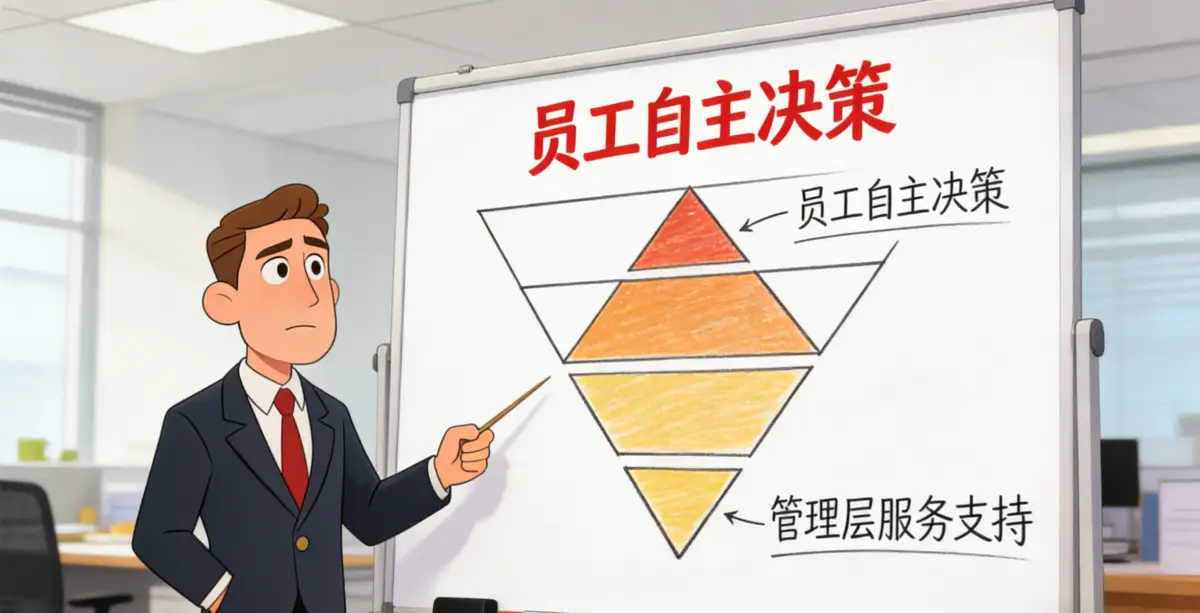
Colleague Principle: From “Managing and Being Managed” to “Fighting Side by Side for a Common Goal”

The Colleague Principle(同仁法则) is a core management and interpersonal principle that holds that, in collaboration and leadership, one should view others—especially subordinates and colleagues—as “partners” or “colleagues” who are equals and share a common destiny, rather than simply as superiors and subordinates or as tools.
- Corporate Management Story About the Colleague Principle
- What Is the Colleague Principle?
- I. The Origins and Core Concepts of the Colleague Principle
- II. The Pervasive Influence of the Colleague Principle in Daily Life
- III. Strategic Application of the Colleague Principle in the Workplace
- IV. The Positioning of the Colleague Principle within the Spectrum of Behavioral Science
- V. Empirical Research on the Mechanism of the Colleague Principle
- VI. Methods for Applying the Colleague Principle in Organizational Behavior and Human Resource Management
- 6.1 Establishing an Information-Sharing Mechanism Based on Transparency and Trust
- 6.2 Implement a Decision-Making Process and Delegation System That Promotes Deep Engagement
- 6.3 Design Incentive Mechanisms for Shared Benefits and Shared Risks
- 6.4 Fostering a "Peer-to-Peer" Feedback Culture of Mutual Respect and Support
- VII. Evolution and Summary of the Colleague Principle
- References
Corporate Management Story About the Colleague Principle
In late 2025, Smith, a partner at “Vertex Consulting” in Boston, was troubled by the persistently high turnover rate and fluctuating project delivery quality in Strategic Consulting Division II, which he led. The team consisted of elite consultants who had graduated from top business schools, but clients referred to them as “exquisite PowerPoint machines”—professional yet lacking a sense of commitment. They would rush off as soon as an assignment ended and rarely took the initiative to consider the client’s long-term success.
Through anonymous surveys and exit interviews, Smith identified the root of the problem: the team felt they were merely high-level “executing cogs,” with project objectives, key decisions, and client relationships entirely controlled by him, the “star partner.” One former employee wrote, “We were just actors in Smith’s script.”
Smith realized he needed to put the Colleague Principle into practice—treating team members as partners in a shared endeavor, rather than as tools for achieving personal goals. In January 2026, he launched a transformation initiative called the “Co-Governance Lab.” First, he completely overhauled project kickoff meetings: instead of simply assigning tasks, he conducted “situation analyses” with the entire project team. Each member was required to propose an independent preliminary hypothesis, and the team would debate these ideas collectively to determine the final strategic direction. Second, he implemented a “rotating project lead” system. On large projects, senior consultants took turns serving as the primary point of contact for external communication and process coordination, while he stepped back to act as a “senior advisor” and “safety net.” Third, he reformed the profit-sharing scheme, directly linking a portion of project profits to the team’s long-term client satisfaction and renewal rates, thereby truly aligning individual interests with the firm’s long-term success.
At first, some consultants felt pressured and uncomfortable with the increased decision-making responsibilities. But after a few months, changes began to emerge. Team meetings transformed from “reporting sessions” into “workshops,” with consultants proactively bringing in cutting-edge academic papers from the industry to share. During a critical project, a rotating lead astutely identified the client’s unspoken underlying needs, guided the team in adjusting the proposal’s focus, and ultimately achieved results far exceeding expectations and earning high praise from the client. The team’s cohesion and professional pride increased significantly, and the exodus of talent was stemmed.
In his quarterly summary, Smith wrote: “When I stopped playing the role of ‘captain’ and began acting as ‘chief navigator,’ everyone on board started taking an interest in our course and the winds and waves. The true essence of the Colleague Principle is to ensure that everyone’s wisdom and sense of responsibility become the very driving force propelling the organization forward.”

What Is the Colleague Principle?
The Colleague Principle(同仁法则) is a core management and interpersonal principle that holds that, in collaboration and leadership, one should view others—especially subordinates and colleagues—as “partners” or “colleagues” who are equals and share a common destiny, rather than simply as superiors and subordinates or as tools. It emphasizes building working relationships based on respect, trust, transparency, and shared goals. At its core, it seeks to inspire employees’ intrinsic sense of ownership, responsibility, and creativity by empowering them with autonomy, listening to their opinions, sharing key information, involving them in decision-making, and allowing them to share in the fruits of success.
In the fields of organizational behavior and human resource management, the Colleague Principle serves as the cornerstone for building highly engaged teams, empowering organizations, and fostering sustainable leadership. It challenges the traditional command-and-control model, positing that managers in the knowledge economy act more as coaches or catalysts than as overseers.
When employees feel they are treated as colleagues, they are more willing to make “discrete efforts” (i.e., going above and beyond their job requirements), more daring in proposing innovative ideas, and develop a stronger sense of belonging and responsibility toward the organization’s success. Conversely, purely instrumental relationships lead to employee alienation, passive compliance, and talent loss. Therefore, this law requires managers to undergo profound self-transformation in the distribution of power, information, and benefits.
I. The Origins and Core Concepts of the Colleague Principle
1.1 Academic Origins and Theoretical Foundations
The theoretical prototype of the Colleague Principle first appeared in social psychologist Muzafer Sherif’s 1935 auto-effect experiment. In a completely darkened room, participants were asked to estimate the distance traveled by a stationary light spot. When individuals made their judgments independently, their answers varied significantly; however, after group discussion, everyone’s estimates rapidly converged toward a single value. This phenomenon of non-coercive behavioral convergence was further validated in Solomon Asch’s 1951 line-length experiment—75% of participants, under group pressure, abandoned their correct judgment at least once and conformed to the group.
A systematic theory was not truly established until the 1970s, when organizational behaviorist Albert Bandura refined its mechanisms through social learning theory: when individuals are part of a network of equal relationships, they adjust their own behavior by observing a “reference group” (i.e., others with similar identities and status). Unlike obedience to authority, this imitation is based entirely on autonomous choice—such as the mutual influence of work habits among colleagues—and differs from the execution of orders issued by superiors.
1.2 Analysis of the Multidimensional Theoretical Framework
The effectiveness of the Colleague Principle depends on three key conditions:
- Relational equality: There is no power disparity between the influencer and the influenced, such as between new and veteran employees.
- Behavioral visibility: Key behaviors must be observable, such as work status in an open-plan office.
- Group critical mass: Research from Columbia University found that when 25% of members persist in a certain behavior, it triggers a tipping point for group imitation.
Its operational process exhibits distinct stages:
- Initial stage: Individuals notice group behavioral patterns (e.g., a team culture of working overtime)
- Intermediate stage: Self-behavioral calibration (assessing whether one’s own behavior aligns with the group)
- Final stage: Unconscious imitation (e.g., automatically adjusting one’s work pace)
1.3 Analysis of Relevant Principles
| Rules of Conduct | Core Mechanisms | Characteristics of Power Structures | Typical Scenarios | Duration of Effect |
| Colleague Principle | Behavioral convergence in equal relationships | Horizontal network structure | Team collaboration, community self-governance | Sustained influence |
| Conformity Effect | Behavioral compromise under group pressure | Implicit hierarchical pressure | Group decision-making, public opinion | Immediate response |
| Obedience to Authority | Behavioral execution within a chain of command | Vertical power structures | Military organizations, bureaucratic management | Instantaneous obedience |
| Broken Window Theory | Behavioral induction through environmental cues | Human-environment interactions | Urban management, public order | Gradual spread |
| Social Facilitation Effect | Enhanced performance due to the presence of others | Presence of observers | Competitive events, public demonstrations | Context-specific triggers |
II. The Pervasive Influence of the Colleague Principle in Daily Life
2.1 The Invisible Bonds of Community Self-Governance
During the renovation of an older residential complex in Dezhou, only eight households initially paid out of pocket to repair the stairwells. However, once two model households emerged on each floor, the participation rate surged to 89% within three months. This viral spread exhibited a distinct geographical gradient: the imitation rate was 92% on the same floor, 78% on adjacent floors, and only 31% on floors one level apart. Community researchers point out: “The Colleague Principle creates an informal monitoring mechanism—when the majority complies with waste sorting, those who litter experience moral anxiety.”
Its effectiveness was particularly evident during the pandemic: in a locked-down residential complex, only 30% of residents initially participated in group purchasing; after a volunteer team demonstrated the supply distribution process, the participation rate reached 95% within three days. This self-organizing model significantly reduced management costs; the property manager admitted, “It’s ten times more effective than sending out notices.”
2.2 Viral Spread of Online Behavior
When the “Bookshelf Challenge” (sharing photos of one’s home book collection) took off on a short-video platform, product manager Bruce initially had no interest. However, after discovering that 9 out of 12 people in his department had participated, he spent the night organizing his bookshelf and filming a video. This imitation follows a precise social distance decay pattern: the participation rate is 61% among close friends, 38% among friends of friends, and only 5% among third-degree connections.
Online trends also exhibit characteristics of “behavioral package” replication: the cycling craze in Chengdu not only drove bicycle sales up by 300%, but also boosted revenue at cafes along the routes by 45%. “People aren’t just imitating the act of cycling,” a sociologist analyzed, “but also the choice of gear, route planning, and even how they take breaks—forming a complete lifestyle template.”

III. Strategic Application of the Colleague Principle in the Workplace
3.1 The Natural Emergence of Organizational Culture
When a certain internet company moved into a new office building, the management department did not issue any regulations, yet within three weeks, a unique set of “elevator etiquette” emerged: during the morning rush hour, employees on lower floors voluntarily took the stairs. This originated when the CEO was photographed taking the stairs to work; department directors followed suit, and the practice eventually spread to the rank-and-file employees. The HR Director revealed, “This saved 87% in communication costs compared to mandatory regulations.”
In the realm of remote work, when 30% of a team’s members consistently kept daily work logs, the adoption rate reached 91% within two months. Notably, the written logs spurred related behaviors: meeting efficiency improved by 40%, and task delays decreased by 25%. “On the surface, it’s about spreading the practice of documentation,” a management consultant pointed out, “but in essence, it’s the synchronized evolution of work mindset.”
3.2 A Mechanism to Facilitate Cross-Departmental Collaboration
The R&D and Marketing departments of a certain automaker had previously experienced communication conflicts, averaging 3.2 disputes per month. After both sides dispatched key personnel to form an “integration team,” these members gradually developed habits such as simplifying reports and visualizing data. Within six months, these work practices spread like ripples:
- The average number of pages in meeting materials decreased from 42 to 15
- The usage rate of 3D models rose from 17% to 89%
- Cross-departmental project cycles were shortened by 22 days
A production manager observed: “When three people from each department consistently arrived at the meeting venue ten minutes early, the on-time attendance rate rose from 63% to 97% within three months. This change was never mentioned in the meeting minutes.”
3.3 Accelerated Channels for Innovation Diffusion
When a biotech lab rolled out a new experimental method, traditional training resulted in an adoption rate of only 38%. After switching to having project leaders demonstrate the method in the communal lab area, the adoption rate for key steps soared to 88% within two weeks. Data tracking revealed:
- First week: 100% of researchers at adjacent workstations followed suit
- Second week: 76% of the same project team adopted the method
- Week 3: Researchers from other research groups proactively sought guidance
“The lab’s coffee corner is more effective than the conference room,” concluded the Technical Director. “When people see with their own eyes that a colleague is saving 30% of their time using the new method, it’s more persuasive than any PowerPoint presentation.”

IV. The Positioning of the Colleague Principle within the Spectrum of Behavioral Science
4.1 Distinguishing It from the Conformity Effect
The Colleague Principle is often confused with the conformity effect, but there is a fundamental difference: When a garment factory implemented safety operating procedures, the compliance rate in the mandatory training group (conformity effect) was 92% initially but dropped to 47% after three months; meanwhile, in the group where senior workers served as role models (Colleague Principle), the rate rose from 65% to 89% over the same period. “Fines lead to passive compliance,” explained the safety officer, “but when new employees see that veteran workers suffer fewer workplace injuries as a result, they genuinely embrace the practices.”
Compared to the Broken Windows Theory (where graffiti on a wall leads to further vandalism), the Colleague Principle has a constructive orientation. A library implemented a carefully designed initiative: when 25% of readers borrowed more than five books per month, the library’s total circulation increased by an average of 40%. “We’re showcasing positive behavioral models,” said the librarian, “just like placing an intact display window next to a broken one.”
4.2 Synergistic Effects of Social Facilitation
In a sales competition, simply publishing rankings (social facilitation) boosted performance by 28%; however, when combined with sharing the winning team’s work methods (the Colleague Principle), the growth rate reached 63%. Data from real estate companies further shows that teams in open-plan offices had client satisfaction scores 31 points higher than those in private offices. “The presence of others sparks motivation,” noted a behavioral analyst, “but it is colleagues’ successful methods that are the key to breaking through bottlenecks.”
V. Empirical Research on the Mechanism of the Colleague Principle
The Human Dynamics Laboratory at MIT used sensors to track behavior and found that when a “behavioral pioneer” emerges in a team, their influence spreads geometrically:
- First-degree contacts have an 82% probability of imitation
- Second-degree contacts drop to 54%
- Only 17% for third-degree contacts
In a comparative experiment in the manufacturing sector, teams that used the Colleague Principle to roll out new processes learned 2.3 times faster than those using traditional training and had a 44% lower error rate. “Instant imitation at the workstation,” emphasized the engineering director, “is three frames faster than training manuals—the human brain processes visual signals in just 13 milliseconds, whereas it takes 600 milliseconds to comprehend text.”

VI. Methods for Applying the Colleague Principle in Organizational Behavior and Human Resource Management
6.1 Establishing an Information-Sharing Mechanism Based on Transparency and Trust
Method: Break down the “need-to-know” information barriers by regularly sharing the company’s strategic direction, financial status (within compliance limits), market competition landscape, and real challenges with the team. Hold open “ask-anything” town hall meetings to encourage employees to ask questions about any topic, and leaders must answer candidly (even if the answer is “we’re not sure yet”). This openness—treating colleagues as “stakeholders” rather than “outsiders”—is the first step in building trust.
Example: Smith holds a monthly “Strategy Decoding Session” to present key metrics on customer feedback, competitor trends, and the company’s financial health to the entire team, and facilitates a discussion: “Based on this information, what do you think we should focus on most in the next quarter? What can each of our teams do?”
6.2 Implement a Decision-Making Process and Delegation System That Promotes Deep Engagement
Method: For decisions that affect the team’s direction and employees’ direct interests, adopt participatory decision-making models such as “suggestion–consultation–decision.” For example, when setting team goals, managers propose a draft, which is then finalized after thorough team discussion and revision. Establish a clear delegation framework that grants employees autonomy to make decisions within defined boundaries (such as budget and compliance), openly supports their decisions, and allows for trial and error.
Example: When formulating the annual learning and development budget, Smith does not allocate funds directly. Instead, he informs the team of the total budget and provides a catalog of external courses. Team members then collectively discuss and decide which courses to purchase and which instructors to invite, and they nominate a colleague to handle procurement and coordination. This ensures that resources are used in a way that better aligns with actual needs and fosters a greater sense of responsibility.
6.3 Design Incentive Mechanisms for Shared Benefits and Shared Risks
Approach: The compensation and incentive system should embody the philosophy of shared prosperity among colleagues. In addition to individual performance bonuses, clear team bonuses, project profit-sharing plans, or equity/stock option incentives linked to the company’s long-term value growth should be established. This allows employees to clearly see how their efforts directly translate into shared benefits for both themselves and the collective, thereby deeply aligning individual interests with the organization’s success.
Example: The company implements a “Project Business Partner” system. In a one-year key consulting project, core project members receive not only a fixed salary but also a 20% share of the project’s net profit. The success of the project and whether the client renews the contract directly affect each individual’s additional income. This motivates everyone to focus on project quality, costs, and client satisfaction as if they were running their own small business.
6.4 Fostering a “Peer-to-Peer” Feedback Culture of Mutual Respect and Support
Method: Restructure performance evaluations from a “judgment” by superiors over subordinates into a “developmental dialogue” among peers. Promote 360-degree feedback and train everyone on how to give and receive constructive feedback. Encourage cross-level and cross-departmental “peer coaching” and “reverse coaching” (where junior employees coach senior employees on new skills). Leaders serve as role models by proactively seeking feedback and publicly expressing gratitude.
Example: At quarterly review meetings, Smith not only asks his subordinates for feedback on him but also arranges for cross-functional colleagues to provide feedback to one another. He introduced the “Appreciative Inquiry” method, requiring that feedback include phrases such as: “What I appreciate most about you is…” and “A specific suggestion I have for how you could add greater value by making a slight adjustment in … is…”. This transforms feedback into a tool for mutual growth rather than a threat.
The Colleague Principle reveals the underlying logic of how human behavior spreads: within a network of equal relationships, individuals unconsciously calibrate their own course of action by observing the behavioral norms of their reference groups. From community clean-up efforts to cultural shaping in multinational corporations, this non-institutional mechanism of influence demonstrates remarkable effectiveness. At its core, it represents distributed learning through collective intelligence—when 25% of members persist in a new behavior, the critical threshold for diffusion is reached, triggering a chain reaction in behavioral patterns.
Compared to rigid management based on obedience to authority, the Colleague Principle permeates everyday life like social capillaries: increased participation in volunteer work within community self-governance, the spontaneous adoption of work logs in remote teams, and the optimization of cross-departmental collaboration processes all stem from emulating the behavioral models of “peers.” Its strategic value is even more evident in the workplace: a certain technology team increased innovation adoption rates by 130% while reducing management costs by 75% through behavioral modeling.
Within the spectrum of behavioral science, the Colleague Principle differs from the pressure-induced compliance of the conformity effect and stands in stark contrast to the negative contagion of the broken-windows effect. When the social facilitation effect is intended to stimulate the willingness to act, the Colleague Principle provides a concrete pathway—for example, sales teams are not only energized by a competitive atmosphere but also draw methods from the success stories of top performers. The essence of modern organizational management lies in transforming institutional norms into observable, imitable behavioral modules; using the示范 effect at key junctures to trigger the evolution of group behavior; and achieving the organic transmission of cultural DNA while reducing managerial friction.

VII. Evolution and Summary of the Colleague Principle
7.1 Evolution of the Colleague Principle
1. The Emergence of Humanistic Management Thought
(1930s–1950s)
The spirit of the Colleague Principle can be traced back to Elton Mayo’s “Hawthorne Experiments” and their conclusions, which revealed the significant impact of social relationships and a sense of respect on productivity. Douglas McGregor’s “Theory Y” posited that employees are inherently self-motivated and willing to take responsibility, providing a humanistic foundation for treating colleagues with collegiality.
2. The Rise of Participative Management and Leadership Theories
(1960s–1980s)
Rensis Likert’s “Supportive Relationships” theory and management systems theory emphasized that high-performing organizations depend on leaders’ trust in, support for, and involvement of their subordinates in decision-making. Robert Greenleaf’s concept of “servant leadership” further positioned leaders as servants and enablers, whose primary task is to meet employees’ needs for growth and success—a concept that profoundly embodies the essence of the Colleague Principle.
3. The Deepening of Knowledge Management and Empowered Organizations
(1990s–Early 21st Century)
As knowledge became a core factor of production, management guru Peter Drucker pointed out that knowledge workers possess the means of production (knowledge) and must therefore be regarded as “colleagues” or “partners,” rather than subordinates. The “Level 5 Leader” described by Jim Collins in Good to Great—with his humility and tendency to attribute success to colleagues while taking responsibility for failure—represents the ultimate embodiment of the Colleague Principle in personal leadership style.
4. The Practice of Modern Holacracy and Self-Managing Teams
(21st Century to Present)
In new organizational models such as Holacracy and agile teams, the Colleague Principle has evolved from a concept into an institutional framework. These models eliminate or weaken traditional hierarchies, emphasizing role-based authority, transparent operations, and collective decision-making, thereby transforming the idea that “everyone is a partner and the organization is co-governed” into a practical governance structure.
7.2 Comparison of Core Distinctions
Theory Y as a foundation for assumptions about human nature; “servant leadership” as a leadership philosophy; “knowledge worker management” as a management focus; and “Level 5 Manager” as a personal trait. All of these point toward a people-centered management philosophy that respects partnerships, but they approach the subject from four distinct angles—theoretical premises, leadership roles, management subjects, and leadership traits—and together constitute the comprehensive theoretical foundation and practical model for the Colleague Principle.
| Characteristics | “Theory Y” (Assumptions About Human Nature) | “Servant Leadership” (Leadership Philosophy) | “Knowledge Worker Management” (Theory of Management Subjects) | “Level 5 Manager” (Leadership Traits) |
| Essence and Origins | One of two opposing sets of hypotheses regarding human nature and work motivation proposed by Douglas McGregor. It represents an optimistic view of human nature: people are naturally eager to work, willing to take responsibility, and creative. | A philosophy of leadership and ethics proposed by Robert Greenleaf. It positions leaders as “servants,” whose primary motivation and responsibility is to serve employees, help them grow and succeed, and thereby achieve organizational goals. | A management concept proposed by Peter Drucker regarding changes in core productivity factors. He pointed out that knowledge workers possess their own tools of production (their knowledge); therefore, they cannot simply be “managed” but must be viewed as “colleagues” or “partners.” | The unique dual traits—extreme personal humility and intense professional will—that Jim Collins identified in his empirical research as characteristic of leaders who take companies from good to great. |
| Core Focus | A fundamental view of human nature. It focuses on the beliefs about employee nature that managers should use as the foundation for building management systems. This serves as the philosophical and psychological premise of the “Colleague Principle.” | The Leader’s Role and Primary Task. Focuses on the attitude and priorities with which leaders should interact with their subordinates. It constitutes the core behavioral patterns and ethical requirements for practicing the “Colleague Principle.” | Structural Transformation of Management Relationships. Focuses on the inevitable adjustment of power dynamics between managers and those they manage, driven by fundamental changes in the nature of work (knowledge work). It serves as the historical context and economic justification for the “Colleague Principle.” | The Leader’s Character and Style. This focuses on the exemplary personal character demonstrated by leaders who truly put the “Colleague Principle” into practice, particularly the humility of attributing success to others (colleagues). It represents the personification of the “Colleague Principle” in an individual and serves as an ideal model. |
| Key Mechanisms | The self-fulfilling prophecy. If managers believe in Theory Y and treat employees accordingly (e.g., by delegating authority and showing trust), they are more likely to elicit positive behaviors from employees that align with Theory Y. | The leader’s motivational shift and service-oriented behavior. Leaders earn authority and followers through “service-oriented behaviors”—such as listening, showing empathy, fostering growth, building community, and sharing power—rather than relying on positional power. | A new “partnership” contract. Managers must learn to ask questions rather than give orders, and to provide an enabling environment rather than monitor employees. Their roles are those of “facilitators” and “resource providers,” forming alliances with knowledge workers based on shared goals. | The “Windows and Mirrors” Attribution Model. In times of success, look out the window and attribute success to colleagues, luck, and external factors; in times of failure, look in the mirror and reflect on one’s own responsibility. This attribution model is the ultimate expression of a “sense of camaraderie.” |
| Typical Manifestations | Managers design flexible work arrangements and autonomous projects, believing that employees will perform better when given freedom. | A CEO spends a great deal of time mentoring young managers and publicly states, “My job is to clear away obstacles so you can showcase your talents.” | The R&D director does not dictate specific work methods to engineers but instead collaborates with them to define technical challenges and provides the latest experimental equipment and academic resources. | When the company’s performance reached its peak, the CEO thanked every key contributor individually at the celebratory banquet and emphasized that it was the team’s resilience that had overcome the difficulties. |
| Relationships and Evolving Roles | Theoretical foundation and starting point of belief. It provides the humanistic legitimacy and feasibility for “treating employees as colleagues.” If you do not believe in Theory Y, it is difficult to sincerely practice the Colleague Principle. | A Guide to Action and Ethical Core. It answers the question of “how to put the Colleague Principle into practice”—namely, that leaders must lead through service. It serves as the bridge and code of conduct connecting beliefs (Theory Y) with specific management actions (such as managing knowledge workers). | Historical Context and Management Theory. From a macro perspective of productivity transformation, it demonstrates that the Colleague Principle is no longer a moral choice but an economic necessity. Knowledge workers must be treated as peers; otherwise, they cannot produce efficiently. | Role Models and Ultimate Proof. Through empirical research, it demonstrates that the most exceptional leaders—those capable of driving organizational breakthroughs—are precisely the most thorough practitioners of the Colleague Principle. It provides the highest-caliber real-world case evidence for the effectiveness of the Colleague Principle. |
7.3 Summary of Relationships and Logical Evolution
These four concepts form a complete logical chain for the Colleague Principle, progressing from “philosophical premise” to “model of action,” then to “historical inevitability,” and finally to “the pinnacle of character.”
Theory Y explains “why it is possible”: It provides the most fundamental psychological assumption—because human nature is inherently good and people are eager to contribute, we can and should treat one another with collegiality.
“Servant Leadership” is the “how”: Based on Theory Y, it provides leaders with a concrete blueprint of behaviors and ethical guidelines for practicing the Colleague Principle—humbling oneself to serve employees.
“Managing Knowledge Workers” is the “why it is necessary”: In the knowledge economy era, Drucker argued from a management perspective that the Colleague Principle is no longer an option but a necessity, because the subjects of management (knowledge workers) and the nature of their work have undergone fundamental changes.
“Level 5 Leader” addresses “what happens when taken to the extreme”: Collins’ research tells us that leaders who take “serving colleagues” to the extreme (Level 5 Leaders) can create the most outstanding organizational achievements. This provides the most powerful validation of success and an inspiring model for the entire concept.
7.4 Integrated Insights for Managers
To truly put the Colleague Principle into practice, you need to:
Draw conviction from “Theory Y”: Sincerely believe that your team has both the willingness and the ability to perform well.
Use “servant leadership” as your guide: Position yourself as a servant, an enabler, and a barrier-remover for your team.
Design the environment with a “knowledge worker management” mindset: Provide your team with autonomy, challenging tasks, and learning resources, rather than micromanaging every detail.
Adopt the “Level 5 Manager” as your character benchmark: Cultivate personal humility, attributing success to the team and failure to yourself.
In short, Theory Y is the philosophy, servant leadership is the technique, knowledge worker management is the battlefield, and the Level 5 Manager represents the master’s realm. Only by uniting these four elements can the Colleague Principle be transformed from a lofty slogan into a powerful engine driving organizational excellence.
References
- Sherif’s Auto-Effect Experiment (Sherif, 1935)
- Asch’s Line Segment Experiment Data (Asch, 1951)
- Columbia University Study on Group Critical Mass (Centola et al., 2018)
- MIT Human Dynamics Laboratory Sensor Research (Pentland, 2014)
- Experimental data comparing new manufacturing processes (Optimization of Production Systems, Vol. 37)
- Douglas McGregor’s “Theory Y.”
- Robert K. Greenleaf’s theory of “servant leadership.”
- Peter F. Drucker’s writings on the management of knowledge workers.
- The chapter on “Level 5 Leaders” in Jim Collins’ Good to Great.
- Organizational behavior research on “participatory management,” “empowering leadership,” and “organizational trust.”
- Practical literature on Holacracy and self-managing teams.