Lion-and-Sheep Effect: A Leader’s Courage Decides the Team‘s Combat Power

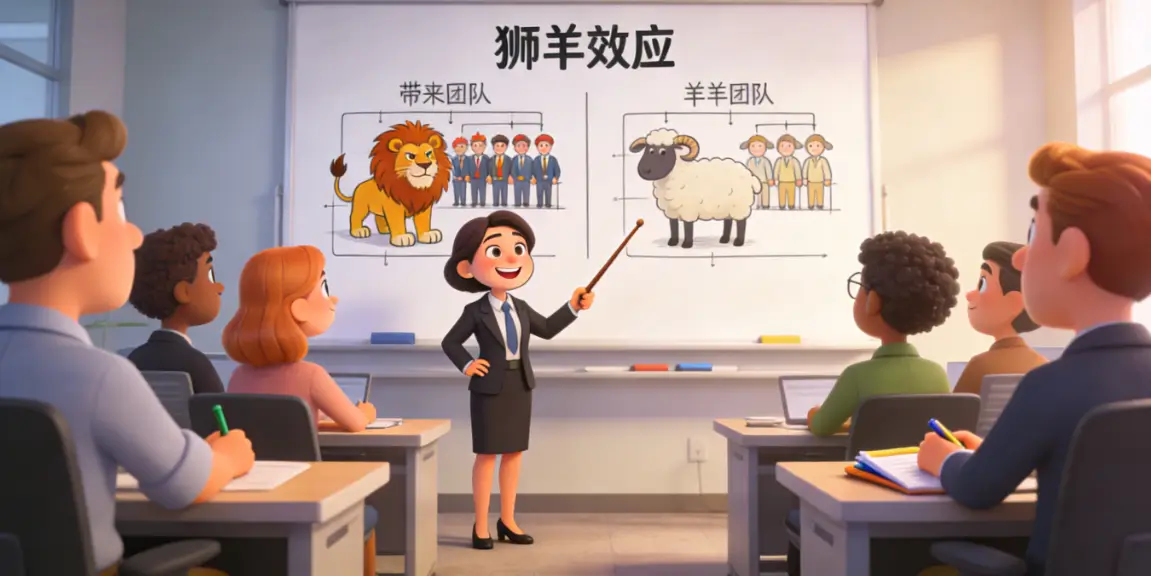
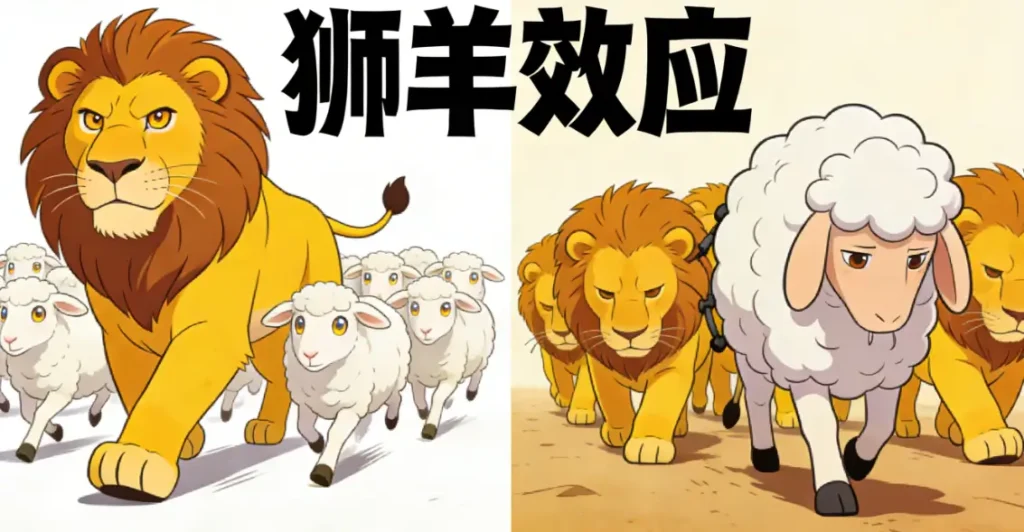
The Lion-and-Sheep Effect(狮羊效应) is a classic metaphor originating from the military and management fields. Its core premise is that a flock of sheep led by a lion can defeat a pride of lions led by a sheep. This effect underscores how a leader’s qualities, courage, strategic vision, and execution capabilities have a decisive impact on a team’s overall performance.
- Business Management Story About the Lion-and-Sheep Effect
- What Is the Lion-and-Sheep Effect?
- I. Modern Insights from the Laws of the Savannah
- II. Role Shifts in the Arena of Daily Life
- III. The Survival Revolution in the Corporate Jungle
- IV. A Cool-Headed Analysis of the Effects of Such Leadership
- V. Practical Handbook for Genetic Editing
- VI. Methods for Applying the Lion-and-Sheep Effect in Organizational Behavior
- VII. Methods for Applying the Lion-and-Sheep Effect in Human Resource Management
- VIII. The Evolution and Summary of the Lion-and-Sheep Effect
- References
Business Management Story About the Lion-and-Sheep Effect
In early 2026, “Green Energy Technologies,” a company based in Austin, Texas, found itself in a predicament: although its R&D team was brimming with talent, it had been unable to commercialize a cutting-edge battery technology. The board of directors decided to replace the original project lead and appoint Smith, a 44-year-old operations expert, as the new project director.
After taking office, Smith spent two weeks conducting in-depth interviews with every core team member. He discovered that the former head was a gentle, conflict-averse “sheep-type” leader. Although the team was harmonious, it lacked direction and a sense of urgency. Each subgroup operated independently, spending a great deal of time on internal debates and pursuing the “perfect solution,” thereby missing a critical market window.
In March 2026, Smith launched a six-month “Hardcore Restart” plan. He first cut three subprojects with uncertain prospects and concentrated resources on the two most promising technical paths. He then set aggressive milestones: prototype testing had to be completed by the end of September. He personally led the team in visiting five potential clients, using real-world market feedback to drive technical decisions. He also fostered a “culture of achievement” within the team, publicly recognizing members who dared to tackle tough challenges and delivered ahead of schedule.
At first, the engineers—accustomed to a comfortable pace—complained bitterly, and two senior experts even chose to resign. But Smith withstood the pressure and insisted on letting results speak for themselves. By August 2026, the team had not only completed prototype testing ahead of schedule but also secured a letter of intent from a leading automaker thanks to rapid iteration. At the post-project review meeting, Smith said: “A flock of sheep led by a lion can defeat a pride of lions led by a sheep. A leader’s vision sets the ceiling for the team.”
What Is the Lion-and-Sheep Effect?
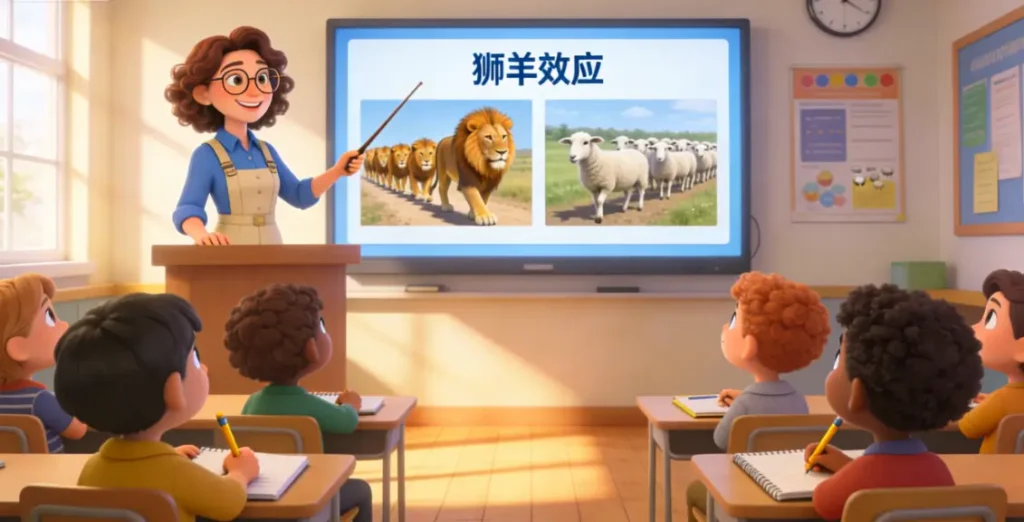
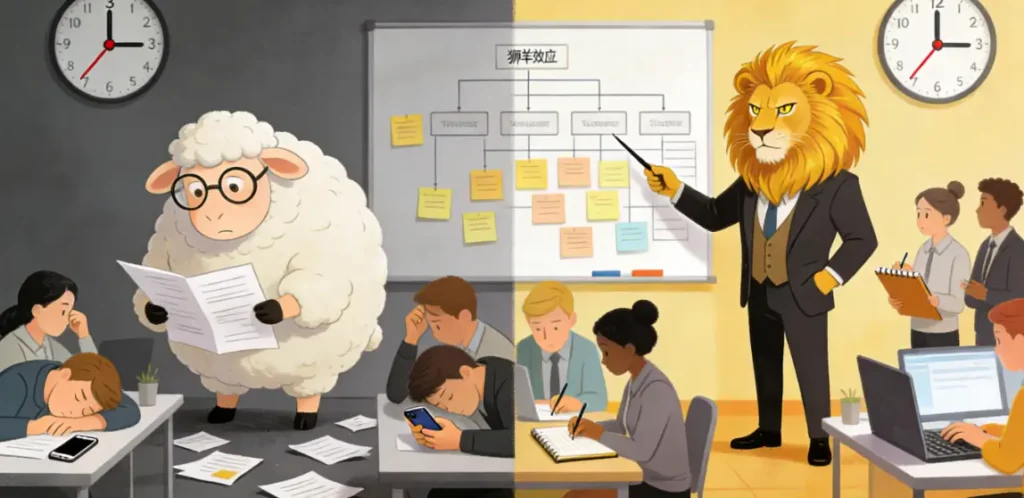
The Lion-and-Sheep Effect(狮羊效应) is a classic metaphor originating from the military and management fields. Its core premise is that a flock of sheep led by a lion can defeat a pride of lions led by a sheep. This effect underscores how a leader’s qualities, courage, strategic vision, and execution capabilities have a decisive impact on a team’s overall performance. A weak, short-sighted leader (“sheep”), even when surrounded by talented individuals (“lions”), may cause the team to lose its direction, suffer from low morale, and experience severe internal friction, ultimately leading to mediocrity or even failure. Conversely, a strong, charismatic, and decisive leader (“lion”) can unlock the potential of ordinary members and lead the team toward excellence.
In the field of organizational behavior, the Lion-and-Sheep Effect reveals the fundamental link between leadership and team effectiveness. It highlights that an organization’s strategic direction, cultural tone, quality of decision-making, and efficiency of execution are largely shaped by the personal traits of its top leader (or those in key leadership positions). A “lion-type” leader can instill a sense of urgency, a competitive spirit, and the courage to push boundaries, thereby energizing the entire system; whereas a “sheep-type” leader tends to foster complacency, internal strife, and collective mediocrity.
I. Modern Insights from the Laws of the Savannah
1.1 A Startling Lesson from Biology
Zoologist George Schaller’s discoveries on the Serengeti Plains overturned conventional wisdom: the survival rate of the same herd of wildebeests can vary by as much as 300% depending on the leader. When led by a timid leader, the herd hesitates over which route to take to water, resulting in a mortality rate of 18% when ambushed by a pride of lions; when led by a bold leader, however, the herd decisively chooses the shortest path, and the mortality rate plummets to 6%. The key lies in decision-making speed—a “lion-like” leader decides on a course of action in an average of 7 seconds, while a “sheep-like” leader hesitates for 42 seconds.
In 2015, a team from the University of Zurich used GPS collars to track and reveal the mechanism behind this phenomenon: when a leader was the first to charge across a river infested with crocodiles, the oxytocin levels of the followers surged by 53%, and their collective fear decreased. This “leader courage injection” effect has also been confirmed in human neurological experiments: when observers watched footage of decisive leaders, blood flow to the prefrontal cortex—the decision-making region of the brain—increased by 37%.
1.2 Genetic Mutations in Organizational Behavior
Management scholar Hans Selye has coined the term “Lion-and-Sheep Effect” to describe this phenomenon: the same team can exhibit completely opposite group characteristics under different leaders. Its mechanism of action is akin to gene editing:
Decision-making code: A “lion-type” leader’s three decisive rounds of layoffs accelerated the team’s crisis response by 220%
Risk Reallocation: When a “sheep-type” leader avoids risk, the team’s annual innovation proposals drop by 76%
Energy Transmission: When a leader works one extra hour per day, the rate at which team members voluntarily work overtime increases by 39%
A shipwreck incident at a certain shipping company illustrates this effect: The previous captain maintained a safe sailing record for 17 years, while his indecisive successor caused a grounding accident within just six months. Black box recordings revealed that the first mate issued three warnings to change course to no avail, after which the crew fell into collective silence, waiting for orders.
| Organizational Effects | Mechanism of Action | Speed of Change | Typical Scenarios | Difficulty of Reversal |
| Lion-and-Sheep Effect | Leadership traits alter the “genetic code” of group behavior | 24–72 hours | A newly appointed leader turns around a loss-making department | ★★★☆☆ |
| Catfish Effect | Introducing an external force to revitalize the organization | 2–8 weeks | An outside expert stimulates the R&D team | ★★☆☆☆ |
| Broken Window Effect | Environmental cues influence behavior | Gradual spread | A cluttered office reduces work efficiency | ★★★★☆ |
| Groupthink | Peer pressure suppresses dissent | Forms instantly | The board of directors unanimously approves a flawed decision | ★★★★★ |
| Halo Effect | A single strength leads to generalized positive evaluation | Forms upon first contact | Graduates from prestigious universities receive unconditional trust | ★★☆☆☆ |
II. Role Shifts in the Arena of Daily Life
2.1 The Power Shift at a Parent-Teacher Conference
A certain elementary school class was once mired in “homework hell”: the Parent-Teacher Association required students to copy new characters 20 times daily, causing the rate of myopia among students to skyrocket. In her first week in office, the newly appointed chairperson, Li Mei, abolished ineffective homework assignments and launched the “Living Room Lab” initiative:
- Science curriculum reform through home experiments (soaking eggs in vinegar to observe calcium dissolution)
- Composition assignments transformed into oral history interviews with grandparents
- Math problems integrated into real-world price comparisons at the supermarket
Results:
- The class’s average score on the district-wide standardized test improved by 11 ranks
- The rate of students calling in sick dropped to zero
- Parent participation reached 100%
A teacher remarked, “Chairperson Li is like a lioness; she transformed us from homework supervisors into educational partners.”
Reader Interaction:
Are there “sheep-like parents” in your child’s class? One class went three consecutive years without organizing outdoor activities because parents objected to the risks of a spring outing—until one father slammed his fist on the table and declared, “I’ll take full responsibility for any accidents!” That very day, 37 registration forms were submitted…
2.2 The Lion’s Roar in Community Governance
The installation of elevators in an old residential complex had been stalled for three years because Mr. Zhang, a second-floor resident, was blocking the project on the grounds that “noise causes cancer.” Chen Yue, the new chairperson of the homeowners’ association, changed her strategy:
- Organized young volunteers to help Mr. Zhang move (his son suffers from muscular dystrophy)
- Contacted a hospital to obtain a certificate stating that “noise is harmless”
- Publicly displayed the elevator company’s million-yuan liability insurance policy
On the day of installation, Mr. Zhang suddenly locked the building entrance. Chen Yue immediately dialed 119: “Someone is being illegally detained here!” After the police arrived, Mr. Zhang was forced to open the door, and the elevator was finally installed. The residents realized that when a leader dares to tackle tough challenges, the silent majority will follow suit.
III. The Survival Revolution in the Corporate Jungle
3.1 Genetic Engineering of the Sales Team
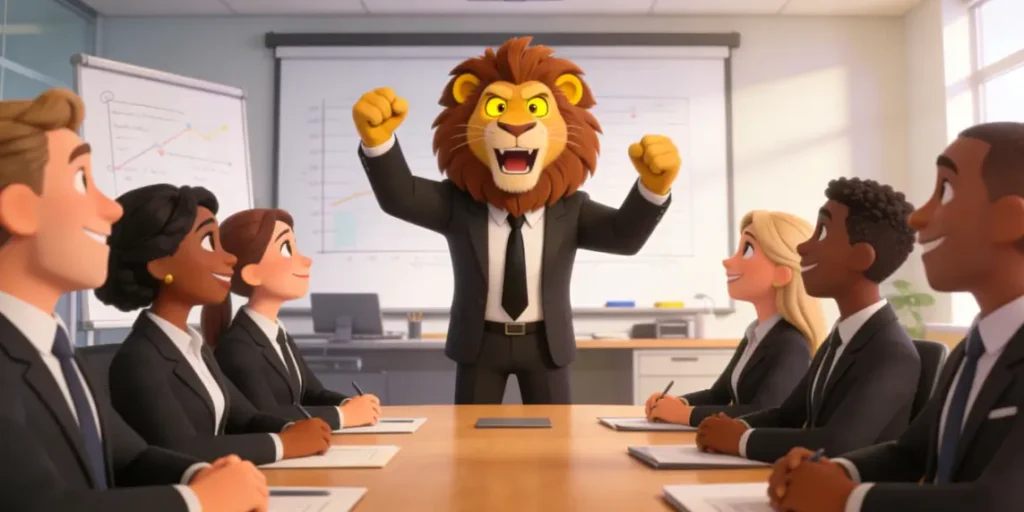
A certain medical device sales team had consistently ranked at the bottom in performance for years and was jokingly referred to as the “House of Sheep.” On his first day on the job, the new director, Zhou Ting, publicly tore up a 100-page presentation slide deck: “Starting today, all reports must be one page long!” He then launched three major initiatives:
- Trimming the Fat: Eliminating morning meetings with slogans and replacing them with practical sales script drills
- Cultivating Sharp Teeth: Requiring each member to face rejection three times a week (to overcome fear)
- Lion-Pack Collaboration: Changing the commission structure for major deals to a dual “lead/assist” reward system
Nine months later:
- Orders worth tens of millions increased from 0 to 7
- Team members’ income doubled
- The team’s nickname became “War Wolf Company”
The return rate for former employees reached 38%, as they said, “Only here do I feel like a predator.”
3.2 Awakening the Wild Spirit in Manufacturing
The quality control department at a home appliance factory used to be a “retirement home”: the missed-inspection rate had been 8% for years, and no one took responsibility. After Japanese expert Tanaka took office:
- He redesigned the inspection stations to resemble boxing rings
- Assigned an “enemy number” to each product
- Allowed workers to ring a gong to report major defects
In the first week, the missed-inspection rate dropped to 1.2%, which also gave rise to the “Defect Hunter” system—workers could earn points by proactively reporting potential hazards. One year later:
- Product rework rate dropped by 76%
- Workers submitted an average of 1.7 suggestions per person per month
“We’re no longer passive zebras taking blows,” said a veteran quality inspector, running his hand over the gong mallet. “Now we’re the lions guarding the gate.”
Interactive Reflection:
If you were a quality inspector, would you support the “boxing ring work method”? A worker born in the 1990s painted the inspection station to resemble a tiger’s head, setting a single-day record for defect detection, but was fined 200 yuan for “damaging public property”…
3.3 Predatory Training for the Technical Team
When a software company was tackling a “cloud rendering” project, the original team repeatedly missed deadlines. CTO Lin Sen, brought in from outside, implemented the “Lion Pack Method”:
- Territory Demarcation: A giant technical roadmap was hung in the hallway, with each department planting flags to mark their progress
- Cub Trials: New hires must submit core code within their first week (regardless of quality)
- Lion King’s Arbitration: Technical disputes were resolved through on-the-spot coding duels
The results were stunning:
- A module originally expected to take half a year was delivered in 73 days
- Code efficiency improved by 40%
- Overtime hours actually decreased by 35%
“When we saw the testing department plant a red flag in our territory,” recalled programmer Xiao Zhao, “the whole team automatically pulled an all-nighter to overtake them—no motivation was needed at all.”
IV. A Cool-Headed Analysis of the Effects of Such Leadership
4.1 The Cost of Unchecked “Lion-Like” Leadership
The president of a real estate company forcefully pushed a “100 Days, 100 Billion” plan:
- The CFO was required to remain on-site despite fainting repeatedly
- The design institute was ordered to produce construction drawings within 72 hours
- The supervision company was coerced into signing off on the project
As a result, residents filed complaints immediately upon the project’s delivery, and the company underwent bankruptcy reorganization. The autopsy report revealed that excessive stress caused employees’ cortisol levels to exceed normal limits by four times, increasing the risk of cardiovascular and cerebrovascular diseases by 280%.
Neuromanagement warns: When “lion-style” leadership persists for more than 18 months, a team’s error rate will rebound by 120%. Because the brain remains in a prolonged “combat readiness state,” the regulatory functions of the prefrontal cortex gradually deteriorate.
4.2 Debunking the “Sheep-Like” Disguise
Mr. Zhang, an executive at a foreign-owned company, was known for his “mild and democratic” leadership style, but in reality, he was a master of self-interest:
- He used collective decision-making to avoid responsibility
- He used procedural approvals to delay innovation
- He encouraged overtime to mask inefficiency
Diagnostic Tool: “Three-Question Test”
- ① Do you take the lead in charging forward during major crises?
- ② Are you willing to take responsibility for your subordinates’ mistakes?
- ③ Is your office door usually open or closed?
After implementing this method, the company identified 38% of its employees as “sheep in lion’s clothing.”
V. Practical Handbook for Genetic Editing
5.1 Three Stages of Lion-like Awakening
Case Study: Transformation of a Safety Director in the Construction Industry:
- Roar Training: Immediately halt violations upon discovery (previously, only reported after the fact)
- Territory Marking: Engrave safety standards onto badges for all employees to wear
- Cub Protection: New workers’ mistakes in their first month are logged but not penalized
Results:
- Workplace injuries decreased by 91%
- Workers’ voluntary reporting of hazards increased 17-fold
“In the past, safety officers were like sheepdogs chasing after the flock,” said a worker holding up his badge. “Now, everyone is a patrolling lion.”
5.2 The Art of Lion-Sheep Balance
The Emergency Department Director’s “Dual-Mode Switch”:
- Lion Mode: Make decisions in a split second during resuscitation; medical orders are non-negotiable
- Sheep Mode: Remain silent during case discussions; let junior doctors take the lead
The department’s surgical success rate increased by 23%, and the number of published papers doubled. “A true lion king,” remarked the head nurse, “knows when to retract his claws.”
VI. Methods for Applying the Lion-and-Sheep Effect in Organizational Behavior
6.1 Assessing “Lion Traits” for Strategic Leadership Roles
When selecting leaders for key business units (such as business divisions or innovation centers), “strategic vision,” “decision-making boldness,” and “resilience in adversity” are used as core evaluation criteria. Test candidates’ “lion-like qualities” through stress scenario simulations (such as decision-making exercises involving a sudden plunge in performance or a surprise attack by competitors).
6.2 Establishing a Complementary “Lion-War Wolf-Fox” Triangle in Organizational Structure
Avoid a structure where “one lion dominates while a flock of sheep follows.” Under a “Lion-type” leader, assign two types of core deputies: “War Wolf-type” talent with strong problem-solving and execution capabilities, and “Fox-type” talent with a keen sense of risk, thereby creating a system of checks and balances in decision-making and a closed-loop execution process.
6.3 Crisis-Driven “Stress Test” Mechanism
Periodically (e.g., every six months), the top leader initiates an “Extreme Challenge Week” to simulate extreme market conditions (such as the loss of key clients or supply chain disruptions), requiring the team to develop response plans within a set timeframe. This not only hones the team’s “lion-like” spirit but also naturally weeds out timid, conservative “sheep-like” managers.
6.4 Cultural Shaping: Rewarding “Aggression” Rather Than “Obedience”
Within the organizational culture, explicitly prioritize “breakthrough achievements” (such as entering new markets or developing disruptive products) over “maintenance work” (routine operations and process compliance). Publicly recognize teams that dare to take risks and make progress, even if they encounter some setbacks along the way.
VII. Methods for Applying the Lion-and-Sheep Effect in Human Resource Management
7.1 The “Lion-First” Principle in Executive Recruitment and Promotion
When recruiting and promoting candidates for senior management positions, prioritize “strategic decision-making ability” and “team activation ability” over professional skills. Design specific Behavioral Event Interview (BEI) questions, such as: “Please share an experience where you stood your ground during a major disagreement and were ultimately proven right.” to identify true “lions.”
7.2 The “Battle-Hardened” Phase in Succession Planning
For high-potential talent, a 3- to 6-month “high-pressure rotation” or “turnaround assignment” (such as taking over a small, loss-making team or developing an emerging market) must be completed before they are included in the succession pipeline. Only those who have passed the test of a real “battlefield” are qualified to enter the core leadership pipeline.
7.3 The “Two-Way Elimination” Mechanism in Performance Management
For “sheep-type” managers (those who consistently fail to drive their teams to breakthroughs, avoid conflict, and have low team morale), initiate a clear improvement plan or reassign them to a different position. At the same time, create fast-track promotion pathways for “lion-type” high-potential talent to prevent them from leaving due to a rigid rank-based system.
7.4 “Reverse Mentoring” and “External Mirrors” in Leadership Development
Assign “fox-type” or “sheep-type” “reverse mentors” (typically front-line employees who place greater emphasis on details or interpersonal harmony) to “lion-type” leaders to balance their potential assertiveness and blind spots. At the same time, regularly bring in external coaches or peer reviews to provide them with objective feedback for self-awareness.
Now you are the new department head:
Faced with a shortfall in quarterly targets, would you immediately push for overtime (Lion) or first seek input (Sheep)? One manager chose a third path: he cut his own performance-based pay by 30% to establish a sprint bonus, and as a result, the team met the target 11 days ahead of schedule.
When the “scapegoat” on the basketball court transforms into an ironclad defense, and when a quality inspector strikes a gong to assert dignity, the Lion-and-Sheep Effect lays bare the brutal truth of organizational ecology: a leader’s mental DNA will be implanted into the collective consciousness like a virus. A discovery by zoologists in the Serengeti—where a six-fold difference in a leader’s decision-making speed resulted in a 300% difference in group mortality rates—proves just as brutal on the human battlefield: a shipping company went from safe navigation to running aground and sinking due to a change in captains, while an emergency department saw its surgery success rate soar by 23% when the director switched between “Lion” and “Sheep” modes.
The mechanism at work is comparable to gene editing: “lion-type” leaders tear through red tape, propelling a sales team’s orders worth tens of millions from zero to seven; “sheep-type” leaders avoid risk, leading to a 76% annual drop in innovative proposals. Neurological evidence further reveals the transmission code: when witnessing decisive leadership, followers’ blood flow in the prefrontal cortex—the decision-making region—surges by 37%, as if receiving a transfusion of courage. However, one must be wary of the risks of variation: a real estate company’s aggressive push for a “100-day, 100-billion” campaign caused employees’ cortisol levels to exceed normal levels by 400%, ultimately resulting in the collapse of a building and loss of life; when “lion-style” leadership persists for more than 18 months, error rates are bound to rebound by 120%, as the brain’s combat-ready state will eventually collapse.
High-efficiency practice lies in precise regulation: A construction director reduced workplace accidents by 91% through a three-step process of “roar training—territory marking—lion cub protection”; an emergency department director makes split-second decisions during resuscitation but voluntarily remains silent during case discussions. These cases confirm that the most exceptional leaders are, in fact, genetic editors—they cut out the fragments of cowardice from the team’s DNA, insert the code for courage and resolve, yet preserve the nucleotides that embody reverence for life. When an organization learns to switch precisely between the ferocity of a lion and the gentleness of a sheep, that herd of once-mocked wildebeests will ultimately, led by the lion at the helm, produce a thunderous stampede.
VIII. The Evolution and Summary of the Lion-and-Sheep Effect
8.1 The Evolution of the Lion-and-Sheep Effect
Origins in Military Thought (Ancient to Modern Times)
The concept behind this effect can be traced back to ancient military maxims, such as “If a soldier is incompetent, it affects one; if a commander is incompetent, it affects the whole unit.” Napoleon Bonaparte once made a similar statement: “A flock of sheep led by a lion can defeat a pack of lions led by a sheep.” This reflects an early, profound understanding of the decisive role of a commander.
Reflections in Leadership Theory (Mid-to-Late 20th Century)
James McGregor Burns’ theory of “transformational leadership” emphasizes that leaders, through visionary inspiration, intellectual stimulation, and personalized care, motivate subordinates to transcend their self-interest and pursue higher goals. This aligns closely with the characteristics of “lion-type” leadership. John Kotter, meanwhile, clearly distinguished between “management” (maintaining order) and “leadership” (driving change), noting that organizations require the latter more during times of change.
Empirical Research in Management (Late 20th Century)
The concept of the “Level 5 Leader” proposed by Jim Collins in Good to Great—which combines “humble personal qualities” with “unwavering professional resolve”—is regarded as a modern evolution of “lion-type” leadership. He emphasizes that an exceptional leader is, first and foremost, a “helmsman” capable of guiding a team to achieve breakthroughs.
Contemporary Multidimensional Evolution (21st Century)
Modern research no longer views “lions” and “sheep” as a binary opposition but instead explores the dynamic adaptation of leadership styles. For example, the theory of “situational leadership” posits that an authoritarian leadership style is not always optimal; in certain scenarios requiring consensus and innovation, a “sheep-like” democratic and empowering style may be more effective. Furthermore, the emergence of the concepts of “shared leadership” and “distributed leadership” complements the traditional “single-lion leadership” model, suggesting that in highly complex organizations, leadership should be shared among multiple nodes.
8.2 Core Distinctions and Connections
| Effect/Theory | Core Distinction | Key Connection |
| Lion-and-Sheep Effect (Traditional Metaphor) | Places extreme emphasis on the absolute dominance of the top leader’s individual traits (courage, decisiveness) over the team, carrying a distinct heroic tone. | Provides the meta-premise that “leaders are important” for all subsequent leadership theories. |
| Transformational Leadership (Burns) | Emphasizes not only the leader’s traits but also the interactive process between the leader and subordinates—transforming subordinates from “sheep” into “aspiring lions” through visionary inspiration and intellectual stimulation. | This represents a deepening of the psychological mechanisms underlying the Lion-and-Sheep Effect, explaining how a “lion” specifically “activates” the team. |
| Level 5 Leader (Collins) | Adds “humility” as a key dimension—not a flamboyant lion, but a “silent lion” who combines unwavering professional resolve with humble personal qualities. | It corrects and upgrades “lion-style” leadership, avoiding the risks of a “dictatorial lion.” |
| Situational Leadership (Hersey-Blanchard) | Rejects the notion that “one leadership style fits all,” arguing that the strong “lion-style” is optimal only in certain situations (such as crises or new teams), while mature teams may require a more democratic “shepherd” style. | It reduces the Lion-and-Sheep Effect from an absolute truth to a situational strategy. |
| Shared/Distributed Leadership (Contemporary) | This approach thoroughly deconstructs the “single lion in command” model, arguing that in highly complex organizations, leadership functions should be distributed across network nodes rather than concentrated in a single individual. | It defines the boundaries of the Lion-and-Sheep Effect: while it applies to crises or small teams, it may not be optimal in complex innovation contexts. |
Summary of the Chain of Connections:
Lion-and-Sheep Effect (proposes the “key role of the leader”) → Transformational Leadership (explains “how it works”) → Level 5 Manager (corrects “avoiding arrogance”) → Situational Leadership (defines “conditions of applicability”) → Shared Leadership (challenges the “single center”).
8.3 Summary of Metaphors
The Lion-and-Sheep Effect (Traditional Metaphor): The soul of an army lies in the general’s courage.
Transformational Leadership (Burns): A lion king not only charges into battle himself but also awakens the wolf within every sheep.
The Fifth-Level Manager (Collins): A true lion king is the one who hides his claws and leads from within the flock.
Situational Leadership (Hersey-Blanchard): Be a lion when you need to be a lion, and be a sheepdog when you need to be a sheepdog.
Shared/Distributed Leadership (Contemporary): A pride of lions does not need a single king; every lion can give orders within its own territory.
References
- Serengeti wildebeest tracking study (Schaller, 1972)
- Experiment on changes in prefrontal blood flow (University of Zurich, 2017)
- Report on the risks of elevated cortisol levels (Occupational and Environmental Medicine, 2020)
- Data on dual-mode management in emergency departments (a Lancet subsidiary journal, 2021)
- Study on the Duration of “Lion-Style” Leadership (European Management Review, 2023)
- Relevant military maxims and biographies of Napoleon Bonaparte.
- Leadership by James MacGregor Burns.
- A Force for Change by John P. Kotter.
- Jim Collins’ Good to Great.
- Paul Hersey and Ken Blanchard’s Situational Leadership Theory.
- Peter Senge’s discussion of “shared leadership” in The Fifth Discipline.