Deci Effect: How Monetary Incentives Can “Crowd Out” Intrinsic Motivation

The Deci Effect(德西效应), also known as the Overjustification Effect(过度理由效应) or the Excessive Rationalization Effect(过度合理化效应), was discovered and named by psychologist Edward Deci(爱德华·德西) through a series of classic experiments.
- A Story of Corporate Management Inspired by the Deci Effect
- What Is the Deci Effect?
- I. The Theoretical Origins and Core Mechanisms of the Deci Effect
- II. The Deci Trap of the Deci Effect in Daily Life
- III. The Deci Effect and the Deci Dilemma in the Workplace
- IV. Methods for Applying the Deci Effect in Organizational Behavior
- V. Methods for Applying the Deci Effect in Human Resource Management
- 5.1 Compensation and Benefits Design: Distinguishing Between "Hygiene" and "Motivational" Functions
- 5.2 Performance Management and Feedback: Shifting from "Judgment" to "Dialogue and Development"
- 5.3 Employee Recognition Programs: Emphasizing "Timeliness," "Specificity," and "Non-Monetary Rewards"
- 5.4 Recruitment and Employer Branding: Attracting "Intrinsically Motivated" Talent
- VI. The Evolution and Summary of the Deci Effect
- References
A Story of Corporate Management Inspired by the Deci Effect
In early 2026, Smith, a studio director at “Agile Games” in Seattle, faced a paradox: To spur innovation among programmers, the company had raised the monthly “Code Innovation Award” bonus by 30%. However, the data showed that the number of employees contributing to internal open-source projects had actually declined—even some veteran employees who had once enthusiastically participated had stopped submitting creative work in their spare time.
After conducting an in-depth investigation, Smith discovered that these employees were not lacking in time. A senior engineer’s feedback hit the nail on the head: “In the past, fixing a cool bug or writing a little tool was purely for ‘fun’; posting it to the community for discussion gave me a real sense of accomplishment. Now things feel different—people first think, ‘Can this be entered into the award? How much money can I win?’ If not, it doesn’t seem worth the time.”
Smith realized with alarm that the team was falling into the trap of the Deci Effect—when external rewards (such as bonuses) are introduced to incentivize activities that are already driven by intrinsic motivation (such as fun and a sense of accomplishment), they actually weaken people’s original intrinsic motivation, distorting the driving force behind their behavior from “I like it” to “for the reward.”
In March, Smith launched a six-week “motivation detox” experiment. He began by transforming the “Code Innovation Award” from a fixed monthly award into an irregular, non-monetary “surprise discovery” celebration. This could take the form of naming a code repository branch after the contributor, having the CEO personally demonstrate their work at an all-hands meeting, or receiving an opportunity to exchange ideas with top external experts. At the same time, he established the “Pure Fun Zone”—an internal “playground” completely free of KPIs, rewards, and even time tracking—dedicated to exploring any technical ideas unrelated to current projects.
By the second month, activity within the internal open-source community began to rebound. A small tool developed by an engineer in the “playground” unexpectedly solved a major problem in another project. Instead of awarding a bonus, Smith invited him to give a company-wide presentation titled “When Programming Is Pure Joy.” By the end of the quarter, although direct spending on “innovation bonuses” had decreased, the number of innovative solutions resulting from cross-team collaboration had doubled. Smith concluded, “The highest form of management is not to put a price tag on every burst of enthusiasm, but to carefully safeguard that innate sense of ‘fun’ and create a stage for it to flourish.”

What Is the Deci Effect?
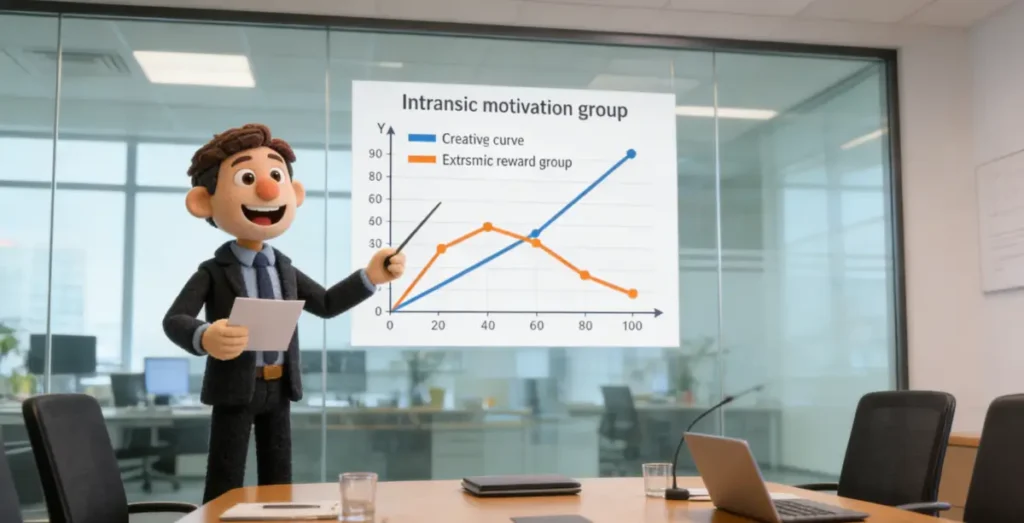
The Deci Effect(德西效应), also known as the Overjustification Effect(过度理由效应) or the Excessive Rationalization Effect(过度合理化效应), was discovered and named by psychologist Edward Deci(爱德华·德西) through a series of classic experiments. It refers to the phenomenon where, when an individual engages in an activity that is inherently interesting to them, the introduction of external rewards—especially controlling extrinsic incentives such as money—actually weakens their intrinsic motivation to engage in that activity. The core mechanism lies in the fact that external rewards shift an individual’s attribution from “I do this because I enjoy it” (internal attribution) to “I do this to receive a reward” (external attribution), thereby undermining a sense of autonomy and the interest itself.
In organizational behavior, the Deci Effect is a key theory for understanding the double-edged sword nature of incentive strategies. It warns managers that, for creative work, exploratory learning, or tasks that rely heavily on a sense of responsibility and mission, simplistic and heavy-handed monetary incentives may backfire. They can “crowd out” employees’ valuable intrinsic passion, curiosity, and sense of ownership, reducing meaningful challenges to utilitarian transactions and ultimately undermining long-term innovation potential and organizational commitment.
I. The Theoretical Origins and Core Mechanisms of the Deci Effect
1.1 A Revolutionary Discovery in Motivational Psychology
The Deci Effect was first demonstrated in 1971 by psychologist Edward Deci through a classic experiment. He had two groups of college students play the Soma Cube puzzle game: Group A played for the sake of playing, while Group B received a $1 reward for each puzzle completed. In the first phase, both groups showed comparable levels of engagement. In the second phase, when the reward was removed, Group B’s playing time plummeted by 50%, while Group A’s remained stable. In 1975, Deci and Richard Ryan formally proposed the “Cognitive Evaluation Theory,” which posits that external rewards lead individuals to attribute their behavior to “doing it for the reward,” replacing the original attribution of “I enjoy doing it.”
In the 1990s, neuroscience provided physiological evidence for the Deci Effect: fMRI scans showed that when people complete tasks out of interest, the prefrontal cortex and basal ganglia form specific activation patterns; whereas when anticipating a reward, striatal activation increases but prefrontal activity decreases. This neural shift signifies a fundamental change in the nature of motivation.
1.2 The Three-Stage Model of Motivational Transition
The Deci Effect follows a clear psychological pathway:
| Intrinsic Motivation Stage | Behavior is driven by internal satisfaction (e.g., the pleasure of reading) | Neural Representation: Activity in the anterior insula and medial prefrontal cortex (self-consistency evaluation) |
| Reward Intervention Stage | External rewards are attached to the behavior (e.g., reading points) | Neural Representation: Increased activation of the nucleus accumbens (reward anticipation) |
| Motivational Erosion Stage | After the reward is removed, the frequency of the behavior falls below the initial level | Neural Representation: Abnormal activity in the anterior cingulate cortex (cognitive dissonance) |
A 2005 cross-cultural study found that the Deci Effect is 37% stronger in collectivist cultures, as external evaluations more easily influence self-perception. In 2025, motivational psychology confirmed that the effect is most pronounced when rewards are controlling (requiring the attainment of a specific standard) rather than informative (recognizing achievement).
II. The Deci Trap of the Deci Effect in Daily Life
2.1 The Motivation Paradox in Family Education
Parental education is a major area affected by the Deci Effect. An educational institution tracked 500 families and found the following:
| Incentive Method | Short-Term Effect | Behavior Retention Rate After 1 Year | Intrinsic Motivation Index |
| Cash rewards for test scores | Scores increased by 23% | 34% | -41% |
| Paying for household chores | Amount of chores doubled | 28% | -57% |
| Points for extracurricular activities | Participation rate: 89% | 45% | -32% |
| Encouragement focused on the process | Moderate rate of progress | 82% | +15% |
Developmental psychologists point out that rewards transform learning from “self-exploration” into a “transactional behavior.” An effective alternative is “support for the three senses”: a sense of autonomy (choosing one’s own learning topics), a sense of competence (appropriately challenging tasks), and a sense of connection (parent-child reading and discussion). This approach can boost intrinsic motivation by 68%.
2.2 Misconceptions About Incentives in Health Management
User behavior on fitness apps reveals a typical Deci curve:
| Initial Enthusiasm Phase | Users exercise spontaneously; daily active rate: 62% |
| Reward Intervention Phase | Exercise points redeemable for prizes are introduced; active rate rises to 89% |
| Motivational Shift Phase | Users focus on high-scoring exercises while neglecting health goals |
| Reward Fatigue Phase | After 6 months, rewards are discontinued; the daily active rate plummets to 31% |
Behavioral medicine recommends using “informative feedback” instead of rewards: by displaying data showing the link between exercise and improved blood pressure, long-term adherence rates can reach 73%. A 2025 report on wearable devices indicates that demonstrating health benefits leads to a retention rate 2.4 times higher than offering material rewards.
2.3 Motivational Erosion in Community Volunteering
The Deci Effect is particularly pronounced in the field of volunteer service:
- A community cleanup event offered souvenirs → Volunteer growth of 120% → Participation rate fell below initial levels after rewards were discontinued
- Switching to a “skill-sharing” mechanism (gardening experts teaching planting techniques) → Sustained participation rate remained at 85%
- Establishing a “Contribution Visualization” wall (displaying environmental achievements) → Monthly increase in new volunteers of 40%
Social psychologists explain that material rewards transform altruistic behavior into an economic exchange, whereas the demonstration of competence and social recognition satisfy higher-order psychological needs. The 2025 Community Governance Report notes that volunteer program members in non-material incentive programs exhibit three times higher loyalty.
III. The Deci Effect and the Deci Dilemma in the Workplace
3.1 The Efficacy Paradox of Compensation Incentives
Performance-based pay systems may backfire. An experiment conducted by a sales company:
| Commission-based group | 10% commission on sales → 37% decline in new customer acquisition | Customer complaint rate rose by 22% (due to aggressive promotion of unsuitable products) |
| Achievement Recognition Group | Base salary + quarterly service story sharing → 41% increase in customer renewal rate | Proposals for cross-departmental collaboration tripled |
Organizational behavior data shows that when pay disparities exceed a 3:1 ratio, the Deci Effect leads to:
- 1) a 53% decline in willingness to cooperate and
- 2) a 67% reduction in innovative behavior.
Best practice is a combination of “guaranteed compensation + non-monetary recognition,” which maintains high levels of intrinsic motivation.
3.2 Reward Pitfalls in Innovation Management
A case study from the R&D department serves as a stark warning:
| Incentive Scheme | Patent Output | Percentage of Breakthrough Innovations | Knowledge Sharing Rate |
| Patent Bonus System | +35% | 12% | 18% |
| Innovation Time Autonomy | +22% | 63% | 91% |
| Problem Bounty System | +41% | 29% | 47% |
When rewards focus on specific innovations, employees tend to:
- Choose low-risk projects
- Withhold key information
- Avoid collaboration.
Google’s 2025 Engineering Report shows that companies offering “autonomous exploration time” achieve a return on R&D investment per million 2.8 times higher than companies relying on bonus incentives.
3.3 Motivational Contamination in Corporate Culture
How Excessive Metrics Stifle a Sense of Mission:
| Initial State | Employees identify with the company’s mission; turnover rate is 9% |
| KPI Expansion Phase | Values are quantified into 50 performance metrics → Behavioral compliance rate rises to 95% |
| Motivational Shift Phase | Employees focus on “padding their scores” rather than embodying the spirit → Customer satisfaction drops by 18% |
| Phase of Collapsed Beliefs | Turnover rate soars to 34%; an internal survey reveals that “corporate hypocrisy” is the primary reason for resignations |
Cultural anthropologists recommend that value-based assessments should not exceed 20% of core metrics, with the remainder instilled through leadership by example and storytelling. By 2025, top employers will generally adopt “values moments”—sharing sessions—to replace quantitative assessments.
3.4 Comparative Analysis of Related Motivation Theories
To understand the Deci Effect, it is necessary to distinguish between similar concepts:
| Theory Name | Core Mechanism | Relation to the Deci Effect | Application Scenarios |
| Deci Effect | External rewards weaken intrinsic motivation | Core Phenomenon | Incentive system design |
| Self-Determination Theory | Behavior driven by needs for autonomy, competence, and relatedness | Theoretical Foundation | Motivational system construction |
| Overjustification Effect | External reasons supplant internal reasons | Psychological Mechanism | Correction of behavioral attributions |
| Cognitive Evaluation Theory | Rewards influence the perception of intrinsic motivation | Explanatory Framework | Prediction of reward effectiveness |
| Motivational Crowding Theory | External incentives crowd out intrinsic motivation | Economic Perspective | Policy-making |
The unique value of the Deci Effect lies in its predictive nature—it reveals the potential counterproductive effects of incentives. In education, when essay contests offer large cash prizes, the degree of formulaic writing increases by 47%; in business management, when sales commissions exceed 30% of total revenue, customer lifetime value decreases by 58%. These nonlinear responses require a precise understanding of incentive thresholds.
IV. Methods for Applying the Deci Effect in Organizational Behavior
4.1 Accurately Identifying the “Zone of Intrinsic Interest” and Prudently Using External Incentives
Method: Managers need to distinguish between two types of tasks:
- 1. Repetitive, tedious, but necessary routine tasks;
- 2. Creative, exploratory, challenging tasks for which employees are inherently enthusiastic.
For the former, external rewards (performance bonuses) are effective tools. For the latter, priority should be given to maintaining intrinsic motivation through job design (increasing autonomy and challenge), infusing meaning, and providing resource support, while treating monetary rewards as ex post, unexpected, and non-committal celebrations rather than ex ante control levers.
Example: Smith distinguishes between “core development tasks” (suitable for performance management) and “open-source contributions/technical exploration” (suitable for the “pure fun zone” and non-monetary celebrations), thereby avoiding the use of a single “bonus yardstick” to measure all work.
4.2 Make External Incentives “Informative” Rather Than “Controlling”
Method: Even when offering rewards or recognition, change the way they are presented. Avoid saying, “If you complete X, you’ll get Y” (control-oriented). Instead, focus on conveying, “The X you’ve accomplished demonstrates exceptional Z ability/value, and we express our gratitude and appreciation for it” (informative). Make rewards feel more like affirmation and celebration of achievements and growth, rather than the purchase or control of behavior.
Example: Transform the “Code Innovation Award” into a “Celebration of Surprising Discoveries,” emphasizing the value of the work and personal growth rather than attaching a specific monetary value.
4.3 Creating a Work Environment That Supports “Autonomy, Competence, and Relatedness”
Method: Based on self-determination theory, systematically build an environment that meets employees’ three fundamental psychological needs. Autonomy: Provide the freedom to choose tasks and decide on work methods; Competence: Set clear and challenging goals, provide timely and specific feedback, and offer support for skill development; Relatedness: Foster a team atmosphere of mutual respect, trust, and collaboration. When these intrinsic needs are met, employees’ intrinsic motivation is at its peak.
Examples: Establishing a “Pure Fun Zone” (supporting autonomy) and hosting technical sharing sessions (enhancing a sense of competence and building relationships) are both direct investments in an environment that meets intrinsic needs.
V. Methods for Applying the Deci Effect in Human Resource Management
5.1 Compensation and Benefits Design: Distinguishing Between “Hygiene” and “Motivational” Functions
Method: In compensation strategy, clearly position base pay and benefits as “hygiene factors,” aimed at providing a sense of fairness and security and eliminating dissatisfaction. Meanwhile, carefully and indirectly link variable compensation (such as bonuses and equity) to complex performance outcomes that require intrinsic motivation (such as innovation and building long-term customer relationships). Furthermore, organizations should invest in a “total rewards system”—such as high-quality learning and development opportunities, meaningful career paths, and flexible work arrangements—as these are more effective at nurturing intrinsic motivation.
Example: For R&D teams, offer industry-leading starting salaries and benefits (to ensure security), but link substantial bonuses to clear, quantifiable team milestones (such as post-launch market performance of a product) rather than to vague metrics like “number of innovations.”
5.2 Performance Management and Feedback: Shifting from “Judgment” to “Dialogue and Development”
Method: Reform the performance evaluation process by weakening its direct, rigid link to bonuses and strengthening its role as a tool for two-way dialogue, developmental coaching, and forward-looking goal setting. Managers’ feedback should be specific, focused on behavior and growth, and help employees enhance their “sense of competence,” rather than simply assigning a score tied to monetary rewards.
Example: During performance reviews, 70% of the time is spent discussing questions such as “What was the biggest challenge you faced on the project? What did you learn from it? Which skill would you like to develop next?” while 30% of the time is dedicated to discussing compensation adjustments (as a result of overall development, rather than the sole focus).
5.3 Employee Recognition Programs: Emphasizing “Timeliness,” “Specificity,” and “Non-Monetary Rewards”
Method: Establish a diverse system of instant recognition. Encourage open, specific praise among employees (e.g., “Thank you for providing critical data on the XX project, which helped us avoid unnecessary detours”). Offer a wide range of non-monetary reward options, such as additional training opportunities, lunches with executives, serving as a special advisor on a project, or extra paid time off. These forms of recognition are more “informative” and less likely to trigger the Deci Effect.
Example: Develop an internal social recognition platform where employees can award “energy coins” to colleagues. Accumulated coins can be redeemed for unique experiences—such as participating in special projects or serving as an internal instructor—rather than being directly exchanged for cash.
5.4 Recruitment and Employer Branding: Attracting “Intrinsically Motivated” Talent
Method: In recruitment communications and interviews, emphasize the meaningfulness, challenges, and autonomy of the role, as well as the company’s commitment to employee growth. Use behavioral interview questions to identify candidates who are passionate about the work itself—rather than being motivated solely by compensation and benefits. Select individuals who align with this culture to reduce reliance on disruptive external incentives from the outset.
Example: Ask during an interview: “Please describe an experience where you delved deeply into a skill or area of knowledge purely out of personal interest and eventually mastered it. What drove you to do so?”
The Deci Effect reveals the fragility of the human motivational system: external rewards can turn meaningful behavior into a transaction. From Deci’s jigsaw puzzle experiment to modern neuroscience, we’ve gradually come to understand how rewards alter behavioral attribution—when “working for money” replaces “working for the love of it,” even if the behavior continues, intrinsic motivation has already vanished. In daily life, it erodes enthusiasm for learning, distorts health management, and alienates volunteer work; in the workplace, it diminishes the quality of innovation, weakens the spirit of collaboration, and taints corporate culture.
Compared to other motivation theories, the core warning of the Deci Effect lies in the dual nature of incentives—rewards can be both catalysts and corrosive agents. A 2025 study in organizational neuroscience revealed that when material incentives exceed 25% of total income, activity patterns in the prefrontal cortex undergo a qualitative change, resulting in a 41% decline in creative problem-solving ability. Effectively avoiding the Deci trap requires “incentive immunity” strategies: replacing mandatory goals with autonomous choices, substituting material rewards with demonstrations of competence, and replacing performance-based transactions with meaningful connections. In an era of material abundance, the most astute form of motivation may be to make rewards disappear into the background, allowing behavior to return to its intrinsic value.

VI. The Evolution and Summary of the Deci Effect
6.1 The Evolution of the Deci Effect
1971: Experimental Discovery and Proposal
Edward Deci first systematically demonstrated through the “Soma Cube” puzzle experiment that when participants received monetary rewards for solving an engaging puzzle, they subsequently spent significantly less time voluntarily continuing to solve the puzzle compared to the group that received no rewards. This marked the formal establishment of the Deci Effect.
Refinement of the Cognitive Evaluation Theory
In collaboration with Richard Ryan, Deci proposed the “Cognitive Evaluation Theory,” providing a more comprehensive explanatory framework for the Deci Effect. This theory posits that external events (such as rewards) influence intrinsic motivation by affecting an individual’s sense of competence and autonomy. Controlling rewards (emphasizing “you must perform well to receive this”) undermine a sense of autonomy, thereby weakening intrinsic motivation; conversely, informative rewards (providing feedback such as “you did a great job”) can enhance intrinsic motivation if they boost a sense of competence.
The Development and Expansion of Self-Determination Theory
Deci and Ryan further developed the broader “Self-Determination Theory,” viewing human motivation as a continuum ranging from amotivation and external regulation to intrinsic motivation. The Deci Effect became a core insight within this theory regarding the “conditions for the internalization of external incentives.” Research expanded to explore how to nurture—rather than undermine—intrinsic motivation by fulfilling the three basic psychological needs: autonomy, competence, and relatedness.
Validation and Application in Organizational Behavior and Management Practice
A wealth of research has validated the existence of the Deci Effect in the workplace, particularly in areas such as creative work, complex problem-solving, and ethical professional behavior. It has prompted modern management practices to use monetary incentives more judiciously and to place greater emphasis on non-monetary motivational strategies—such as designing meaningful work, empowering leadership, constructive feedback, and a culture of recognition—to protect and stimulate employees’ intrinsic motivation.
6.2 Distinctions and Comparisons
| Dimensions of Comparison | The Deci Effect (core phenomenon) | Cognitive Evaluation Theory (attribution mechanism) | Self-Determination Theory (macro framework) | Herzberg’s Two-Factor Theory (classification of motivation) |
| Essence | A specific, verifiable psychological experiment finding: external rewards diminish intrinsic motivation. | A set of theories on attribution and psychological processes that explain “why” the Deci Effect occurs. | A grand metatheory on human motivation, personality development, and well-being, which incorporates the Deci Effect. | A dichotomous classification theory of factors influencing job satisfaction, based on workplace research. |
| Core Focus | “What happened?” (Rewards undermine interest). | “Why did this happen?” (How rewards affect perceived autonomy and competence). | “What does the complete human motivational system look like?” (The continuum from amotivation to intrinsic motivation and basic psychological needs). | “At work, what leads to satisfaction, and what leads to dissatisfaction?” (Motivators vs. hygiene factors). |
| Key Contributions | Used rigorous experiments to reveal the potential risks of incentives, challenging the common belief that “rewards are a panacea.” | Provided a profound explanation of psychological mechanisms, distinguishing between the different roles of control-oriented and informational rewards. | Placed micro-level findings within the macro-level context of human development, proposing the three universal needs of autonomy, competence, and relatedness. | Offered managers a practical framework for distinguishing the nature of “incentives,” pointing out that money is primarily effective in the “hygiene” domain. |
| Relationship to the Deci Effect | It is the Deci Effect itself—an observed scientific fact. | It serves as the “instruction manual” explaining how it works. | It represents the “theoretical framework” and “philosophical elevation” of the Deci Effect. | It acts as a key “ally” and “application guide” for the Deci Effect in workplace motivation practices. |
6.3 Core Connections
These four elements constitute a complete knowledge system that spans from “micro-level phenomena” to “psychological mechanisms,” then to “macro-level theories,” and ultimately connects to “management practice”:
Discovery of the Phenomenon (Deci Effect): Through ingenious experiments, Deci discovered a new kind of “psychological chemical reaction”—when the chemical substance of “external rewards” is added to the solution of “intrinsic interest,” it actually causes interest to precipitate or disappear. This serves as the empirical foundation for all subsequent thinking.
Mechanism Explanation (Cognitive Evaluation Theory): Deci and Ryan did not stop at the phenomenon; they delved deeply into the principles behind this “chemical reaction.” They discovered that the key lies in how rewards influence an individual’s “cognitive evaluation” of their own behavior. If a reward makes a person feel controlled (“I’m doing this for the money”), it erodes a sense of autonomy; if a reward conveys affirmation of competence (“I’m doing this because I’m good at it”), it enhances a sense of competence. This explains when and why the effect occurs, providing a leverage point for intervention.
Theoretical Elevation (Self-Determination Theory): Building upon this, they constructed a more ambitious theoretical framework. Self-Determination Theory posits that the Deci Effect is merely the tip of the iceberg; beneath it lies humanity’s universal pursuit of three fundamental psychological needs: autonomy, competence, and relatedness. The flourishing of intrinsic motivation depends on the sustained fulfillment of these needs. This elevates the Deci Effect from a cautionary tale about motivation to a philosophy on how to nurture the full humanity of individuals.
Practical Resonance (Herzberg’s Two-Factor Theory): In the field of management practice, Herzberg reached highly resonant conclusions through independent research. He distinguished between “motivators” (such as achievement, recognition, and the work itself) that lead to satisfaction, and “hygiene factors” (such as compensation, policies, and working conditions) that lead to dissatisfaction. This confirms from another angle that money (hygiene factors) primarily serves to prevent dissatisfaction rather than motivate excellence; true motivation stems from the intrinsic experience of work (which overlaps significantly with the fulfillment of psychological needs related to self-determination). This provides managers with a clear and practical framework for applying the insights of the Deci Effect.
In short, the sequence is as follows: “A scientist discovered a strange phenomenon (the Deci Effect) in the laboratory → He and his colleagues researched and explained the psychological mechanisms behind the phenomenon (Cognitive Evaluation Theory) → They incorporated this mechanism into a grand theory of human well-being (Self-Determination Theory) → Meanwhile, another management scholar, through research in the workplace, developed a practical classification system (Two-Factor Theory) that can guide us on how to avoid the harmful effects of this phenomenon.”
6.4 Summary of Analogies
The Deci Effect: It’s like discovering that “if you give candy to a child who already loves to draw every time they draw, after a while, they’ll stop drawing if you don’t give them candy”—this is an experimental record of a counterintuitive phenomenon.
Cognitive Evaluation Theory: It’s like a psychologist explaining, “Because the candy makes the child feel, ‘I’m drawing for the candy,’ rather than ‘I like to draw.’ If you praise them by saying, ‘You use colors imaginatively’ (which boosts their sense of competence), they might enjoy drawing even more”—this is an analysis of the psychological mechanism behind the phenomenon.
Self-Determination Theory: It’s like proposing a broader principle: “It’s not just about drawing; when people do anything, they need to feel that they are acting voluntarily (autonomy), that they can do it well (competence), and that they are connected to others (relatedness). When these needs are met, people thrive”—this is a universal law of human nature distilled from a single phenomenon.
Herzberg’s Two-Factor Theory: It’s like a principal summarizing his experience: “To make students love learning, simply ensuring the classroom isn’t cold (hygiene factors) isn’t enough; the key is to have good teachers, engaging courses, and a sense of accomplishment (motivational factors). “Pocket money (financial rewards) solves the problem of a student skipping school to work, but it doesn’t solve the problem of getting them to love learning”—this is a checklist for educational administrators (and business managers) to distinguish between “maintenance medicine” and “nutritional supplements.”
References
- Deci, E. L. (1971). Effects of Externally Mediated Rewards on Intrinsic Motivation. Journal of Personality and Social Psychology.
- Ryan, R. M. (2000). Self-Determination Theory and the Facilitation of Intrinsic Motivation. American Psychologist.
- Motivation Psychology Branch of the Chinese Psychological Society. (2025). “A Review of Thirty Years of Research on the Deci Effect.” Acta Psychologica Sinica.
- MIT Human Motivation Lab. (2025). Neural Correlates of Incentive Sensitivity. Nature Neuroscience.
- Harvard Incentive Design Center. (2025). The Paradox of Rewards in Organizations. Annual Review of Psychology.
- Edward L. Deci & Richard M. Ryan – “Cognitive Evaluation Theory” and “Self-Determination Theory.”
- Daniel H. Pink – Discussions on intrinsic motivation and extrinsic rewards in Drive.
- Frederick Herzberg – “Motivation-Hygiene Two-Factor Theory.”