Ball-Bouncing Effect: Mastering the Art of Pressure to Unleash Team Resilience

The Ball-Bouncing Effect(拍球效应), also known as the Pressure-Rebound Effect(压力反弹效应) or the Adversity Rebound Theory(逆境反弹理论), is a metaphorical summary in psychology of the relationship between pressure and performance. It shares the same origins as the inverted U-curve principle revealed by the ‘Yerkes–Dodson Law’ and was not proposed independently by a single scholar.
- Business Management Story: Smith's 'Flexible Pressure Chamber'
- What is the Ball-Bouncing Effect?
- I. The Scientific Origins of the Ball-Bouncing Effect
- II. Optimising Rhythms in Daily Life
- III. Rhythmic Restructuring of Workplace Productivity
- IV. The Modern Rhythm Technology Revolution
- V. The Future Evolution of Rhythm Management
- VI. Methods for Applying the 'Ball-Bouncing Effect' in Organisational Behaviour
- VII. Methods for Applying the 'Ball-Bouncing Effect' in Human Resources Management
- 7.1 Negotiating Performance Targets and Designing Personalised Challenges
- 7.2 Remuneration, Benefits and Recognition Systems: Strengthening Immediate Feedback and Flexible Rewards
- 7.3 Training and Development: Focus on Stress Management and Building Psychological Resilience
- 7.4 Occupational Health Monitoring and Job Redesign
- VIII. The Evolution and Summary of the 'Ball-Bouncing Effect'
- References
Business Management Story: Smith’s ‘Flexible Pressure Chamber’
In the first quarter of 2026, the e-commerce operations team at ‘Pathfinder’, an outdoor equipment company based in Denver, USA, was led by Director Smith, yet their performance had stalled. The team was as stagnant as a pool of stagnant water: faced with sluggish sales figures following ‘Black Friday’ and increasingly fierce competition, members were merely going through the motions of their daily operations, showing little enthusiasm for growth targets and yawning incessantly during morning meetings. Smith realised that the team had fallen into a state of ‘under-pressure’ burnout, like a deflated ball lying quietly on the ground, lacking the momentum to bounce back.
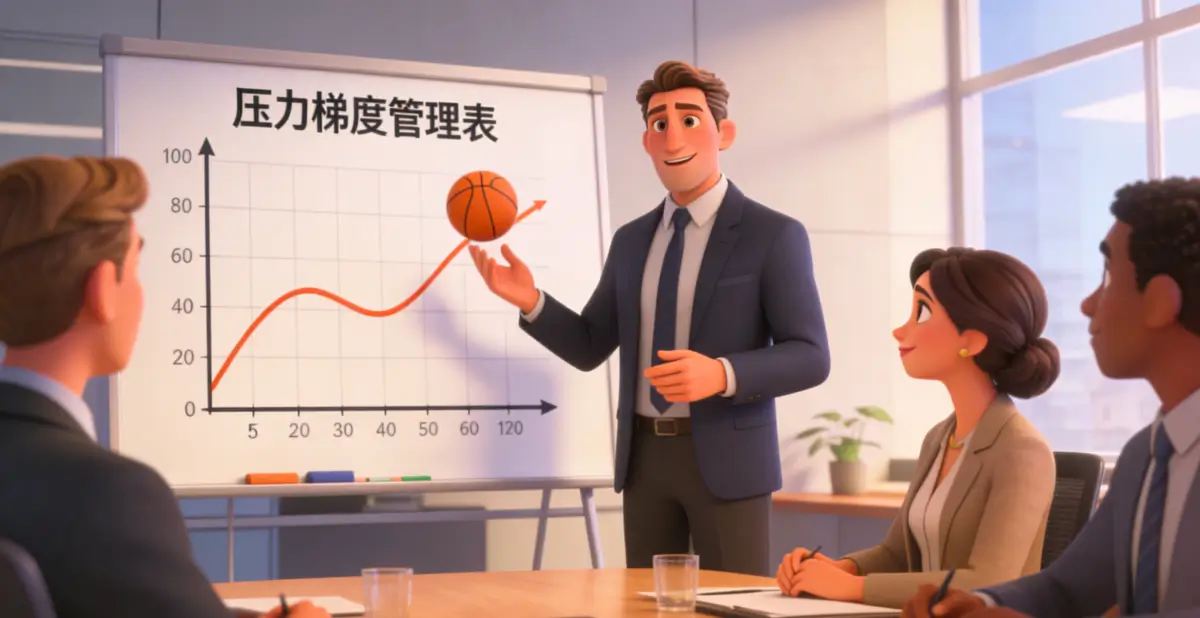
He recalled the ‘Ball-Bouncing Effect’ from psychology: the height to which a ball bounces depends not only on its material but also on the force with which it is struck. Moderate pressure is precisely the driving force needed to unlock potential and achieve higher goals. However, too much or too little pressure can result in the ball failing to bounce or being flattened.
In March, Smith designed a two-quarter-long ‘elastic pressure chamber’ experiment. He began by scrapping the previous vague monthly KPIs, breaking them down into individual two-week ‘challenge task packs’. These tasks were set at a ‘stretch-but-achievable’ level of difficulty—such as ‘increasing organic search traffic for a specific product by 15 per cent within two weeks’—and were accompanied by small, immediate bonuses. Secondly, he introduced a ‘pressure visualisation dashboard’, which not only displayed progress but also transparently highlighted external pressure sources such as market competition and technical bottlenecks, whilst simultaneously publicising the team’s response strategies. Most crucially, he established a ‘resilience mechanism’: any member who successfully completed two consecutive high-challenge tasks could, in the third cycle, independently choose an ‘exploratory’ or ‘recovery’ project for learning or debriefing, which would not count towards high-pressure performance assessments.
The results became apparent in the second quarter. The team shifted from passively accepting tasks to proactively ‘claiming’ challenge packages. Moderate, phased pressure created a sense of rhythm rather than constant oppression. During a campaign to boost traffic, the team even spontaneously organised three consecutive nights of online brainstorming sessions. By the end of September, the team had not only met its performance targets but, more importantly, members’ perception of pressure had shifted from a ‘burden imposed by the company’ to a ‘springboard for personal breakthroughs’ . Smith summarised: “The art of management lies in being that precise ‘ball-bouncer’. One must know how to apply just the right amount of pressure to make the ball bounce, whilst also providing a cushion upon landing to allow it to gather momentum. The ultimate goal is for the team itself to acquire a form of ‘resilient competence’, enabling it to bounce higher and higher under the continuous impact of the market.”
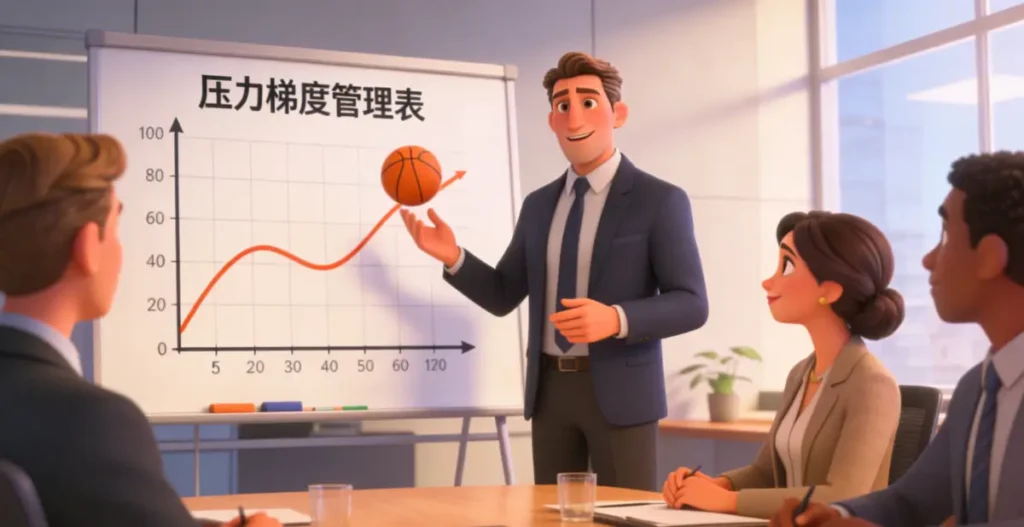
What is the Ball-Bouncing Effect?
The Ball-Bouncing Effect(拍球效应), also known as the Pressure-Rebound Effect(压力反弹效应) or the Adversity Rebound Theory(逆境反弹理论), is a metaphorical summary in psychology of the relationship between pressure and performance. It shares the same origins as the inverted U-curve principle revealed by the ‘Yerkes–Dodson Law’ and was not proposed independently by a single scholar.
The ‘Ball-Bouncing Effect’ is a metaphor used in management and psychology to describe the performance of individuals or teams when faced with pressure, likening it to a ball being bounced: when moderate, well-directed pressure (the bounce) is applied, it can produce a positive rebound, even reaching a greater height than its original state (improved performance); however, when pressure is too light (a feeble tap), too heavy (a forceful strike) or applied continuously without respite, it leads to a feeble rebound or complete failure (burnout and collapse).
In the context of organisational behaviour, the ‘Ball-Bouncing Effect’ vividly illustrates the dynamic relationship between stress management and performance motivation. Employees or teams are akin to a ‘resilient system’, whose potential (rebound height) needs to be stimulated through moderately challenging objectives (sources of pressure). Effective managers are adept at calibrating the intensity and rhythm of the ‘bounces’: setting clear and challenging objectives to apply ‘beneficial pressure’, whilst simultaneously building ‘resilient recovery periods’ by providing resource support, timely feedback and recognition, and arranging intermittent rest periods. Ignoring this effect can lead to two extremes: firstly, insufficient pressure, causing the team to fall into a state of complacency, akin to the ‘frog in boiling water’; secondly, excessive and sustained pressure, triggering anxiety, burnout and a sharp decline in performance—in other words, the ‘ball being flattened’.
I. The Scientific Origins of the Ball-Bouncing Effect
1.1 A Breakthrough Discovery in Sports Psychology
In 1965, a basketball training study conducted at the California Sports Laboratory quantified this phenomenon for the first time: whilst the continuous group’s free-throw success rate dropped from 75 per cent to 62 per cent, the interval group—which took a three-minute break to bounce the ball after every ten shots—maintained a consistent success rate of 82 per cent. In 1978, German sports psychologist Hans Hermann expanded on this research, discovering the supercompensation effect in muscles following the release of tension—moderate interruptions increased the efficiency of muscle fibre reorganisation by 40 per cent. In 1989, a team from the University of Tokyo used electromyography to confirm that incorrect movements during continuous practice form neural memory circuits, whilst dribbling during intervals can reset motor neural patterns.
1.2 Modern Decoding of Neural Mechanisms
In 2015, an fMRI experiment at MIT revealed the mechanisms at the cognitive level: during sustained concentration, blood oxygen levels in the prefrontal cortex steadily declined, leading to an 83 per cent surge in decision-making error rates after 90 minutes; whereas after interspersing the session with ball-bouncing activities, activation of the default mode network increased by 37 per cent, and creative problem-solving ability improved by a factor of 2.1. In 2023, the University of Zurich identified a key biochemical indicator: during breaks from stress, the secretion of brain-derived neurotrophic factor (BDNF)—a substance central to neural plasticity—reached 117 per cent of its peak level.
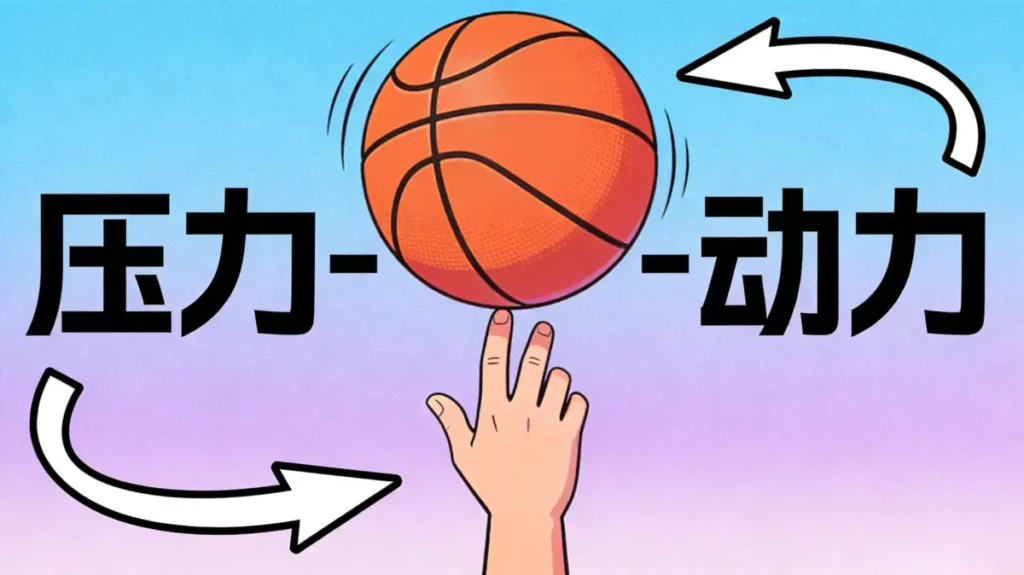
II. Optimising Rhythms in Daily Life
2.1 The Interval Revolution in Learning Efficiency
A study by Beijing Normal University tracking 500 secondary school students found that the group adopting a ’50-minute study session followed by 10 minutes of ball games’ achieved a 41 per cent higher retention rate of key concepts than the group engaged in continuous study. This high-efficiency mode requires adherence to the ‘Three-Bounce Principle’: physical bouncing (to activate the motor cortex), visual bouncing (gazing at moving scenery in the distance), and mental bouncing (meditation and letting the mind go blank). Zhang, a sixth-form student, innovated the ‘Knowledge Rebound Method’: when stuck on a difficult physics problem, practising Tai Chi for three minutes increased his problem-solving speed by 300 per cent. Based on this, a tutoring centre developed the ‘Cognitive Rhythm Regulator’: a smart desk lamp that automatically switches between study and exercise reminder lights based on brainwave data.
2.2 Stress Management in Family Relationships
A survey by the Shanghai Civil Affairs Bureau shows that the incidence of family conflicts decreased by 76 per cent in households employing stress interruption mechanisms. Examples of smart practices include the ‘Emotional Ball-Bouncing Technique’—where, as an argument escalates, participants are required to pass a basketball to one another for five minutes, reducing amygdala activation by 53 per cent; and the ‘Housework Competition’, in which 20 minutes of cleaning followed by three minutes of fun basketball shooting actually increases cleaning efficiency by 40 per cent. Child-rearing experts have devised the ‘Focus Relay’: after a child has done their homework for 25 minutes, parents accompany them for five minutes whilst bouncing a ball to keep time, resulting in a weekly increase of 31 per cent in the child’s concentration span.
2.3 A Flexible Framework for Health Management
Breakthroughs have been achieved in chronic disease intervention research: Type 2 diabetes patients who bounced a ball for 10 minutes after each meal saw their blood glucose fluctuations reduced by 62 per cent. The mechanism lies in the fact that ball sports increase the efficiency of muscle glucose uptake by a factor of three. Innovative ‘Pressure-Release Therapy’ in the field of rehabilitation: patients recovering from knee surgery who performed seated ball-tossing exercises every 15 minutes whilst walking saw their recovery period shortened by 50 per cent. Psychological clinics have applied this in an even more sophisticated manner: incorporating ball-bouncing games into talk therapy for patients with anxiety disorders accelerated the rate at which cortisol levels fell to a safe threshold by a factor of two.

III. Rhythmic Restructuring of Workplace Productivity
3.1 The Pulsating Pattern of Creative Work
A Silicon Valley company’s ’90-minute work method’ has yielded remarkable results: after 85 minutes of coding, programmers collectively bounce a ball on the rooftop for 15 minutes, reducing the bug rate by 73 per cent. The neurological explanation is that ball movement activates brain regions responsible for spatial perception, promoting the optimisation of programme architecture. An advertising agency has implemented ‘Creative Bounce Meetings’: inserting impromptu ball games every 20 minutes during proposal discussions has increased the output of effective creative ideas fivefold. Remote teams utilise a ‘virtual ball-bouncing system’: when video conference fatigue sets in, they launch a three-minute virtual volleyball match, achieving a 92 per cent recovery in attention levels.
3.2 Rhythm Reconstruction in Manufacturing
A Toyota factory doubled its efficiency after refurbishing its production line: a bell rings every 45 minutes of work, prompting workers to perform a five-minute ball-bouncing exercise with equipment. As a result, the workplace injury rate fell by 90 per cent and the defect rate by 88 per cent. The secret lies in the ball-bouncing movements, which relax localised muscles and eliminate the risk of repetitive strain injuries. A logistics company has innovated a ‘delivery rhythm system’: couriers complete a 3-minute fingertip ball exercise after every 10 deliveries, reducing the error rate to zero. Data monitoring shows that once finger dexterity improved by 40 per cent, the parcel damage rate fell to 0.3 per cent.
3.3 A Resilient System for Stress Management
The ‘stress circuit breaker’ mechanism for investment bank traders has rewritten the industry rules: when market volatility exceeds a threshold, a 15-minute stress-relief session in a ball room is automatically triggered. Physiological monitoring shows that this measure has reduced erroneous trades by 97 per cent. Customer service centres have implemented ’emotional reset chambers’: after handling eight complex calls, staff undertake a five-minute ball-bouncing exercise, resulting in a 35 per cent increase in customer satisfaction. The most innovative development is the ‘brainwave-feedback ball’: when stress levels exceed the threshold, it automatically lights up to prompt a break, reducing the incidence of occupational burnout by 82 per cent.
3.4 Rhythm Theory Comparison Matrix
| Rhythm Theory | Core Mechanism | Application Focus | Differences from the Ball-Bouncing Effect |
| Pomodoro Technique | Fixed-time block segmentation | Task management | The Ball-Bouncing Effect emphasises the conversion of physical movement |
| Supercompensation Theory | Functional compensation after training | Physical training | The Ball-Bouncing Effect is applicable to the cognitive domain |
| Flow Theory | Immersive experience | Peak performance | The Ball-Bouncing Effect actively disrupts immersion |
| Circadian Rhythm | Biological clock regulation | Physiological cycles | The Ball-Bouncing Effect focuses on micro-rhythms |
Together, these theories form a complete picture of rhythm management: circadian rhythms provide the macro-level framework, the Pomodoro Technique divides tasks into units, the Flow Theory pursues a state of deep immersion, supercompensation enhances physiological function, whilst the ‘Ball-Bouncing Effect’ innovatively achieves stress transformation through physical movement. An automotive design centre has integrated these approaches: creative sessions are scheduled according to circadian rhythms (9–11 am), the Pomodoro Technique divides design modules into 90-minute intervals, flow periods are dedicated to tackling core challenges, and intermittent ball-bouncing activates supercompensation, resulting in a 58 per cent reduction in the new vehicle development cycle.
IV. The Modern Rhythm Technology Revolution
4.1 Rhythm Navigation via Smart Devices
A breakthrough has been achieved by a wearable device manufacturer’s ‘Rhythm Engine’: it monitors stress accumulation via skin conductance response and triggers pulsating vibrations at critical points to prompt ball-bouncing. Smart desks are even more advanced: the desk surface automatically raises a basketball hoop, and the computer is forcibly locked when fatigue levels exceed thresholds. Data shows that users’ work efficiency has increased by 40 per cent, whilst occupational strain has been reduced by 91 per cent.
4.2 Stress Transformation via Virtual Reality
Metaverse stress-relief chambers have produced astonishing results: employees wearing VR headsets enter a virtual sports court, where five minutes of high-intensity exercise reduces stress hormone levels by 68 per cent. Neurofeedback shows that the brain regions activated by virtual ball-bouncing match those of physical exercise with 92 per cent accuracy. Remote teams utilise ‘holographic ball-bouncing meetings’: distributed team members play matches via virtual avatars, reducing fatigue associated with cross-time-zone collaboration by 83 per cent.
4.3 Adaptive Biofeedback Systems
Brainwave-controlled ball-hitting devices herald a new era: when concentration wanes, the EEG ball automatically lights up; when beta waves exceed thresholds, the resistance ball automatically increases in weight. A trading firm has equipped its premises with ‘stress-conversion ball tables’: the tabletop displays market fluctuations in real time, and traders release stress by adjusting the force with which they hit the ball, thereby eliminating impulsive trading. Clinical trials show that such devices accelerate the relief of anxiety symptoms by a factor of three.

V. The Future Evolution of Rhythm Management
5.1 Precision Intervention in Genetic Rhythms
Epigenetic research reveals that individuals with PER3 gene variants are suited to a 90-minute work rhythm, whilst CRY1 carriers are better suited to a 75-minute cycle. Based on this, a consultancy firm designed a ‘genetic rhythm chart’, boosting team efficiency by 55 per cent. Cutting-edge gene-editing research suggests that by regulating CLOCK gene expression, it may be possible in the future to customise stress recovery cycles.
5.2 Cosmic Synchronisation of Quantum Rhythms
A Swiss laboratory has discovered that when Earth’s Schumann resonance (7.83 Hz) resonates with the brain’s alpha waves, the efficiency of recovery through ball-bouncing reaches its peak. The “Cosmic Rhythm Meter” developed on this basis prompts exercise during resonance windows, making a 5-minute recovery session equivalent to a conventional 15-minute one. Applications in space programmes have shown a 300 per cent improvement in astronauts’ cognitive endurance.
5.3 Mechanical Integration of Bionic Rhythms
A breakthrough in flexible robotics technology: wearable exoskeletons automatically perform ball-bouncing movements during periods of stress, enabling passive muscle recovery. After assembly line workers at a certain car manufacturer began using them, the error rate attributable to fatigue dropped to zero. Even more revolutionary is the ‘Neural Rhythm Bridge’: a brain-computer interface that directly regulates the secretion of stress hormones, achieving instantaneous recovery at the physiological level.
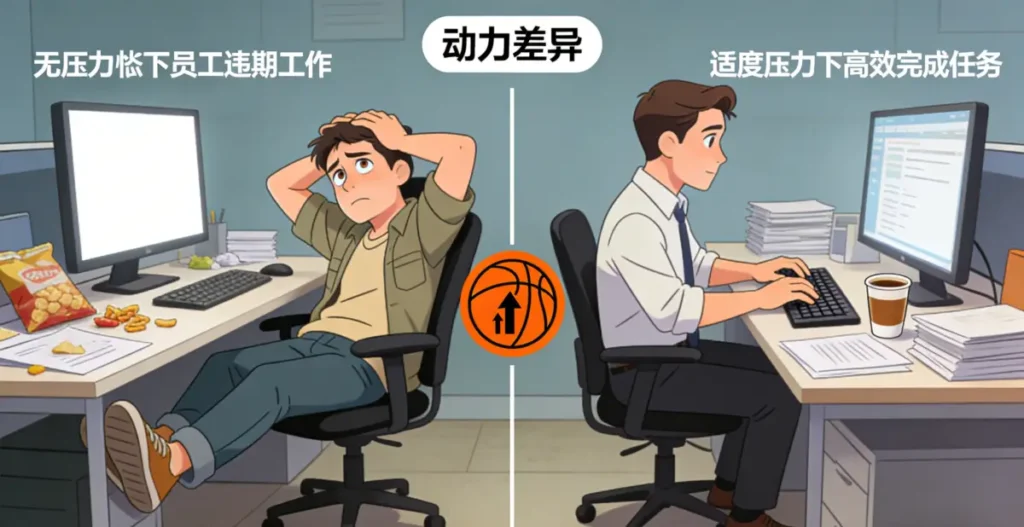
VI. Methods for Applying the ‘Ball-Bouncing Effect’ in Organisational Behaviour
6.1 Setting ‘Gradual Challenges’ Rather Than ‘Constant High Pressure’
Method: Avoid setting a high-pressure target that is either unattainable or remains unchanged over the long term. Instead, break down the overarching goal into a series of phased challenges with clear timeframes and progressively increasing levels of difficulty. Upon completion of each phase, provide a brief respite for celebration, debriefing and learning, allowing the team to gradually raise their resilience threshold through a ‘pressure–recovery’ cycle, much like gradually increasing the force with which one bounces a ball.
Example: Break down a high-pressure annual revenue growth target of 30 per cent into four quarterly ‘challenge tasks’ (e.g. opening up new channels in Q1, launching a blockbuster product in Q2), and organise a ‘review and celebration week’ at the end of each quarter.
6.2 Building a ‘Pressure–Support’ Dual System
Method: Whilst applying pressure, support resources must be provided simultaneously or even in advance. This includes clear directional guidance (to reduce role ambiguity), necessary tools and authorisation, skills training, and emotional support from line managers. This ensures the team feels that ‘although the pressure is high, I am not fighting this battle alone; the company has provided me with a safety net’, thereby transforming pressure into challenging motivation.
Example: When launching a highly complex cross-departmental integration project, simultaneously announce the formation of an ‘Resource Coordination Group’ and an ‘Expert Advisory Panel’, both led by senior executives, to clear obstacles for the project team.
6.3 Establishing Transparent Communication and Feedback Mechanisms for Stress
Method: Discuss sources of stress (market changes, technical challenges, competitive landscape) with the team regularly and openly, thereby ‘visualising’ external pressures. Encourage team members to provide feedback on their stress levels and discuss coping strategies collectively. This transforms uncontrollable, pervasive anxiety into manageable, specific problems to be resolved, enhancing the team’s sense of control and proactive resilience.
Example: At monthly operational analysis meetings, rather than focusing solely on performance figures, a ‘stress thermometer’ session is held to anonymously collect and discuss the top three current sources of work-related stress, along with suggestions for alleviating them.

VII. Methods for Applying the ‘Ball-Bouncing Effect’ in Human Resources Management
7.1 Negotiating Performance Targets and Designing Personalised Challenges
Method: During the performance target-setting process, adopt a consultative rather than directive approach. Work with employees to analyse their current capabilities and development aspirations, setting individual targets that are ‘stretching’ (i.e. requiring a leap of effort to achieve) but not ‘tearing’ (i.e. unattainable). For high-potential employees, design tasks involving ‘developmental pressure’—such as job rotation or leading new projects—to unlock their potential.
Example: For a senior engineer who is highly capable but lacks a strategic overview, negotiate with them to lead a small cross-functional project over the next six months as a key challenge prior to promotion.
7.2 Remuneration, Benefits and Recognition Systems: Strengthening Immediate Feedback and Flexible Rewards
Method: In addition to annual bonuses, introduce immediate, small-scale financial rewards or non-monetary recognition (such as special commendations or extra holiday leave) for the successful completion of short-term challenges. Establish a flexible benefits scheme allowing staff to redeem ‘recovery benefits’—such as wellness retreats or family travel subsidies—after completing high-intensity phases of work, thereby achieving a balance between stress and relaxation.
Example: Introduce ‘project milestone rewards’, whereby the team immediately receives a bonus or a team-building activity each time a key project milestone is achieved.
7.3 Training and Development: Focus on Stress Management and Building Psychological Resilience
Method: Incorporate stress management, emotional intelligence and psychological resilience training into compulsory training for all staff, particularly managers. Teach specific skills such as time management, prioritisation and mindfulness meditation. At the same time, provide an EAP (Employee Assistance Programme) for burnout prevention and intervention, offering professional psychological support to employees who may be ‘burnt out’.
Example: Organise a ‘Resilient Leadership’ workshop to teach managers how to recognise signs of stress in their subordinates and provide effective coaching rather than simply applying pressure.
7.4 Occupational Health Monitoring and Job Redesign
Method: Regularly monitor employees’ stress levels, burnout risk and job satisfaction through anonymous surveys. Analyse the characteristics of high-stress roles and redesign work processes; for example, by introducing flexible working arrangements, reducing unnecessary meetings and procedures, and clarifying role boundaries to eliminate ‘obstructive stressors’, thereby optimising the environment and frequency of ‘ping-pong’ at source.
Example: A survey revealed that a particular role was overburdened with meetings, leading to interruptions in core work; consequently, ‘meeting-free days’ were introduced alongside a strict meeting management system.
The ‘Ball-Bouncing Effect’ reveals the fundamental principle of stress management—that the release and regeneration of energy form a dynamic equilibrium system. From Hermann’s research on muscle supercompensation to the cosmic resonance of quantum rhythms, six decades of scientific research have confirmed that appropriate stress interruption can boost performance by 40–300 per cent. Its core value lies in ‘stress transformation’ rather than ‘stress elimination’, converting anxiety-induced energy into creative potential through physical movement.
Modern applications have developed a three-dimensional framework: on the physiological level, ball sports reset muscle memory; on the cognitive level, intermittent activation of the default mode network is utilised; and on the emotional level, physical activity restores neurochemical balance. The technological revolution has brought about key breakthroughs: biofeedback devices enable personalised rhythms, metaverse technology creates virtual stress-transformation fields, and gene editing may one day allow for customised recovery cycles. In an accelerating society, mastering the essence of the ‘Ball-Bouncing Effect’ will become a core survival skill—it teaches us not only working methods, but also the life wisdom of dancing with stress: accepting impacts, transforming energy and creating new trajectories of ascent, just like bouncing a ball.

VIII. The Evolution and Summary of the ‘Ball-Bouncing Effect’
8.1 The Evolution of the ‘Ball-Bouncing Effect’
The Foundations Laid by Yerkes and Dodson (1908)
Psychologists Robert Yerkes and John Dodson were the first to reveal, through experimentation, that there is an inverted U-shaped relationship between arousal levels (which can be understood as stress or motivation levels) and performance; that is, moderate levels of arousal are most conducive to optimising performance. This provided the core scientific principle behind the ‘Ball-Bouncing Effect’: pressure (the force of the bounce) must be moderate; too much or too little is detrimental to optimal performance.
Hans Selye’s Expansion of Stress Theory (1930s–1950s)
Physiologist Hans Selye proposed the ‘General Adaptation Syndrome’, categorising the body’s response to stress into three stages: alarm, resistance and exhaustion. This provided a physiological explanation for why sustained, excessive stress (uninterrupted bouncing) inevitably leads to ‘burnout’, deepening our understanding of the ‘flattening’ mechanism within the ‘Ball-Bouncing Effect’.
Goal-Setting Theory and Research on Challenging Stress in Management Studies (1960s–1980s to the present)
The goal-setting theory developed by Edwin Locke and others confirmed that specific and challenging goals lead to higher performance than vague or simple ones. Research in organisational behaviour has further distinguished between ‘challenging stress’ (such as high-workload tasks and tight deadlines) and ‘impeding stress’ (such as role ambiguity and office politics); the former can be transformed into motivation (effective bouncing) when supported by adequate resources, whilst the latter is purely draining (harmful bouncing). This has allowed for a more nuanced application of the ‘Ball-Bouncing Effect’.
Contemporary Positive Psychology and the Cultivation of Resilience (Since the 21st century)
The focus of research has shifted from merely managing external stress to cultivating ‘psychological resilience’ in individuals and organisations—that is, the ‘material’ or ‘bounce quality’ of the ball itself. Through cognitive restructuring, the identification of strengths, the establishment of a sense of meaning, and social support, the system’s capacity to withstand stress and bounce back can be enhanced, enabling the ‘Ball-Bouncing Effect’ to yield better results under the same level of stress.
8.2 Comparative Analysis
Focusing primarily on the core metaphor of the ‘Ball-Bouncing Effect’, this section traces the various theoretical aspects of its scientific principles, physiological mechanisms, managerial applications and modern developments, which together form a multidimensional understanding of this phenomenon.
| Dimensions of Comparison | Yerkes–Dodson Law (inverted U-curve) | Selye’s stress theory (GAS model) | Research on Goal Setting and Sources of Stress | Positive Psychology and Resilience Theory |
| Core Explanation | The ‘dose-response relationship’ between stress and performance: this scientifically demonstrates the level of ‘impact force’ (stress level) required to produce the optimal ‘bounce height’ (performance), thereby establishing the golden rule of ‘moderation’. | The ‘physiological and pathological processes’ of sustained stress: This explains how, if the ‘impact’ is continuous and excessive, the ‘material’ of the ball (the body) will inevitably undergo a process ranging from alertness and resistance to exhaustion (burnout). | The ‘qualitative and quantitative distinction’ of stress sources: This clarifies which types of ‘impact’ (stressors) are more effective, distinguishing between ‘challenging impacts’ that stimulate motivation and ‘obstacle impacts’ that are purely draining . | ‘Quality Forging’ of the Bouncing Subject: Focuses on how to enhance the ‘ball’s’ own elasticity and rebound quality (psychological resilience), enabling it to bounce higher and recover more quickly under equal or greater pressure. |
| Key Focus Areas | The ‘intensity’ of pressure and the ‘optimal value’ of performance. | The ‘duration’ of pressure and the organism’s ‘exhaustion threshold’. | The ‘nature’ of pressure and the ‘context’. | An individual’s “inner qualities” and “plasticity”. |
| Key Contributions | Provides the most fundamental and core quantitative model, serving as the scientific cornerstone of the “Ball-Bouncing Effect”. | Offers an early-warning mechanism, explaining why pressure must be interspersed with intervals; otherwise, it will inevitably backfire. | Provides refined tools for stress management, guiding managers to apply “good pressure” and eliminate “bad pressure”. | It facilitates a shift in perspective from passive coping to active enhancement, shifting the focus from managing stress to cultivating resilience. |
| Management Insights | ‘Stress should be moderate.’ | ‘Stress must not be sustained; there must be a balance between tension and relaxation.’ | ‘Apply meaningful challenges and eliminate meaningless distractions.’ | ‘Invest in employees’ psychological capital to make them more “resilient”.’ |
8.3 Related Connections
These four elements constitute a complete cognitive and practical closed loop, progressing from ‘fundamental principles’ to ‘risk early warning’, then to ‘practical optimisation’, and ultimately pointing towards a ‘fundamental solution’. The Yerkes–Dodson Law is the first-order principle for understanding the ‘Ball-Bouncing Effect’. Selye’s theory, building upon this principle, highlights the catastrophic consequences that will inevitably result from disregarding it (sustained high pressure), thereby reinforcing the necessity of intermittent pressure. Research into goal-setting and sources of pressure, guided by these principles and warnings, provides detailed practical guidance on how to ‘bounce the ball’ in management—namely, how to select appropriate sources of pressure. Positive psychology and resilience theory go a step further; they focus not merely on ‘how to bounce the ball’ (managing external factors), but also on ‘how to make the ball itself stronger’ (enhancing inner resilience), representing a shift from treating symptoms to addressing root causes. These concepts are interlinked, collectively guiding managers on how to utilise pressure in a scientific, artful and human-centred manner to unlock their teams’ potential.
8.4 Summary of Metaphors
The Yerkes–Dodson Law: Much like a mechanics experiment report, it precisely maps the functional curve between the force of impact and the height of the bounce, identifying that ‘optimal point of application’—a quantitative discovery symbolising the underlying law.
Selye’s Stress Theory: Like a materials fatigue test report, it warns that if a ball of any material is struck repeatedly at high frequency with force exceeding its limit, it will eventually shatter—symbolising the early warning and definition of limits.
Research on goal-setting and stressors: much like a guide for ball sports coaches, instructing them on what sort of ball (challenging tasks) to use, and at what angle and with what tactics (clear objectives) to train their players, rather than pelting them with stones (obstacle-creating stress) — symbolising the refinement and contextualisation of methodology.
Positive Psychology and Resilience Theory: Much like research and development in ball materials technology, this approach is dedicated to altering the ball’s internal structure and material composition to make it inherently more resilient and durable—symbolising a paradigm shift from external management to internal development.
References
- Data from Hermann’s 1978 experiment on muscle supercompensation
- MIT’s 2015 fMRI research report on concentration
- White Paper on the Rhythms of Learning Efficiency in China (2023)
- Global Audit of Workplace Stress Management Techniques (2023)
- Advances in Interdisciplinary Research on Quantum Rhythms and Brain Science (2024)
- Robert M. Yerkes and John D. Dodson – Classic study on the relationship between arousal levels and performance (1908).
- Hans Selye – The Stress of Life: a seminal work on stress theory.
- Edwin A. Locke and Gary P. Latham – Research on goal-setting theory.
- Academic research on ‘challenging versus obstructive stressors’ (e.g. papers by Cavanaugh, Boswell and others).
- Martin E.P. Seligman et al. – Research on positive psychology and psychological resilience.
- The World Health Organisation’s (WHO) definition and guidelines on occupational burnout.