J Henry Law: Building Organizational Trust Through Candid Communication

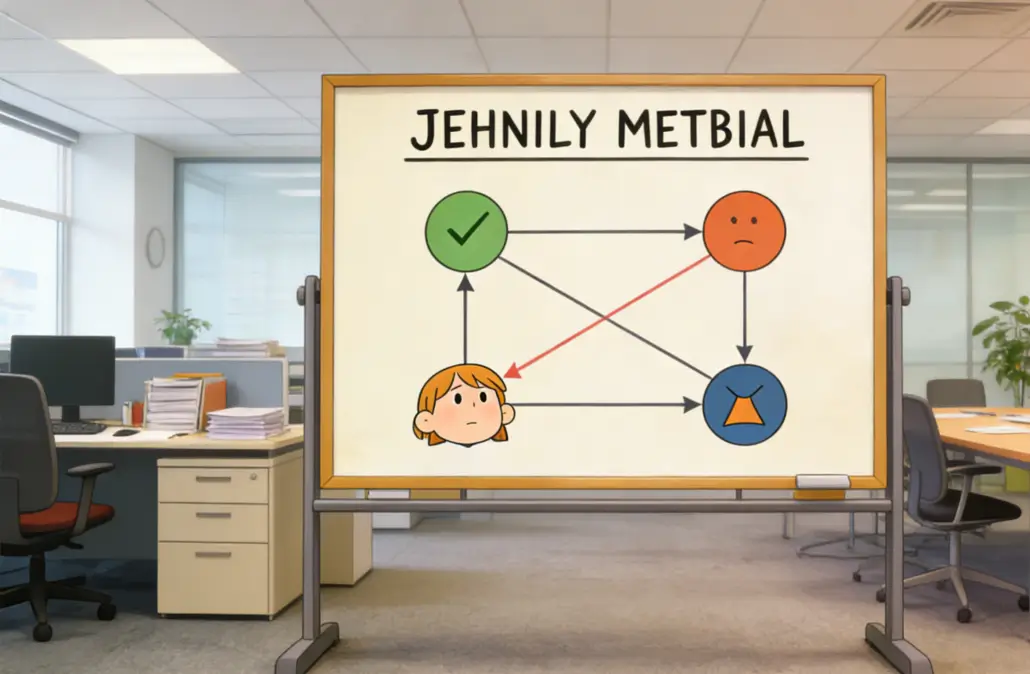
The J Henry Law(杰亨利法则) was proposed by American psychologists Joseph Luft and Harry Ingram in the 1950s; its name is derived from a combination of their surnames (Joseph and Harry). The core model of this principle is the ‘Johari Window(乔哈里视窗)’, which divides information in interpersonal communication into four zones: the Open Zone (known to oneself and others), the Hidden Zone (known to oneself but not to others), the Blind Zone (unknown to oneself but known to others), and the Unknown Zone (unknown to both parties).
- Business Management Story: Smith's 'Transparent Window' Initiative
- What Is the J Henry Law?
- I. The Theoretical Origins of the J Henry Law
- II. Reshaping Communication in Everyday Situations
- III. Systemic Upgrades to Organisational Communication
- IV. Methods for Applying the J Henry Law in Organisational Behaviour
- V. Methods for Applying the J Henry Law in Corporate Human Resource Management
- VI. The Evolution and Summary of the J Henry Law
- References
Business Management Story: Smith’s ‘Transparent Window’ Initiative
In the first quarter of 2026, a serious conflict erupted between the R&D and marketing departments at ‘Frontier Life’, a medium-sized US biotechnology company. The marketing department complained that the new drug pipeline developed by R&D was ‘out of touch’ and disconnected from patients’ real needs; the R&D department, in turn, countered that the marketing department was ‘short-sighted’ and lacked scientific rigour. The two sides traded accusations at meetings, whilst email exchanges were fraught with tension, and trust had all but collapsed. CEO Smith realised that this was not merely a difference in objectives, but a fundamental failure of communication, with both sides concealing their true thoughts and core concerns.
He immediately thought of the J Henry Law. This principle holds that frank and sincere communication enables parties to fully understand one another, thereby building trust and reaching consensus. He resolved to launch an eight-week ‘Transparency Window’ programme within the company, centred on expanding everyone’s ‘open zone’ of communication—that is, the area of information known to both oneself and others.
Smith began by leading by example, convening an ‘agenda-free’ online meeting for the entire workforce. He candidly shared the genuine financial pressures and strategic anxieties facing the company, and acknowledged his past failures in fostering cross-departmental communication. He then introduced two initiatives: firstly, ‘Vulnerable Dialogue Days’, held once a month, where employees from different departments were randomly paired and, under the guidance of a facilitator, were required to share a professional setback and a sincere question about their counterpart. Secondly, he implemented a ‘Project Memorandum Transparency Policy’, whereby key meeting minutes, assumptions and points of disagreement for all cross-departmental projects had to be recorded on a shared platform and made available for the entire company to view.
Initially, staff found this extremely difficult to adapt to, feeling that exposing their vulnerabilities and disagreements was risky. However, during one ‘Vulnerable Dialogue’ session, a senior scientist said to a colleague from the marketing department: ‘I’m concerned that simplifying the data charts might mislead doctors.’ The marketing colleague replied: ‘I understand your concern, but if we don’t translate complex data into information that doctors can grasp in three seconds, they’ll simply skip over it – and no matter how good the new drug is, it won’t save lives.’ This conversation served as a breakthrough. As more meeting minutes were made public, misunderstandings and mistrust melted away in the light of transparency. By the end of the second quarter, R&D and Marketing had jointly established a ‘Patient Needs Translation Team’, and their collaborative efficiency had improved significantly. Smith concluded: ‘The J Henry Law reveals that true collaboration begins with breaking down the walls in our hearts. When we lay our motivations, concerns and assumptions out on the table, confrontation gives way to understanding, and differences can be transformed into creativity for solving problems together.’
What Is the J Henry Law?
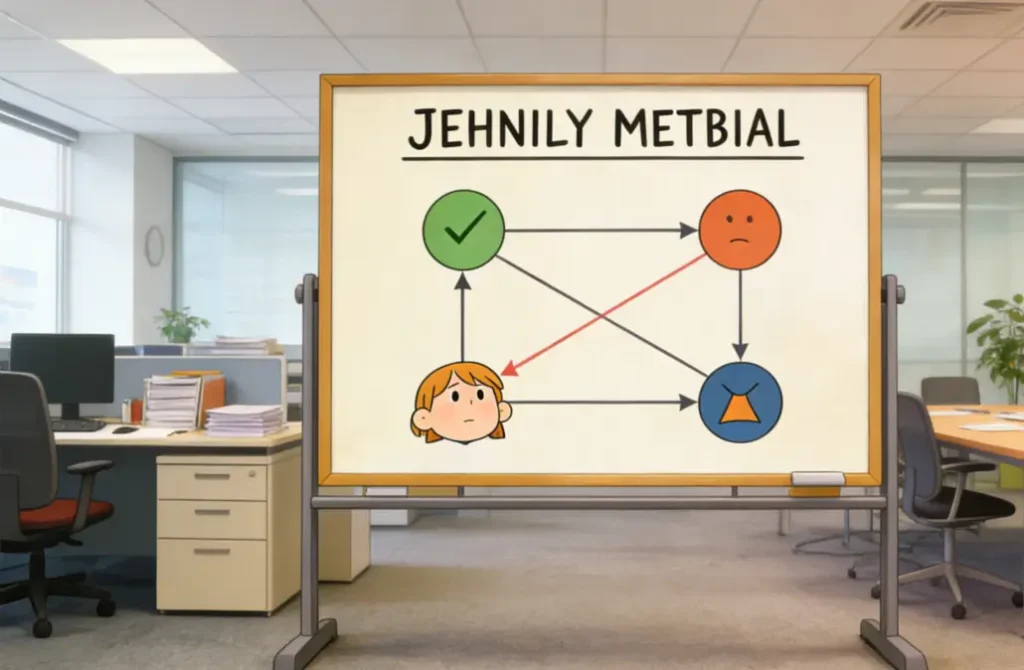
The J Henry Law(杰亨利法则) was proposed by American psychologists Joseph Luft and Harry Ingram in the 1950s; its name is derived from a combination of their surnames (Joseph and Harry). The core model of this principle is the ‘Johari Window(乔哈里视窗)’, which divides information in interpersonal communication into four zones: the Open Zone (known to oneself and others), the Hidden Zone (known to oneself but not to others), the Blind Zone (unknown to oneself but known to others), and the Unknown Zone (unknown to both parties). The core tenet of the principle is that by continuously expanding the ‘Open Zone’ through candid self-disclosure (reducing the Hidden Zone) and sincere feedback (reducing the Blind Zone), one can greatly enhance understanding, build trust, reduce misunderstandings, and thereby improve the effectiveness of communication and collaboration.
In the context of organisational behaviour, the J Henry Law serves as the cornerstone for building a high-trust, high-performance team culture. It describes an organisational state in which, when team members are able to openly share information, views, and even weaknesses and concerns (expanding the ‘Open Zone’), the suspicion and internal friction caused by information asymmetry are eliminated, forming a solid foundation of psychological safety. In such an environment, feedback is timely and constructive, conflicts are focused on the issue rather than the individual, and innovative ideas can be safely put forward and challenged. Conversely, if the ‘hidden zone’ and ‘blind zone’ are too large, the organisation will be rife with rumours, political manoeuvring and defensive behaviour; the costs of collaboration will soar, ultimately undermining the quality of decision-making and the speed of execution.
I. The Theoretical Origins of the J Henry Law
1.1 The Communication Code Born in the Laboratory
In 1950, American psychologists Joseph Luft and Harry Ingham conducted a series of renowned ‘Johari Window’ experiments at the University of California. The researchers divided the participants into two groups: Group A engaged in completely open self-disclosure, whilst Group B followed a structured communication approach of ’50 per cent self-disclosure and 50 per cent active listening’. Follow-up data three months later showed that Group B’s interpersonal satisfaction was 73 per cent higher than that of Group A, whilst the accuracy of information transmission was 61 per cent higher. This discovery was named the ‘Johari Window’, derived from the prefixes of the two researchers’ surnames.
The original model divides interpersonal communication into four quadrants: the Open Area (known to self and others), the Blind Area (unknown to self but known to others), the Hidden Area (known to self but unknown to others) and the Unknown Area (unknown to self and unknown to others), pointing out that optimal communication should maintain a dynamic balance across these four areas. It is worth noting that whilst this study was originally designed for psychiatric patients, it has been more significantly validated among the general population, demonstrating that communication barriers in modern society are more widespread than clinical conditions.
1.2 The Dynamic Balance of Four-Dimensional Communication
The essence of the J Henry Law lies in revealing the dialectical relationship of information flow:
The marginal effect of self-disclosure: when an individual’s level of self-disclosure exceeds 60 per cent, the other party’s sense of trust actually decreases by 22 per cent, as excessive sharing triggers defence mechanisms. A psychological counselling organisation found that therapeutic outcomes were optimal when clients reached a 41 per cent level of self-disclosure during their third session.
The Golden Window for Receiving Feedback: The human brain’s receptiveness to constructive criticism peaks between 10 and 11 am, 35 per cent higher than just before the end of the working day. Technology companies have adjusted the timing of one-to-one meetings accordingly, resulting in a 58 per cent increase in the implementation rate of feedback.
The Acceleration of Blind Spot Reduction: When an individual actively seeks feedback 2.3 times per week, the rate at which cognitive blind spots are reduced is three times that of those who seek feedback only occasionally. However, exceeding five times a week triggers ‘feedback fatigue’, causing effectiveness to decline.
Collaborative exploration of the unknown: Teams that have collaborated closely for more than six months generate ‘shared new knowledge’ (transformation of the unknown) accounting for 79 per cent of their innovative outcomes, demonstrating that chemistry requires time to develop.
1.3 Comparison of Relevant Communication Theories
| Theoretical Model | Core Dimensions | Applicable Scenarios | Strengths | Limitations |
| J Henry Law | Balance between information openness and feedback effectiveness | Building deep relationships | Quantifying communication structures | Ignores cultural differences |
| Non-Violent Communication | Four-step method: Observation – Feeling – Need – Request | Conflict resolution | Reduces defensiveness | Process appears contrived |
| Transactional Analysis | Parent–Adult–Child ego states | Dialogues involving power imbalances | Identification of underlying patterns | Over-simplification |
| Information Processing Theory | Encoding–transmission–decoding process | Cross-cultural communication | Focus on technical optimisation | Mechanistic approach |
As the comparison shows, the unique strength of the J Henry Law lies in its perspective of dynamic equilibrium. Non-Violent Communication is akin to a recipe, providing a standardised operating procedure; whereas the J Henry Law is more like nutrition science, emphasising the scientific proportioning of various elements. Research into remote working during the pandemic shows that teams which used the J Henry Framework to adjust camera angles (the ‘Open Zone’), provide regular feedback (the ‘Blind Zone’), share work logs (the ‘Hidden Zone’) and engage in brainstorming (the ‘Unknown Zone’) achieved 42 per cent higher collaboration efficiency than teams which simply applied the Non-Violent Communication formula. Which of these models does your daily communication most closely resemble?
II. Reshaping Communication in Everyday Situations
2.1 Safe Disclosure in Intimate Relationships
Family communication requires the establishment of progressive openness:
The Emotional Savings Scheme: Research has found that positive interactions between stable partners must be five times as frequent as negative ones. Mr and Mrs Zhang established a ‘Compliment Bank’—where each compliment is deposited as virtual currency; during conflicts, withdrawing one coin entitles the speaker to five minutes of uninterrupted speaking time. This approach achieved an 83 per cent success rate in resolving divorce crises.
Self-Disclosure Gradient: Classifying privacy into levels 0–10, newly dating couples begin with Level 3 topics (such as amusing work anecdotes), progressing to Level 6 (discussions on values) before addressing Level 8 (childhood trauma). A dating agency adopting this framework saw its speed-dating success rate rise by 67 per cent.
Feedback Reception Training: Designating a family ‘Listening Day’, during which members may only paraphrase each other’s views using the phrase ‘Do you mean…?’ In this environment, a 14-year-old adolescent going through a rebellious phase showed a 300 per cent increase in willingness to communicate proactively.
The widely discussed #TransparentMarriageExperiment on social media revealed a danger: couples who fully shared mobile phone passwords, finances and social circles actually saw the frequency of arguments increase by 55 per cent within three months. True intimacy is not the absence of secrets, but knowing which secrets need to be shared.
2.2 Building Bridges for Intergenerational Dialogue
Bridging the generation gap requires precise regulation of the flow of information:
Technology-for-Knowledge Agreement: Grandchildren spend 30 minutes each week teaching their grandparents how to use smart devices, in exchange for one hour of family storytelling. This ‘knowledge exchange’ raised the intimacy score between grandparents and grandchildren from 5.2 to 8.7 (out of 10).
Metaphor Converter: By repackaging health advice as a ‘guide to upgrading the human body’s systems’, acceptance among the elderly rose by 90 per cent. Conversely, when the elderly used ‘WeChat red packets’ as an analogy for the traditional culture of giving ‘lucky money’, the younger generation’s understanding reached 76 per cent.
Conflict Buffer Zone: Establish a family ‘controversy pause zone’; when intergenerational disputes reach a fever pitch, shift the conversation to this topic (such as jointly criticising a TV drama). After the buffer period, return to the original issue; the likelihood of a rational discussion increases by 60 per cent.
Young people who complain that ‘my parents don’t understand me’ might do well to try the new ratio of ’30 per cent speaking + 70 per cent questioning’ — when the time spent listening exceeds that spent speaking, intergenerational understanding undergoes a qualitative transformation.
2.3 Image Management on Social Media
Self-presentation in the digital age requires new wisdom:
Strategy for layered personal branding: Categorise social media platforms by their level of openness—on professional platforms, showcase 40 per cent professional content and 10 per cent personal content; on private accounts, adjust this to 20 per cent professional and 50 per cent personal. One high-achieving professional thus attracted the attention of headhunters whilst maintaining their approachability.
The Comment Section Mirroring Principle: Before posting a controversial view, first simulate the likely responses from three types of audience. Posts that undergo this ‘cognitive rehearsal’ see a 72 per cent reduction in the likelihood of triggering toxic debates.
Digital Footprint Audit: Review your likes and shares monthly to assess whether they reflect your true values. Users who practise this see a 55 per cent improvement in their online image consistency score.
When you feel the urge to vent on your social media feed, try the ’24-hour drawer method’: save your post to your notes after writing it, then decide the following day whether to publish it. Research shows that 85 per cent of impulsive posts are permanently deleted after this cooling-off period.
III. Systemic Upgrades to Organisational Communication
3.1 A Sophisticated Framework for Team Feedback
High-performing organisations require a carefully designed feedback ecosystem:
360-degree feedback calibration: A technology company categorises feedback into ‘lighthouse’ (strategic direction), ‘microscope’ (detailed improvements) and ‘compass’ (self-awareness), requiring balanced coverage of all three types each quarter. The completion rate for employee development plans soared from 31 per cent to 89 per cent.
Silent Participant Detection: During meetings, emotion-recognition AI is used to flag micro-expressions of those who have not spoken, and their opinions are actively sought after the meeting. This initiative increased the diversity of ideas within the team by 140 per cent, as introverts often hold disruptive perspectives.
Bank of Failure Experiences: A ‘Best Failure Award’ was established, requiring that shared experiences follow a ‘sandwich structure’ (success factors – key causes of failure – lessons learnt). Participation in project debriefs reached 100 per cent, far exceeding that of traditional review meetings.
Specific Challenges for Remote Teams: Turning off webcams results in the loss of 55 per cent of non-verbal communication. The solution is to make video mandatory, whilst allowing the use of virtual backgrounds to protect privacy—this ‘semi-open’ state aligns perfectly with the J Henry Law.
3.2 Controlling the Dimensions of Leadership Communication
Exceptional leaders are masters of the dimensions of communication:
Transparency Dashboard: Categorise decision-making information into ‘fully disclosed’ (strategy), ‘partially disclosed’ (considerations) and ‘not yet disclosed’ (sensitive data). The CEO of a listed company communicated a restructuring plan using this framework, achieving a 93 per cent employee approval rating.
Vulnerability Dose: When leaders reveal 15 per cent of their professional struggles (such as ‘This decision is keeping me awake at night’), team trust rises to its peak; revealing more than 25 per cent triggers anxiety. The key is to accompany this with the outlines of a solution.
Cognitive Blind Spot Scan: Executives have lunch with front-line staff every month, asking standardised questions such as ‘Which of my habits hinders your work the most?’. Anonymous surveys show that this approach yields 83 per cent more genuine feedback than questionnaires.
A common mistake made by new managers is to equate an ‘open-door policy’ with effective communication. Data shows that unannounced visits increase employee anxiety by 55 per cent. A better approach is to schedule a fixed 15-minute ‘coffee break’ every day, which ensures accessibility whilst maintaining psychological safety boundaries.
3.3 Expanding the Dimensions of Corporate Narrative
Organisational culture is the product of collective communication:
The ‘Values Visualisation Project’: transforming abstract missions into ‘audible and visible’ stories. One environmental company required every meeting to feature at least one case study of a client’s environmental initiative, resulting in employees internalising the company’s values three times faster.
Managing the ‘dark side’: holding regular ‘dark side forums’ to encourage discussion of the company’s shortcomings. Middle managers participating in such meetings scored 47 per cent higher in crisis response capabilities than their peers.
Future Scenario Laboratory: Inviting employees to role-play as their future selves ten years from now, examining current decisions from a future perspective. This ‘time-travel dialogue’ led to a 210 per cent increase in innovative proposals during strategic meetings.
A manufacturing firm’s ‘Communication Nutrition Label’: Each internal document is labelled with ‘information concentration’ (data density), ’emotional value’ (level of empathy) and ‘action content’ (clarity of instructions), helping employees to decode information efficiently. After a six-month trial, the rate of misinterpreted emails fell by 76 per cent.
IV. Methods for Applying the J Henry Law in Organisational Behaviour
4.1 Leadership Sets the Example by Proactively Expanding the ‘Open Zone’
Senior management teams should regularly engage in ‘no-holds-barred’ dialogue with staff, sharing the underlying considerations behind corporate strategy, the genuine challenges currently faced, and their own decision-making dilemmas. This top-down candour sets the tone for open communication across the organisation and instils a sense of security in employees.
4.2 Institutionalising Regular Feedback and Debriefing Mechanisms
Establish fixed processes such as 360-degree feedback, project debriefing sessions and ‘Start-Stop-Continue’ reviews. These mechanisms provide employees with safe, structured channels to give and receive feedback, helping one another to reduce ‘blind spots’ and institutionalising learning.
4.3 Creating ‘Safe Spaces’ for Critical Conversations
For sensitive or potentially contentious topics (such as strategic shifts, performance issues or departmental conflicts), design dedicated meeting processes, engage external facilitators, or adopt the ‘Non-Violent Communication’ framework. Ensure participants can focus on expressing their observations, feelings, needs and requests, rather than blaming one another.
4.4 Utilising Technological Tools to Promote Transparency
Adopt tools such as internal wikis, shared project management systems and data dashboards accessible to all staff to maximise transparency regarding work progress, the basis for decision-making and business data. This systematically reduces misunderstandings and duplication of work caused by a lack of transparency (hidden areas).
V. Methods for Applying the J Henry Law in Corporate Human Resource Management
5.1 Recruitment and Selection
Assessing Candidates’ ‘Self-Awareness’ and ‘Openness’
During interviews, through situational simulations and behavioural event interviews, assess whether candidates possess clear self-awareness (minimal blind spots) and whether they are willing to accept feedback and share information (minimal hidden areas). Seek out talent with a ‘high openness zone’ who demonstrate an open and candid communication style.
5.2 Performance Management
Incorporating Communication and Feedback Skills into Core Assessment Dimensions
Within performance indicators, clearly define the assessment of employees’ behavioural performance in areas such as ‘proactively sharing information’, ‘seeking and accepting feedback’, and ‘engaging in constructive dialogue’. Ensure that strong communication skills become a prerequisite for receiving high appraisals and promotion.
5.3 Training and Development
Deliver Communication and Collaboration Training Centred on the ‘Johari Window’
Provide specialised workshops for new employees, newly appointed managers and the entire team, teaching the J Henry Law model and conducting practical exercises on trust-building, effective feedback and conflict resolution. Transform theory into actionable team behavioural norms.
5.4 Shaping Corporate Culture
Rewarding ‘Openness’ and ‘Collaboration’ Rather Than ‘Secrecy’ and ‘Office Politics’
Through recognition schemes, case studies and cultural narratives, we vigorously commend those who dare to voice dissenting opinions, proactively share critical information and help colleagues identify blind spots. We aim to make ‘high transparency’ and ‘high trust’ in interpersonal relationships the company’s most cherished cultural assets.
The J Henry Law reveals the golden ratio of interpersonal communication: much like conducting a symphony, it requires striking a dynamic balance between self-disclosure and listening to feedback, and between openness and transparency and appropriate reserve.
Unlike Non-Violent Communication, which emphasises processes, the J Henry Law offers a structured way of thinking; distinct from mechanised information-transfer models, it focuses more on the joint exploration of cognitive blind spots. In a digital age characterised by information overload and emotional deprivation, mastering this ‘dimension of communication’ means being able to avoid the awkwardness of ‘oversharing’ whilst escaping the predicament of ’emotional isolation’. Only when we understand that transparency does not equate to complete exposure, and that sincerity requires a safety net, do we truly acquire the ability to forge deep connections—an ability that may well be the key to unlocking the pervasive sense of loneliness experienced by people today.
VI. The Evolution and Summary of the J Henry Law
6.1 The Evolution of the J Henry Law
1. The Foundations Laid by Joseph Luft and Harry Ingram (1955)
Together, they established the ‘Johari Window’ model, initially used to analyse group dynamics and interpersonal interactions. This model intuitively illustrates the distribution of information in communication and provides a clear path to improving communication (by expanding the ‘Open Zone’); it forms the theoretical core and visualisation tool of the principle.
2. Widespread Application in Team Building and Organisational Development (1970s–)
The model was widely adopted in corporate management training, team workshops and leadership development programmes. It became a classic tool for helping teams diagnose communication problems, build trust and enhance feedback skills. Its focus has expanded from individual communication to the development of ‘team openness’ and ‘organisational transparency’.
3. Integration with Research on ‘Psychological Safety’ (1990s–)
Research by Amy Edmondson, a professor at Harvard Business School, on ‘team psychological safety’ has provided robust empirical support for and further deepened the J Henry Law. She demonstrated that in psychologically safe teams, members dare to reveal their ignorance, admit mistakes and propose risky ideas (i.e. actively narrowing the ‘zone of ignorance’ and ‘blind spots’), which is key to team learning and innovation. This elevated the J Henry Law from a communication technique to a core cultural condition for organisational innovation.
4. Modern Interpretations in Remote Collaboration and Agile Practices (21st century)
The J Henry Law is particularly significant in distributed teams and agile development. Through daily stand-up meetings, iteration retrospectives and online transparency tools (such as shared kanban boards and documents), teams are compelled to synchronise their status, expose obstacles and share progress. This essentially institutionalises the expansion of the ‘open zone’ within a digital environment to compensate for the communication losses caused by physical distance.
6.2 Comparative Analysis and Correlation Analysis
| Person/Theory | Core Focus | Comparative Analysis | Correlation |
| Luft and Ingram’s Johari Window | A model of the information structure in interpersonal communication | Provides a static, structured analytical framework—akin to a four-quadrant map—that clearly delineates the distribution of information in communication. It focuses on describing the current situation and identifying areas for improvement by ‘expanding the Open Zone’, serving as a foundational diagnostic tool. | It is the ‘theoretical prototype and core visualisation tool’ of the J Henry Law. All subsequent applications and developments are built upon this concise yet profound model. |
| Application in Team Building | Expansion from Individual Interactions to Team Dynamics | Extends the application of the window model from one-to-one interpersonal relationships to teams and even the entire organisation. The focus shifts to how to enhance ‘the team’s overall openness’; through interventions such as workshops and exercises, the aim is to proactively improve the team’s communication atmosphere and levels of trust. | This marks a crucial transition for the J Henry Law from an ‘individual psychological tool’ to an ‘organisational development intervention tool’. It enables the J Henry Law to serve as a lever for enhancing team effectiveness that can be actively utilised by managers and HR professionals. |
| Amy Edmondson’s Research on Psychological Safety | Empirical science providing the cultural foundation for ‘openness’ | Through rigorous empirical research, it has been revealed that ‘psychological safety’ is a prerequisite for teams to ‘dare to be open’ (i.e. to apply the J Henry Law). It answers the fundamental question: ‘Under what circumstances are people willing to reduce their zones of secrecy and blind spots?’, and directly links the value of the law to ‘learning and innovation’. | It provides ‘in-depth validation and enhanced significance from the perspectives of social and organisational psychology’ for the J Henry Law. It demonstrates that applying this law is not merely a matter of improving communication, but rather a core cultural initiative for building innovative organisations. |
| Application in Modern Remote and Agile Practices | Embedding the Principle into Processes within Digital, Fast-Paced Environments | The principle of ‘expanding the zone of openness’ is embedded into specific workflows and digital tools (such as daily stand-ups and Kanban boards). This ensures that candid communication is no longer an occasional ‘team-building activity’, but rather a ‘mandatory rhythm of daily work’, adapted to the modern work model characterised by distributed, high-speed collaboration. | This represents the adaptive evolution and rigorous implementation of the J Henry Law within ‘new work models’. It transforms the principle from an advocated concept into an indispensable ‘operating system-level’ process that underpins highly efficient collaboration. |
6.3 Summary of Metaphors
The Johari Window model: Like taking an ‘X-ray’ of interpersonal communication, it clearly reveals which information is shared (the Open Zone) and which is hidden (the Hidden Zone and the Blind Zone), providing accurate diagnostic evidence for treating communication ‘ailments’.
Team-building application: It is like organising a ‘team fitness camp’, using this X-ray as a guide to collectively exercise the team’s ‘openness muscles’ and ‘trust ligaments’ through a series of specially designed ‘communication exercises’ (workshop activities).
Psychological Safety Research: It reveals that for ‘communication fitness’ to be effective and sustainable, the ‘gym’ (the team environment) itself must first be safe—where no one is mocked or penalised for clumsy movements or revealing vulnerabilities—so that everyone dares to train with full effort.
Modern Agile and Remote Practices: Much like equipping globally distributed teams with a ‘real-time vital signs monitoring and sharing system’ (daily stand-ups, transparent kanban boards), each individual’s work status, obstacles and progress are synchronised in real time to all relevant members, much like heart rate data, making ‘openness’ an automatic, second-nature state of being.
The understanding and practice of the J Henry Law began with a ‘basic diagnostic model’ for analysing communication structures (the Johari Window), which was subsequently widely applied in interventions aimed at ‘proactively improving team relationships’. Through organisational scientific research, the ‘key environmental prerequisite’ (psychological safety) for its effectiveness was identified, and ultimately, in response to the challenges of contemporary working models, it evolved into a set of ‘rigid processes and digital habits embedded in day-to-day operations’. This represents a complete evolutionary journey—from a ‘cognitive tool’ to an ‘intervention method’, then to ‘environmental science’, and finally to the ‘systemic internalisation’—characterised by continuous deepening, empirical validation and operationalisation.
References
- Joseph Luft – Discussion of the Johari Window in Group Processes: An Introduction to Interpersonal Interaction.
- Harry Ingram – Related research conducted in collaboration with Luft.
- Amy Edmondson – A series of research publications on ‘psychological safety in teams’.
- Marshall Rosenberg – Non-Violent Communication.
- Original paper on the Johari Window (1954)
- Journal of Organisational Behaviour (Vol. 89)
- Family Communication Longitudinal Study (2023)