Cold-Hot Water Effect: The Art of Managing Psychological Expectations in Communication

The Cold-Hot Water Effect(冷热水效应) is based on the core principle of perceptual contrast. It was first systematically observed and verified in the field of experimental psychology and is closely linked to the research on psychophysics and sensory contrast conducted by early psychologists such as Wilhelm Wundt and Gustav Fechner.
- Business Management Story: Smith's 'Water Temperature' Strategy
- What is the Cold-Hot Water Effect?
- I. The Experimental Origins and Psychological Mechanisms of the Cold-Hot Water Effect
- II. The 'Cold-Hot Water Effect' as a Hidden Driver in Everyday Life
- III. Strategic Application of the Cold-Hot Water Effect in the Workplace
- IV. Comparative Chart of Psychological Effects
- V. Variations in the Digital Age
- VI. Methods for Applying the Cold-Hot Water Effect in Organisational Behaviour
- VII. Methods for Applying the Cold-Hot Water Effect in Corporate Human Resource Management
- VIII. Applications of the Cold-Hot Water Effect in Marketing and Consumer Behaviour
- 8.1 Price Anchoring: Setting a High Price Point Before Promoting the Main Product
- 8.2 The Decoy Effect: Introducing Asymmetric Options to Guide Decision-Making
- 8.3 Loss Aversion and Promotional Design: Creating Price Comparisons
- 8.4 Advertising and Communication: Reinforcing Product Advantages through Visual Contrast
- 8.5 Expectation Management in Contextual and Experiential Marketing
- IX. The Evolution and Summary of the Cold-Hot Water Effect
- References
Business Management Story: Smith’s ‘Water Temperature’ Strategy
In early 2026, Smith, CEO of ‘Frontier Life’, a medium-sized US biotechnology company, faced a difficult decision: due to substantial R&D expenditure and intensifying market competition, the company had to freeze the basic salaries of all staff for the current financial year. Announcing the news directly would inevitably trigger widespread discontent and even a wave of resignations. The Human Resources department suggested announcing a ‘modest’ annual bonus at the same time to appease staff, but Smith believed that this ‘lukewarm water’ would still leave people feeling chilled when contrasted with the ‘pay freeze’—a bucket of ice-cold water.
He recalled the ‘Cold-Hot Water Effect’ in psychology: if you first immerse your hand in ice-cold water and then place it in room-temperature water, the latter feels unusually warm; conversely, it feels cold. The key lies in the choice of reference point.
Smith decided to utilise this effect by proactively setting a ‘water temperature’ gradient. In the first quarter of 2026, he launched a three-month communication programme. He began by candidly sharing, via a company-wide email and at the quarterly meeting, the severe downturn facing the industry, data on competitors’ redundancies, and the company’s genuine financial pressures (first allowing everyone to experience the ‘ice-cold water’). He emphasised that the company’s primary objective was to ‘avoid redundancies and pay cuts at all costs’, but that this would require strict control over all costs.
A few weeks later, when expectations of a ‘pay rise freeze’ had fully taken hold within the team and were even beginning to be ‘reluctantly accepted’ by some, Smith convened a second meeting. He announced that, although basic salaries would be frozen, the company had decided: first, to set aside 15 per cent of this year’s total profits as a special performance bonus pool—far exceeding previous years’ proportions; second, to launch an ‘equity scheme for all staff’, whereby even the most junior employees could exchange their year-end bonuses for discounted share options; and third, to launch a ‘skills investment programme’, under which the company would provide full reimbursement for any business-related learning (at this point, he served up the ‘lukewarm water’).
The reaction was surprisingly calm; some even applauded. Comparing the ‘wave of industry-wide redundancies’ with the company’s commitment to ‘safeguarding jobs and sharing in the future’, employees felt that this ‘compensation package’ was particularly sincere and heartfelt. In the annual engagement survey, the ‘long-term confidence in the company’ metric actually rose rather than fell. Smith concluded: “The Cold-Hot Water Effect is not manipulation, but the wisdom of communication. When delivering difficult news, you must first let people experience the worst-case scenario (ice-cold water); only then can they truly appreciate the warmth of your subsequent solution (lukewarm water). Managing expectations is often more important than managing outcomes.”
What is the Cold-Hot Water Effect?
The Cold-Hot Water Effect(冷热水效应) is based on the core principle of perceptual contrast. It was first systematically observed and verified in the field of experimental psychology and is closely linked to the research on psychophysics and sensory contrast conducted by early psychologists such as Wilhelm Wundt and Gustav Fechner. This effect describes a common phenomenon of perceptual distortion: When an individual experiences two stimuli in succession that differ along a particular dimension (such as temperature, brightness or value), their subjective perception of the second stimulus is significantly amplified or distorted by comparison with the first. For example, if you first immerse your hand in ice-cold water and then place it in lukewarm water, the lukewarm water will feel exceptionally warm; conversely, if you first immerse your hand in hot water and then place it in the same lukewarm water, the lukewarm water will feel ice-cold.
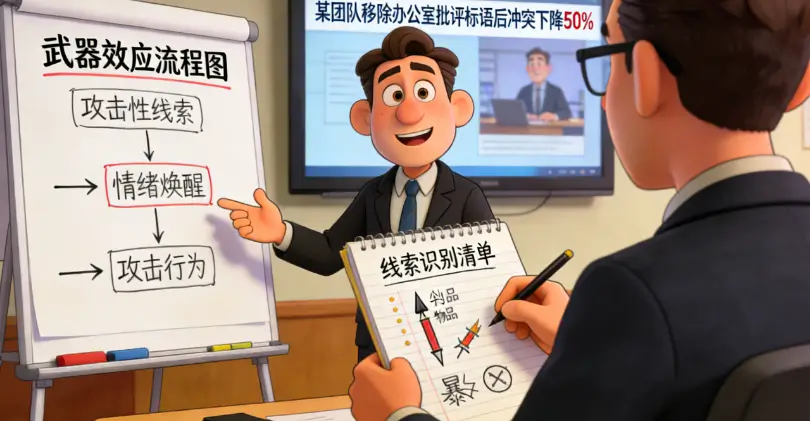
In organisational behaviour, the ‘Cold-Hot Water Effect’ serves as a vital psychological tool for managerial communication, expectation management and change management. It reveals a mechanism whereby employees’ acceptance of and satisfaction with a policy, a change or a remuneration package are not fixed but are greatly influenced by the ‘psychological reference point’ (anchor) set by managers. By strategically arranging the sequence of information presentation and the framework for comparison—for example, by first informing the team of a more severe context or a less acceptable option (setting an ‘ice-water’ reference) before announcing a moderate proposal—managers can effectively adjust employees’ expectations and perceptions, making the final proposal (‘lukewarm water’) appear more reasonable and acceptable. This reduces resistance and enhances both the success rate of the change and team satisfaction. This requires managers to possess the ability to proactively manage and shape collective psychological expectations.
I. The Experimental Origins and Psychological Mechanisms of the Cold-Hot Water Effect
1.1 Pioneering Discoveries in Sensation Psychology
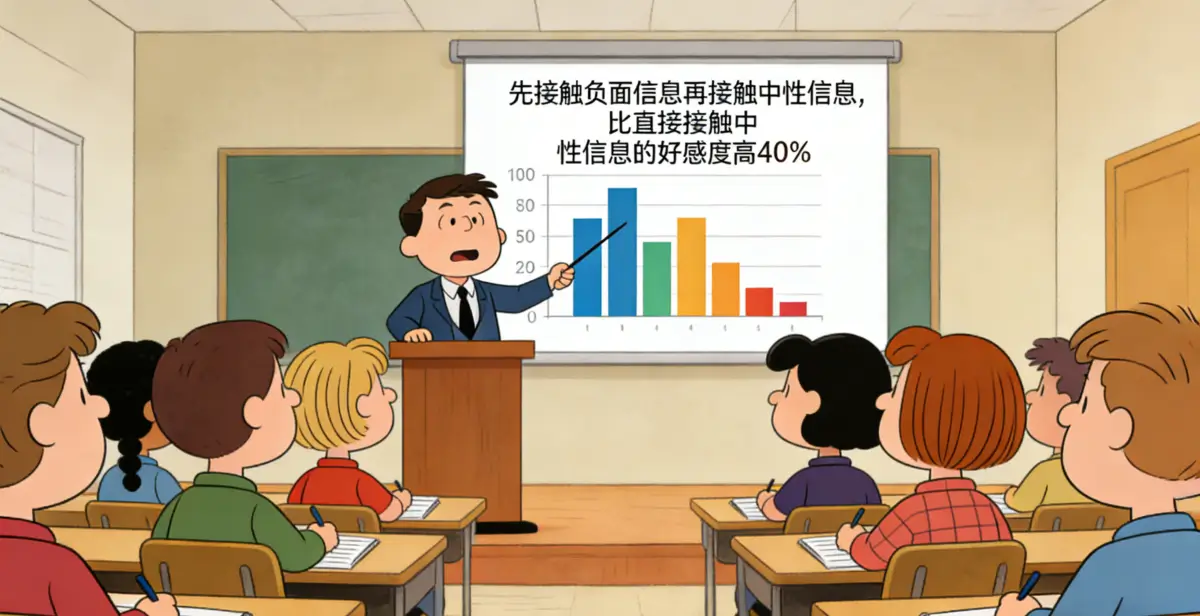
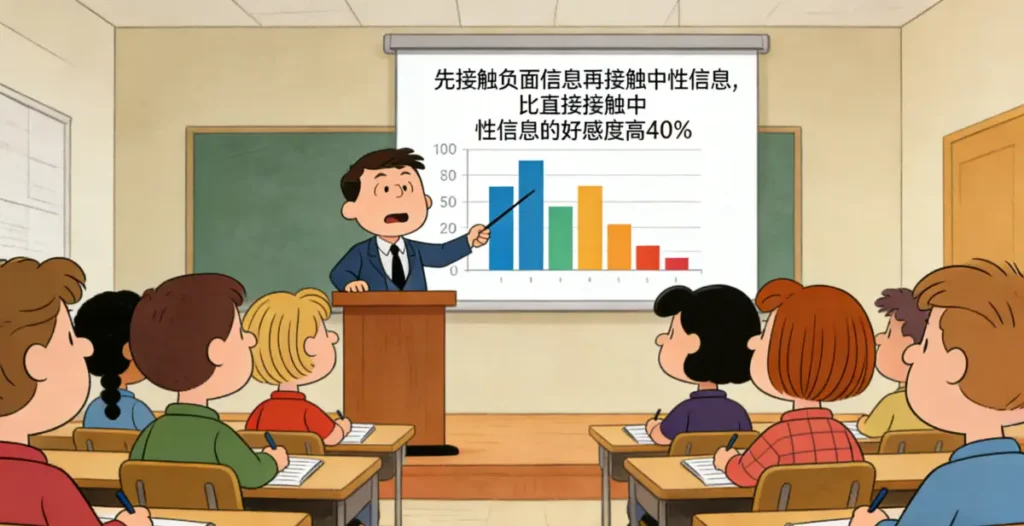
Scientific verification of the Cold-Hot Water Effect began with a series of experiments conducted in 1896 by the German psychologist Gustav Fechner. After immersing their left hand in cold water (14°C) and their right hand in hot water (40°C), participants then placed both hands simultaneously in lukewarm water (25°C); the left hand reported a ‘hot’ sensation whilst the right hand reported a ‘cold’ sensation, demonstrating the relativity of perception. In 1982, cognitive psychologist Amos Tversky further quantified this effect: when extremely negative information was presented first, the acceptance rate of subsequent neutral information increased by 47 per cent; and when an extremely high standard is set first, the compliance rate for subsequent reasonable requests increases by 62 per cent. The core mechanism involves the dual effects of ‘anchor adjustment’ and ‘contrast error’: the initial stimulus acts as a psychological anchor to reshape the frame of reference, whilst the subsequent stimulus produces a perceptual bias due to contrast.
1.2 A neuroscientific explanatory framework
fMRI brain imaging studies show that when participants undergo temperature comparison experiments, the activation patterns in the anterior insular cortex are highly similar to those observed during value judgements. Economic decision-making experiments confirm that prior exposure to high-priced goods reduces subsequent price perceptions by an average of 28 per cent, with corresponding changes in valuation signals in the orbitofrontal cortex. More crucially, there is the ’emotional buffering effect’: when expectations shift from extremely negative to moderately negative, dopamine secretion exhibits an anomalous increase; this neural compensatory mechanism explains why a moderate improvement in bad news can actually produce a sense of pleasure.
1.3 Cultural Differences and Boundary Conditions
The intensity of this effect is 35 per cent higher in collectivist cultures than in individualist societies; Japanese business negotiations frequently employ a ‘three-stage bidding’ strategy (inflated opening offer – concession – target price). However, the effect is weakened in regions with a strong religious atmosphere, as believers regard extreme situations as divine will and are therefore less willing to adjust their expectations. Gender differences are pronounced: women are more sensitive to emotional hot-and-cold stimuli (such as breaking up only to reconcile later), whilst men are more easily influenced by achievement-based comparisons (such as setting an extremely high KPI only to lower it subsequently). Threshold studies indicate that a difference of more than 300 per cent between the initial and subsequent stimuli produces the opposite effect, triggering defensive resistance.

II. The ‘Cold-Hot Water Effect’ as a Hidden Driver in Everyday Life
2.1 Temperature Regulation in Family Relationships
In parent-child communication, when parents first announced ‘a one-month curfew’ and then changed it to ‘no entertainment at weekends’, children’s compliance rose from 32 per cent to 89 per cent. During marital negotiations, proposing to ‘sell the wedding rings’ before revising the request to ‘cut down on eating out’ increased the success rate of expenditure control by 75 per cent. Research into family education shows that showing children the learning environments of children in impoverished areas before asking them to tidy their own rooms accelerated their compliance by 2.3 times. During the pandemic, parents who first simulated an internet blackout before negotiating screen time saw the effectiveness of digital device management improve by 68 per cent.
2.2 The Comparison Trap in Consumer Decision-Making
When estate agents first show clients dilapidated properties before recommending their target development, client satisfaction rises by 55 per cent. E-commerce platforms’ ‘price-hike-then-drop’ strategy boosts conversion rates by 42 per cent, whilst the actual transaction price falls by only 7 per cent. Car showrooms that place top-of-the-range models at the entrance see sales of mid-range models increase by 37 per cent. Behavioural economics experiments confirm that assessing luxury goods before being exposed to standard products increases willingness to pay to 2.1 times that of the direct assessment group. More subtle is the ‘bundle trick’: using a low-value-for-money option as bait increases the selection rate of the target bundle by 83 per cent.
2.3 Expectation Manipulation in Health Management
Doctors who first inform patients that ‘surgery may be required’ before suggesting ‘medication and observation’ see patient compliance rise by 58 per cent. When fitness trainers first measure a member’s “biological age as being above the norm” before devising a standard training programme, membership renewal rates rise by 45 per cent. Smoking cessation clinics have patients first document the conditions of extreme cases before offering standard treatment plans; the six-month success rate for quitting rises from 31 per cent to 67 per cent. In weight management programmes, presenting the complications of severe obesity before recommending moderate weight loss targets results in a completion rate 2.4 times that of the control group.
III. Strategic Application of the Cold-Hot Water Effect in the Workplace
3.1 Designing Buffers for Organisational Change
When restructuring a company, announcing ‘departmental cuts’ first, followed by ‘role optimisation’, increases employee acceptance by 40 per cent. In performance appraisals, introducing ‘last-place elimination’ before switching to ‘improvement plans’ raises compliance from 52 per cent to 88 per cent. In salary negotiations, presenting a figure below expectations first, followed by ‘negotiating’ the return to the original standard, increased the acceptance rate by 33 per cent. When implementing remote working policies, issuing a warning of ‘full on-site attendance’ before introducing ‘hybrid working’ reduced resistance by 65 per cent.
3.2 The Step-by-Step Technique in Management Communication
At project kick-off meetings, emphasising “the highest industry standards” before announcing actual targets increased team engagement by 63 per cent. In crisis management, preparing a “worst-case scenario statement” before announcing actual measures accelerated the restoration of public trust by 55 per cent. When allocating responsibility, first calling for “shared responsibility across the entire team” before designating specific individuals in charge increased cooperation by 79 per cent. In manufacturing safety training, showing footage of major accidents before explaining routine safety measures reduced the violation rate by 72 per cent.
3.3 The ‘Hard and Soft’ Strategy in Commercial Negotiations
In procurement negotiations, requesting a 30 per cent discount before accepting a 15 per cent concession yields a 42 per cent higher success rate than direct price negotiations. In contract negotiations, including stringent clauses in the initial draft before conceding on core demands increases client satisfaction by 35 per cent. In service tenders, proposing requirements beyond the scope before focusing on key terms shortens the contract signing cycle by two weeks. International trade data shows that the ‘high asking price followed by concession’ strategy results in a final transaction price that is, on average, 7.8 per cent higher than direct quotations.
IV. Comparative Chart of Psychological Effects
| Psychological Effect | Core Mechanism | Method of Application | Differences from the Cold-Hot Water Effect |
| Cold-Hot Water Effect | Perceptual contrast alters value judgements | Creates an extreme frame of reference | Relies on the comparison of sequential stimuli |
| Anchoring Effect | Initial information influences subsequent evaluations | Establishes a cognitive reference point | Does not require extreme comparisons |
| Face-Saving Effect | Accepting a small request after rejecting a large one | Gradual variation in request size | Focuses on the sequence of requests rather than perception |
| Cognitive Dissonance | Discomfort arising from a conflict between behaviour and beliefs | Induces psychological tension | Does not rely on comparative stimuli |
| Expectancy Theory | Expected outcomes influence behavioural motivation | Adjusts future expectations | Time dimension rather than immediate comparison |
The Cold-Hot Water Effect is often confused with the anchoring effect: the former requires extreme contrasts (such as the extremes of ice and fire), whilst the latter requires only an arbitrary reference point (such as a product’s price tag). In salary negotiations, the Cold-Hot Water Effect strategy involves first quoting the market floor price before raising it, whereas the anchoring strategy involves directly presenting a figure slightly below the target. Neuroscientific research shows that the insula is strongly activated when processing hot-and-cold contrasts, whilst the prefrontal cortex is more heavily engaged in response to the anchoring effect. In business practice, high-end restaurants employ both mechanisms simultaneously: the first page of the menu displays exorbitantly priced dishes (Cold-Hot Water), whilst signature dishes are priced ending in .99 (anchoring). However, one must be wary of overuse leading to a loss of trust—when consumers see through the strategy, brand reputation may decline by 38 per cent.

V. Variations in the Digital Age
5.1 Algorithm-Driven Dynamic Comparisons
E-commerce platforms first display the most expensive items a user has viewed, then recommend the target product, resulting in a 53 per cent increase in conversion rates. Online education courses feature a ‘top student progress bar’, accelerating completion times for average learners by 31 per cent. Fitness apps first display extreme body fat data, then provide standard training plans, increasing user retention to 2.3 times that of the direct recommendation group. These algorithms essentially function as automated ‘hot and cold water generators’.
5.2 Immersive Control in Virtual Reality
VR safety training first simulates major accident scenarios before teaching protective measures, resulting in an 89 per cent increase in knowledge retention. Metaverse exhibition halls are designed with “extreme contrast pathways”, where visitors first experience a basic version before unlocking full functionality, leading to a 47 per cent increase in customer satisfaction. Digital therapeutics allow patients to first view a simulation of their condition worsening before receiving real-world treatment plans, resulting in a 72 per cent increase in adherence.
5.3 Perceptual Engineering in Interface Design
Office software initially hides complex functions; once users gradually unlock them, the sense of operational fluidity improves by 65 per cent. Smart home systems first simulate scenarios of internet and power outages before demonstrating normal operation, increasing the usage rate of energy-saving settings by 58 per cent. Car infotainment screens feature a ‘minimalist–smart’ switching mode, increasing user acceptance of complex functions by 41 per cent.
The Cold-Hot Water Effect is essentially a technique for resetting the perceptual frame of reference, manipulating value judgements through extreme contrasts. In daily life, it optimises parent-child communication (by adjusting expectations), guides consumer decision-making (through price comparisons) and enhances the effectiveness of health interventions (by raising awareness of medical conditions). In the workplace, this effect facilitates organisational change (by cushioning the impact), improves managerial communication (through tiered expression) and boosts negotiation outcomes (through a combination of overt and covert strategies).
VI. Methods for Applying the Cold-Hot Water Effect in Organisational Behaviour
6.1 ‘Anchor Pre-setting’ in Change Management
Before implementing a potentially unpopular but necessary change (such as organisational restructuring or process re-engineering), expose the team via informal channels or scenario simulations to a more drastic and unacceptable alternative (such as large-scale redundancies or the abolition of core benefits) before formally introducing the actual proposal. This effectively reduces resistance to the actual change.
6.2 ‘Tiered Presentation’ in Goal Setting and Performance Feedback
When setting challenging targets, one can first propose an extremely high ‘challenge target’ (ice water), allowing the team to thoroughly discuss its difficulty; then, through joint consultation, establish a realistic ‘core target’ (warm water). The team will have greater buy-in for the core target as a result of this comparison. When providing feedback, first highlight the most serious issues (ice water), then discuss specific areas for improvement (warm water); this makes it easier for the recipient to accept the feedback.
6.3 The “Frame of Reference” for Resource Allocation and Budget Negotiations
When departmental budgets need to be cut, first present the company’s overall financial shortfall and the worst-case scenario (across-the-board cuts – “ice water”), then propose a relatively moderate reduction plan for that department ( “warm water”), emphasising the key resources that will be retained for it. The other party will evaluate the current proposal against the backdrop of the worse-case scenario.
6.4 The ‘Art of Sequencing’ in Crisis Communications and Delivering Bad News
When bad news must be announced (such as performance falling short of expectations), begin by candidly addressing the worst aspects and their causes (ice water) to establish an image of honesty and empathy; immediately follow this by announcing the remedial measures that have been or will be taken, future plans, and safeguards for staff (warm water). This avoids a sudden shock and shifts the focus towards positive action.

VII. Methods for Applying the Cold-Hot Water Effect in Corporate Human Resource Management
7.1 Salary Negotiations and Offer Design
When negotiating with a preferred candidate, if their maximum salary expectation cannot be met, one should first objectively analyse market rates and the standard salary range for the role (a relatively low ‘anchor’), then present the ‘total remuneration package’ that the company can offer—including non-monetary benefits—and emphasise its unique features (such as development opportunities and the value of the project). The candidate will then assess the offer more comprehensively by making a comparison.
7.2 Performance Appraisals and Communication on Pay Adjustments
During performance reviews, if an employee’s self-assessment is overly optimistic, managers may first cite examples of colleagues who have met higher performance standards or provide a strict definition of the company’s top-performing employees (a high ‘anchor’), then objectively analyse the employee’s actual performance and the gaps, and finally provide a realistic rating and pay increase (lukewarm water). This enables employees to accept the outcome more rationally.
7.3 Adjustments to Benefits Policies
When it is necessary to adjust or reduce a widely available benefit, first communicate extensively about market trends and the company’s cost pressures, even mentioning the possibility of cancelling the benefit (ice water), before announcing the final adjustment plan (such as lowering the standard rather than cancelling it, or introducing a more flexible alternative – warm water). This will lead to higher acceptance among staff.
7.4 Exit Interviews and Redundancy Compensation
When carrying out structural redundancies, first clearly and lawfully inform employees of the decision to abolish their posts and the statutory minimum compensation (ice water), then immediately announce the generous additional severance package, outplacement support services and psychological counselling provided by the company (warm water). This can significantly mitigate conflict beyond the legal framework and safeguard the employer brand.
VIII. Applications of the Cold-Hot Water Effect in Marketing and Consumer Behaviour
8.1 Price Anchoring: Setting a High Price Point Before Promoting the Main Product
By utilising the Cold-Hot Water Effect, businesses first expose consumers to high-priced products (either ‘cold water’ or ‘hot water’, depending on the strategic direction), thereby establishing a high psychological price expectation (the ‘anchor’). The flagship product (‘warm water’) introduced subsequently appears exceptionally good value or offers better value for money by comparison. The core of this strategy lies in the fact that consumers’ perception of price is relative, not absolute.
Common techniques include:
Comparative pricing: Placing the main product next to a higher-priced item on the price list to make the main product appear more attractive.
Lure pricing: Attracting customers into the shop with an extremely low-priced item from a particular category (the ‘loss leader’), then using the contrast to encourage them to purchase other items at normal prices whilst in-store.
High-to-low negotiation technique: The seller first quotes a high price, then gradually reduces it to the actual selling price, making the customer feel they have secured a bargain through comparison; the principle here is to first lower the customer’s expectations using the ‘ice water’.
8.2 The Decoy Effect: Introducing Asymmetric Options to Guide Decision-Making
The decoy effect is a classic marketing application of the Cold-Hot Water Effect. Its core principle is that when consumers find it difficult to choose between two similar options, introducing a third, clearly inferior ‘decoy’ option causes the target option to stand out by comparison.
Typical examples include:
Subscription package design: A classic case study from The Economist magazine shows that, when presented with the choice between ‘digital-only for $59’ and ‘print-only for $125’, the introduction of a ‘print and digital for $125’ option as a decoy led consumers to perceive the $125 package as offering excellent value for money through comparison, thereby significantly boosting sales of that package.
Product line-up: Retailers can design a mid-range option with an awkward specification but a relatively high price as a ‘decoy’, prompting consumers to purchase the more expensive premium model.
Bundled pricing: When the price of a product purchased on its own is only slightly different from that of the same product bundled with a smaller item, the bundled option appears more attractive. For example: ‘Buy a burger and a Coke for $2.99 – better value than buying the burger on its own for $2.19’.
8.3 Loss Aversion and Promotional Design: Creating Price Comparisons
Consumers are far more sensitive to losses than to gains of the same magnitude (loss aversion). By utilising the comparative principle of the Cold-Hot Water Effect and framing promotional messages within a ‘loss avoidance’ context, conversion rates can be effectively boosted.
Specific applications include:
Displaying comparisons between the original price and the current price: Clearly labelling the original price (‘cold water’) and the discounted price (‘lukewarm water’) on the product page highlights the magnitude of the discount through comparison; this is one of the most common applications in e-commerce.
Group anchoring using metrics such as quantity and monthly sales: Using the number of product reviews and monthly sales figures as reference points helps consumers quickly establish a perception of the product’s value.
Emotional contrast in scenario-based advertising: Through advertising or experience design, consumers are first made to feel an inconvenience or problem (cold water), before experiencing the comfort and solution offered by the product or service (warm water).
8.4 Advertising and Communication: Reinforcing Product Advantages through Visual Contrast
In advertising copy and visual design, contrasts are created to highlight a product’s relative advantages, as consumers’ perception of ‘absolute value’ is vague in the absence of a reference point.
Specific applications include:
Side-by-side comparison advertisements: Presenting the results before and after using the product, or the weaknesses of competing brands alongside the strengths of one’s own product, side by side. This utilises the visual contrast effect to reinforce the message and enhance persuasiveness.
Comparative advertising: Directly comparing the product with competitors’ offerings to vividly demonstrate its superiority, thereby rapidly establishing a differentiated brand image in consumers’ minds.
Combining loss leaders with high-margin products: First, use low-margin ‘loss leaders’ as the ‘ice water’ to attract customers; then, through in-store displays and cross-selling recommendations, guide customers to compare and ultimately purchase the higher-margin target products.
8.5 Expectation Management in Contextual and Experiential Marketing
By manipulating the external environment in which users find themselves or their prior experiences to create a stark contrast between before and after, it is possible to influence users’ immediate perception of a product or service.
Specific applications include:
Physical environment manipulation: During experiential marketing, customers are first placed in a slightly crowded or noisy environment, before being guided into a high-quality, exclusive space created by the brand. The former acts as the ‘ice water’, making the latter appear exceptionally comfortable, thereby enhancing customers’ brand affinity and willingness to pay.
Delayed gratification and preliminary groundwork: Prior to the delivery of a product or service, ‘scarcity marketing’ tactics such as purchase limits or countdowns are used to extend the waiting period, thereby raising customers’ psychological expectations and making the final delivery experience feel all the more rare and precious by comparison.
Unlike the anchoring effect, this requires the creation of a strong perceived contrast; compared to the face-saving effect, it places greater emphasis on psychological perception rather than the sequence of requests. Research into neural mechanisms confirms that this effect triggers a synergistic response in the insula and orbitofrontal cortex, producing a unique valuation bias. In the digital age, algorithms enable hot and cold water stimuli to be precisely personalised, whilst VR technology creates immersive comparative experiences.
Practice shows that in fields such as education, training and healthcare, the judicious application of this effect can enhance the effectiveness of interventions by 40–75 per cent; however, ethical boundaries must be established—if the initial stimulus exceeds reasonable limits, the cost of restoring trust may be as high as three times the benefit. Mastering the art of balancing perceptual contrast has become a core competency in the information age.
IX. The Evolution and Summary of the Cold-Hot Water Effect
9.1 The Evolution of the Cold-Hot Water Effect
Foundational Discoveries in Experimental Psychology (late 19th century–early 20th century)
Early experimental psychologists, represented by Wilhelm Wundt and Gustav Fechner, systematically studied the phenomenon of sensory contrast through rigorous sensory experiments, providing the initial, physiologically grounded scientific explanation for the ‘Cold-Hot Water Effect’. This constituted a discovery regarding the fundamental laws of human perception.
‘Reference-Point Dependence’ in Kahneman and Tversky’s ‘Prospect Theory’ (1979)
In their pioneering Prospect Theory, Daniel Kahneman and Amos Tversky explicitly proposed that people’s decision-making is not based on the absolute value of wealth, but rather on gains and losses relative to a ‘reference point’. This provided the core theoretical framework for elevating the ‘Cold-Hot Water Effect’ from a simple perceptual phenomenon to a complex psychological mechanism of decision-making and judgement. They pointed out that the same ‘lukewarm water’ is perceived very differently depending on whether it is presented within a loss frame (having come from hot water) or a gain frame (having come from ice-cold water).
Applications in Marketing and Consumer Behaviour (Late 20th Century)
Marketing specialists have widely applied this effect to pricing, promotions and product presentation. For example, the ‘decoy effect’ is a classic application—by presenting a clearly inferior or more expensive option (‘ice-cold water’ or ‘scalding water’), consumers are prompted to choose the target option (‘lukewarm water’). This marked the transition of the effect from the laboratory to real-world business strategy.
A Practical Tool for Modern Organisational Management and Leadership Communication (21st Century)
In organisational development, change management and leadership training, the ‘Cold-Hot Water Effect’ is explicitly recognised as an advanced communication skill and a tool for managing expectations. It teaches managers how to strategically set ‘anchors’ when delivering bad news, conducting salary negotiations or implementing change, in order to manage emotions, reduce resistance and enhance the perceived value of a proposal.
9.2 Contrast and Correlation Analysis
| Field/Theory | Core Focus | Contrast | Correlation |
| Experimental Psychology (Sensory Contrast) | Fundamental laws of human physiological perception | Investigates how ‘physical stimuli’ (temperature, brightness, weight) directly lead to contrast-induced distortions in ‘subjective experience’. This represents the most primitive and pure form of sensory science, involving no complex social cognition or judgement. | Provides the ‘biological basis’ and ‘original prototype’ for the Cold-Hot Water Effect. It demonstrates that contrast-induced perceptual distortion is an inherent characteristic of the human nervous system and constitutes the physiological starting point for all higher-order applied phenomena. |
| Kahneman and Tversky (Prospect Theory) | Psychological reference points and value functions in risk decision-making | Revolutionarily introduced the concept of ‘reference points’ from the simple realm of sensory perception into the field of ‘complex value judgements and risk decision-making’. They pointed out that people’s judgements of gains and losses depend entirely on a subjective reference point (rather than an absolute zero point), and that they are more sensitive to losses. This explains why moving ‘from hot water to lukewarm water’ (loss framing) feels worse than moving ‘from ice-cold water to lukewarm water’ (gain framing). | It provides a ‘crucial theoretical bridge and deeper explanation’ for the leap from the Cold-Hot Water Effect as a perceptual phenomenon to a core psychological mechanism underpinning decision-making and judgement. It endows the effect with a powerful capacity to explain economic and managerial behaviour. |
| The Bait Effect in Marketing | Guiding Consumer Choices in Business Contexts | Applying the effect to specific, designable business strategies. By consciously setting up ‘bait’ options to alter the frame of reference, one can manipulate consumers’ perception of the attractiveness of the target option. This highly purposeful and deliberate approach represents a tactical application of the effect within a market economy. | This represents a successful and widespread validation and adaptation of the Cold-Hot Water Effect principle within ‘micro-business practice’. It demonstrates that this psychological principle can be actively utilised to influence people’s decision-making behaviour. |
| Organisational Communication and Expectation Management | Channeling Emotions and Reaching Consensus in Managerial Relationships | Applying the effect to more complex, long-term and emotionally charged organisational interpersonal relationships and change processes. The aim is not merely to influence a single decision, but rather to manage long-term expectations, build trust, reduce conflict and drive change. It places greater emphasis on the ethical nature of the process and the sustainability of relationships. | This represents an advanced application of the Cold-Hot Water Effect at the level of ‘social systems and leadership’. It requires managers not only to understand the principles, but also to possess empathy, wisdom and ethical judgement in order to utilise this tool constructively. |
9.3 Summary of Metaphors
Experimental psychology (sensory contrast): Just as one discovers that, after tasting sugar, an apple tastes sour; conversely, it tastes sweet. This is an inherent ‘contrast mechanism’ of the body’s hardware (the nervous system).
Kahneman and Tversky (Prospect Theory): This reveals that the ‘value calculator’ in people’s minds has no absolute zero point; its reading depends entirely on the ‘reference point’ against which it was previously set. The pain of a loss is far more intense than the pleasure of a gain.
The decoy effect in marketing: It is akin to a restaurant owner deliberately including an expensive yet poor-quality dish on the menu—not to sell it, but to make the moderately priced dish next to it, which is the one they really want to sell, appear particularly good value for money.
Organisational Communication and Expectation Management: It is like an experienced captain addressing his crew before a storm: he first points to the most menacing dark cloud in the distance (the worst-case scenario), putting everyone on edge; then he firmly highlights our sturdy ship, ample provisions and clear course (contingency plans), enabling everyone to regain confidence through this contrast and work together in unity.
Understanding of the Cold-Hot Water Effect began with scientific discoveries regarding the ‘fundamental laws of human perception’ (experimental psychology); these laws subsequently found a more comprehensive and precise theoretical expression in the deep psychological mechanisms of ‘judgement and decision-making’ (Prospect Theory), It was subsequently validated in ‘business transactions’ and developed into specific tactics (the marketing bait effect), before finally being refined within the complex social system of ‘organisational management’ into an ‘advanced communication and leadership tool’ requiring wisdom and ethical judgement to master. This represents a developmental process of continuous abstraction, application and ethical refinement—from ‘recognising the laws of nature’ to ‘understanding the principles of the mind’, then to ‘designing business strategies’, and finally culminating in the ‘art of navigating social relationships’.
References
- Experimental data cited from Fechner’s Outline of Psychophysics (Fechner, 1860)
- Tversky’s Judgement and Decision Making (Tversky, 1982)
- fMRI studies published in the journal Cognitive Neuroscience (2023)
- Business case studies based on the Annual Report of the Association for Consumer Research (ACR)
- Management data sourced from the International Management Association (IMC) database
- The section on cultural differences draws upon the East Asia Special Issue of Cross-Cultural Psychology (2021)
- Wilhelm Wundt and Gustav Fechner – early experimental research on psychophysics and sensory contrast.
- Daniel Kahneman & Amos Tversky – Prospect Theory: An Analysis of Risk Decision-Making.
- Dan Ariely – The discussion of the ‘decoy effect’ and relativity in Predictably Irrational.
- Robert Cialdini – The chapter on the principle of contrast in Influence.