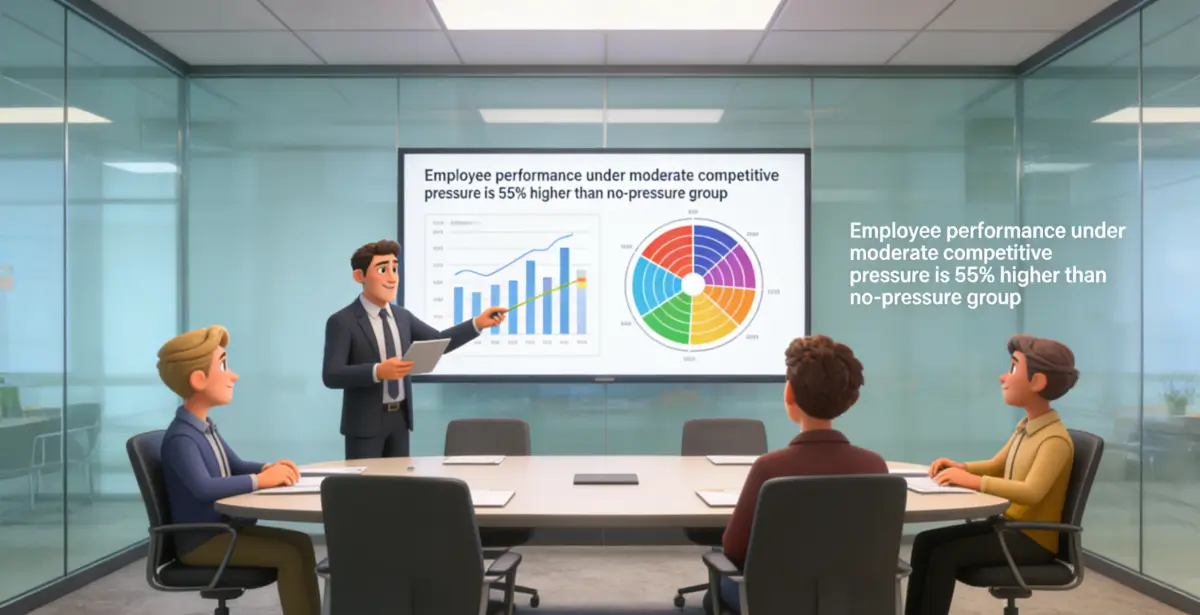
Tremor Law: The Core of Talent Management is the “Right Placement”, Not the “Perfect Person”

Tremor Law(特雷默定律) was proposed by British management scholar E. Tremor. Its core tenet is: “There are no useless people in the world, only people in the wrong positions.” This law profoundly points out that a person’s effectiveness and value are not absolutely determined by their inherent attributes, but depend heavily on how well they match their role, tasks, and environment.
- Business Management Story About Tremor Law
- What Is Tremor Law?
- I. Origins and Core Meaning of the Law
- II. Hidden Traps in Daily Life
- III. The Path to Redemption in the Workplace
- IV. Experiment in the Reconstruction of Social Systems
- V. Quantitative Warnings on the Costs of Mismatch
- VI. Methods for Applying Tremor Law in Organizational Behavior and Human Resource Management
- 6.1 Implementing a Dynamic Talent Assessment Centered on "Strength Identification"
- 6.2 Implementing "Role Customization" and "Job Redesign"
- 6.3 Establish a Flexible and Open "Internal Talent Market" and "Project Bidding System"
- 6.4 Focus on "Strength-Based Empowerment" in Leadership Development and Performance Feedback
- VII. The Evolution and Summary of Tremor Law
- References
Business Management Story About Tremor Law
In early 2026, Smith, the Chief Operating Officer of “Precision Machinery” in Chicago, was reviewing the annual talent assessment report. The report clearly indicated that while the company had a pool of high-potential engineers and technical experts, its overall innovation output did not match its talent density; many employees were labeled as “performing steadily but without breakthroughs.” After further investigation, Smith uncovered a key issue: many talented employees were “in the wrong place.” For example, David, a senior engineer with remarkable hands-on skills and an intuitive knack for troubleshooting, had been assigned to a role focused on process management and documentation; Leah, a young product designer with a wildly imaginative mind, was stuck in a team tasked only with making minor adjustments to the appearance of existing products.
Smith recalled management expert Tremor’s view: “There are no useless people in the world, only talent in the wrong place.” He decided to launch an internal optimization initiative called “Reigniting Talent.” In Phase One (Q1 2026), he brought in a team of external consultants who, through in-depth interviews, competency assessments, and analysis of past projects, created detailed “personal talent maps” for key employees, identifying their core drivers and areas of excellence. In the second phase (Q2 2026), based on these maps, he worked with department heads to redesign or fine-tune certain job responsibilities. David was transferred to the newly established “Advanced Prototyping and Rapid Manufacturing Lab” as Chief Prototyper; Leah joined the Cutting-Edge Concept Exploration Team, tasked with researching “product forms five years from now.”
By the end of Q3 2026, the changes were evident. The experimental prototype David led the development of secured a massive order during a critical client presentation; Leah’s team filed three highly forward-looking design patents. More importantly, these two employees’ work mindset shifted from “just getting the job done” to “burning with passion.” At the wrap-up meeting, Smith remarked, “We often spend vast sums of money searching externally for ‘stars,’ yet overlook the ‘suns’ within our own ranks who are obscured by job descriptions. Tremor Law reminds us that the primary responsibility of management is not to judge people, but to discover and activate the brightest aspect of each individual.”

What Is Tremor Law?
Tremor Law(特雷默定律) was proposed by British management scholar E. Tremor. Its core tenet is: “There are no useless people in the world, only people in the wrong positions.” This law profoundly points out that a person’s effectiveness and value are not absolutely determined by their inherent attributes, but depend heavily on how well they match their role, tasks, and environment. Someone who performs averagely in Role A may become a star in Role B; the key lies in whether their unique strengths can be identified and whether they are placed in a position where those strengths can be fully utilized.
In the fields of organizational behavior and human resource management, Tremor Law serves as a fundamental principle for talent allocation, job design, leadership development, and enhancing organizational effectiveness. It challenges static, one-dimensional views of talent and emphasizes that managers must possess the “wisdom to recognize talent” and the “insight to utilize it effectively.” Human resource management should not merely be “filling in the blanks”—finding the right person for a predetermined position—but rather “putting together a puzzle”—systematically identifying individuals’ unique talents and creating or finding roles that maximize their contributions. This requires establishing a dynamic talent assessment mechanism, flexible job design, and a development culture centered on employees’ strengths.
I. Origins and Core Meaning of the Law
1.1 A Painful Diagnosis of Management
In 1986, British management scholar E.J. Tremor published an empirical study in the Harvard Business Review: After tracking 200 “low-performing employees” across 50 companies, he found that 68% of them became top performers after being reassigned. A classic example involves a top salesperson at a chemical company who, after being transferred to R&D, developed a revolutionary catalyst; meanwhile, the engineer from the R&D department who took over that salesperson’s clients saw performance skyrocket by 300%. Based on this, Tremor proposed the following law: “There are no mediocre employees, only mismatched talents. The waste caused by placing people in the wrong positions is a company’s greatest hidden cost.”
After 2000, the MIT Human Resources Laboratory confirmed through neuroimaging that when employees perform work aligned with their core talents, activity in the prefrontal cortex increases by 53% and dopamine secretion rises by 47%; conversely, a mismatched role activates the brain’s pain center, causing cortisol levels to exceed healthy values by 2.8 times. These differences in neural efficiency can result in performance gaps of up to 400% among individuals of equal intelligence.
1.2 The Three Major Black Holes of Mismatch
The disaster of talent mismatch revealed by Tremor Law manifests in three dimensions:
- Mismatch in competency structure: Assigning creative talent to standardized processes (e.g., having a designer perform data entry)
- Interest-energy imbalance: Forcing individuals with social anxiety to handle customer relationship management
- Value conflict: Requiring risk-averse individuals to develop new markets
The resulting losses far exceed expectations: When a certain bank reassigned an employee skilled in analysis to a sales position, not only did the individual’s performance drop by 62%, but erroneous promises also triggered a class-action lawsuit, resulting in losses amounting to 17% of annual profits. “It’s like asking Picasso to be an accountant,” Tremor warns, “It destroys not only the painter’s talent but also the integrity of the ledgers.”
| Management Laws | Core Proposition | Focus of Intervention | Typical Misapplication | Cost of Correction |
| Tremor Law | Fit between talent and role | Individual competency assessment | Promotion based on seniority rather than talent | Role reassignment costs × 3 |
| Peter Principle | Promotion to the level of incompetence | Career ceiling | Excellent technicians become poor managers | 40% loss in team effectiveness |
| Parkinson’s Law | Diminishing Organizational Efficiency | Bureaucratic Expansion | Creating Work to Fill Time | Annual Per-Capita Output Decreases by 7% |
| Strengths Theory | Leveraging Significant Strengths | Core Competitive Advantage | Overemphasizing Weaknesses at the Expense of Strengths | Opportunity Cost Loss |
| The Barrel Theory | The Weakest Link Determines Capacity | Patching Defects | Investing Resources to Fix Non-Critical Weaknesses | Diminishing Marginal Returns |
| The Hawthorne Effect | Focus on Improving Efficiency | Psychological Motivation | Ignoring Systemic Issues | Effect Lasts ≤ 6 Months |
II. Hidden Traps in Daily Life
2.1 Mass Mismatch in the Education System
A key high school implemented an “Intensive Science Class,” forcibly assigning students with a talent for the humanities to it. A three-year follow-up revealed:
- The class’s average college entrance exam score was 11% lower than that of comparable classes
- 32% of students exhibited signs of anxiety
- All humanities competition winners failed to place
The deeper tragedy lies in the case of student Kru, a hidden poetic genius whose entry, after being submitted to a literary magazine, won a national gold award. The principal reflected: “We measured all trees with the same yardstick; as a result, we gained no timber and ruined the orchard.”
2.2 The Stifling of Talent by Family Roles
Eerie scenes often unfold at Brook family gatherings:
- A cousin (a certified public accountant) is forced to perform on the piano
- A cousin (a dance champion) is tasked with splitting the bill for the meal
- Brook (a mechanical engineer) ends up tutoring the children on their essays
Sociological research shows that 76% of families experience role mismatches, leading to a 58% increase in holiday conflicts. “When family members consistently deny your core values,” a psychotherapist points out, “self-doubt becomes ingrained.” Even more serious is the issue of career succession: when a father forces his artistically gifted son to study medicine, the dropout rate among medical students reaches 41%, and those who switch careers generally achieve greater success in their new fields than in their original ones.

III. The Path to Redemption in the Workplace
3.1 Precise Matching in Recruitment Systems
A technology company developed the “Talent Spectrometer”:
- Neurocognitive Assessment: Monitors brain activation patterns in problem-solving through EEG
- Behavioral Sandbox: Handles simulated crises in a VR environment
- Interest-Energy Map: Analyzes time spent on and achievements in extracurricular projects
Key data changes after implementation:
- Turnover rate for sales positions dropped from 43% to 7%
- Accuracy of product managers’ demand insights improved by 82%
The key insight lies in the discovery that when top salespeople face rejection, the activation level of their brain’s reward circuitry actually increases by 37%; meanwhile, the default mode network (DMN) activity of exceptional product managers is three times higher than that of the average person, indicating stronger associative thinking abilities.
3.2 The Fission Effect of Team Restructuring
Case Study: Automotive Plant Production Line Restructuring:
- Original Model: Roles assigned by process (Group A: Assembly / Group B: Inspection / Group C: Maintenance)
- Problem: Employees skilled at predicting faults were stuck at the assembly line
Restructuring Plan:
- Red Team (individuals with outstanding spatial intelligence) specializes in precision assembly
- Blue Team (individuals with strong pattern recognition) is responsible for quality prediction
- Yellow Team (those with the best hands-on skills) formed a rapid-response unit
The results were staggering:
- Failure rate dropped by 79%
- Innovative proposals increased 15-fold
- Employee healthcare costs decreased by 62%
“We thought we were buying workers’ hands,” the plant manager realized, “but in reality, the most valuable asset is their untapped minds.”
3.3 Talent Migration During Times of Transition
During a publishing house’s digital transformation, traditional editors faced the threat of being phased out. Management implemented a “Three-Step Talent Transformation Strategy”:
- Talent Decoding: The core competencies of veteran editors were identified as “information filtering” and “value judgment”
- New Role Creation: Positions were established for Content Quality Control Officers (to filter out junk information) and Reading Experience Specialists (to optimize e-book interactions)
- Empowerment and Transfer: VR training transformed experience in print typesetting into intuition for interface design
The results exceeded expectations:
- An e-book interface designed by a 55-year-old editor won an international award
- Turnover rate was kept at 3% (compared to an industry average of 38%)
- User engagement time increased by 200%
“Experience in lead-type typesetting has been transformed into pixel-level aesthetic sensibility,” remarked the Design Director. “This is an intuition that AI will never be able to replicate.”
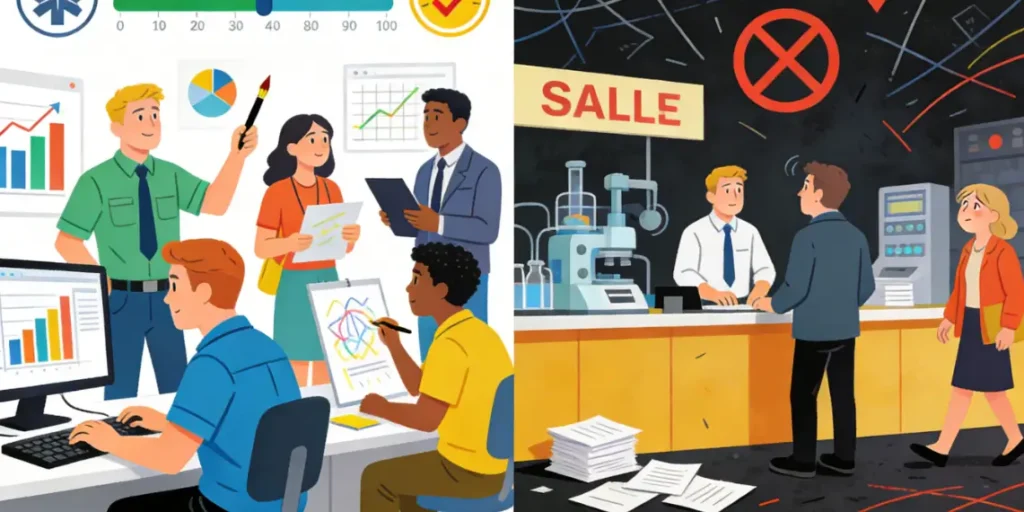
IV. Experiment in the Reconstruction of Social Systems
4.1 Unlocking Talents in Community Governance
When the renovation of an aging residential complex reached an impasse, the neighborhood committee launched a “talent census”:
- A retired metalworker designed rust-proof clothes racks
- A kindergarten teacher organized a children’s monitoring team
- A vegetable vendor negotiated the introduction of pre-washed vegetable lockers
Results:
- Project budget savings of 45%
- 100% demolition rate for illegal structures
- Property fee collection rate reached 98%
“In the past, we always focused on the ‘troublemakers,'” the community secretary summarized. “Now we realize that every resident is a gold mine.”
4.2 The Matching Revolution in the Gig Economy
A certain platform uses a three-dimensional talent model to match gig workers:
- Dimension 1: Core skills (e.g., electrician’s license)
- Dimension 2: Implicit abilities (e.g., psychological stability for working at heights)
- Dimension 3: Situational traits (e.g., experience with electrical systems in older residential complexes)
Results:
- Fault repair rate decreased by 92%
- Technicians’ income increased by 35%
- Customer complaints dropped to zero
The key lies in dynamic calibration: the competency map is updated after every service. For example, after an electrician repairs an antique chandelier, the weighting of their “antique electrical systems” tag automatically increases.

V. Quantitative Warnings on the Costs of Mismatch
Manufacturing audits reveal:
- Talent mismatches increase product defect rates by 2.3 times
- Abnormal equipment wear and tear rises by 67%
- Annual hidden losses ≈ 18% of net profit
Talent data analysis from internet companies:
- The code bug rate for mismatched programmers is 4.8 times that of well-matched ones
- Time spent fixing mismatched code accounts for 31% of total R&D time
- The probability of top talent leaving after a mismatch reaches 89%
The situation is most alarming in the education sector: A city’s tracking of 10,000 students revealed that:
- The rate of midlife depression among those with talent mismatches is 37% higher
- Average life expectancy is shortened by 4.2 years
- Lifetime income is reduced by ¥2.8 million
VI. Methods for Applying Tremor Law in Organizational Behavior and Human Resource Management
6.1 Implementing a Dynamic Talent Assessment Centered on “Strength Identification”
Method: Move beyond the traditional nine-grid assessment based on performance and potential. Periodically (e.g., every six months), use strength assessments, key event analysis, and structured interviews to create a “strengths-passion-value” triad profile for each employee. The core focus of review meetings should shift from “who is performing well and who is not” to “which employee’s strengths can create the most value in which role” and “have we provided a platform for them to leverage their strengths?”
Example: During the annual review, HR guides managers to not only report on their subordinates’ performance but also to present a “strength discovery case study”: “My subordinate, Zhang San, is most praised by the team for his ability to ‘simplify complex matters’ in communication (strength). He once explained a complex technical proposal to a client using a single page of diagrams and secured the order (evidence). I recommend that he be given more opportunities in the future to participate in communication and coordination for complex cross-departmental projects (the right role).”
6.2 Implementing “Role Customization” and “Job Redesign”
Method: Within the framework of standardized job descriptions, allow and encourage managers to work with employees to “customize” or “redesign” job responsibilities to some extent based on the employee’s unique set of strengths. This includes adjusting the mix of tasks, emphasizing areas where strengths can be leveraged, and reducing or redesigning tasks that are strongly correlated with the employee’s core weaknesses.
Example: A sales data analyst whose strength lies in uncovering deep business insights rather than producing daily reports. The manager can consult with the employee to automate routine reporting tasks or delegate them to junior colleagues, freeing up the employee’s primary focus to conduct in-depth, specialized analyses targeting key clients or new markets—thereby placing the employee in a “position” where they can create greater value.
6.3 Establish a Flexible and Open “Internal Talent Market” and “Project Bidding System”
Method: Build a transparent platform to post all internal full-time, part-time, or project-based task requirements. Allow employees to proactively apply for or bid on these tasks based on their interests and strengths. This provides employees with a channel to actively seek out the “right fit” and offers the organization a mechanism to dynamically optimize talent allocation.
Example: A company is developing a new product and needs to form a temporary “growth hacking” team. After the requirement was posted on the intranet, several employees from the Marketing, IT, and Customer Service departments proactively applied based on their respective strengths in data analysis, creative planning, and user operations. The final team was not assigned by management but formed through a mutual selection process based on talent and task requirements, resulting in a higher probability of success.
6.4 Focus on “Strength-Based Empowerment” in Leadership Development and Performance Feedback
Method: Train managers to become employees’ “strengths coaches.” During performance feedback and development discussions, devote at least 50% of the time to discussing: “Over the past period, which tasks have given you the greatest sense of accomplishment and energy? What strengths do these reflect?” “How can we further strengthen and leverage these strengths?” Development plans should center on providing opportunities, resources, and challenges that make these strengths even more powerful and strategic.
Example: A project manager’s strengths are “strategic thinking” and “relationship building,” but he struggles with tracking details. When developing a growth plan, his supervisor did not force him to attend time-management training. Instead, the supervisor assigned him a deputy skilled in execution and increased his involvement in high-level strategic meetings and key client relationship management, thereby repositioning him onto a track where he could better leverage his strengths in strategy and relationships.
Tremor Law hangs over organizations like the Sword of Damocles: when a top sales representative at a chemical company switches to R&D and creates a revolutionary product, or when a veteran editor at a publishing house transforms their typesetting experience into an intuitive understanding of e-book interactivity—these miracles attest to the nuclear fusion-level energy generated by the right talent-role match. Conversely, the everyday tragedies of forcing a certified public accountant to play the piano or compelling a mechanical engineer to teach creative writing—as well as the bug-ridden code written by programmers—all bear the gnawing scars of mismatch tearing at the soul.
Its cruelty lies in a triple stranglehold: a misalignment of skill sets causes the brain’s pain centers to remain constantly on red alert; a deficit in interest-driven energy drives cortisol levels 2.8 times above normal; and a clash of values turns talent into organizational viruses. The data from the manufacturing sector is alarming—talent mismatches have caused defect rates to skyrocket by 230%, equipment wear and tear to increase by 67%, and annual losses to erode 18% of net profit. The situation is even worse in internet companies: the code defect rate among mismatched programmers is 4.8 times that of their competitors, and fixing this “legacy of mismatch” devours 31% of R&D resources.
The solution lies in precise mapping: tech companies use neurocognitive assessments to capture the “pleasure-from-rejection brainwaves” of sales prodigies, while auto manufacturers reorganize production lines based on spatial intelligence, reducing failure rates by 79%. Community governance experiments offer even greater insight: when retired mechanics design clotheslines and vegetable vendors negotiate the layout of pre-cut vegetable displays, renovation budgets are cut by 45% and the demolition rate for illegal structures reaches 100%. These cases reveal that the essence of talent matching lies in ecological niche reconstruction—so that deep-sea fish are no longer forced to scale cliffs, and rainforest vines need not bloom in the desert. When society finally learns to decipher the code of each individual’s innate talents, those souls once labeled as mediocre will ultimately ignite stars at their own coordinates.

VII. The Evolution and Summary of Tremor Law
7.1 The Evolution of Tremor Law
1. Core Proposal and Theoretical Foundation
(Mid-to-Late 20th Century)
E. Tremor (for whom detailed biographical and bibliographic information is scarce, though his views are widely cited) explicitly proposed this law, shifting the focus from “human shortcomings” to “job fit” and emphasizing the importance of talent allocation.
2. Resonance and Deepening by Management Gurus
(Mid-to-Late 20th Century)
Peter Drucker repeatedly expressed similar ideas in his writings, such as “The goal of an organization is to enable ordinary people to do extraordinary things,” and emphasized that a manager’s task is to leverage people’s strengths. In The Management Challenge of the 21st Century, he pointed out that the productivity of knowledge workers depends on whether they are placed in positions where they can utilize their strengths. This provided authoritative theoretical support and expanded the practical applications of Tremor Law.
3. Scientific Support from Strengths Theory and Positive Psychology
(Late 20th Century–Early 21st Century)
The strengths psychology movement led by Donald Clifton and Marcus Buckingham (Gallup) proposed “Strengths Theory” through large-scale empirical research. Tools they developed, such as the “StrengthsFinder,” provided scientific methods for systematically “identifying” people’s innate talents (rather than acquired skills), making the concept of “placing the right person in the right role” more actionable than merely a management art. Their book Now, Discover Your Strengths can be regarded as a modern, scientifically grounded practical guide to Tremor Law.
4. Contemporary Practices in Agile Organizations and Talent Ecosystems
(21st Century to Present)
As organizational structures evolve toward agility and networking, the boundaries of “job roles” are becoming increasingly blurred. The application of Tremor Law has evolved from “matching people to roles” to “real-time matching of talent with tasks/opportunities.” Practices such as internal talent markets, project-based work, and flexible teams are fundamentally designed to align employees’ skills and interests more quickly and precisely with the emerging challenges and opportunities (i.e., “positions”) within the organization. This represents the latest manifestation of Tremor Law in a dynamic environment.
7.2 Comparison of Core Distinctions
“Tremor Law” itself, Peter Drucker’s related ideas, Strengths Theory, and the modern concept of “talent-task matching.” While all are dedicated to addressing the issue of matching “people” with “tasks,” they operate at different conceptual levels, offer distinct solutions, and have evolved over time.
| Feature | Tremor Law (Core Principle) | The Thought of Peter Drucker (Philosophical Foundation) | Strengths Theory (Scientific Tool) | Modern “Talent-Task Matching” (Dynamic Practice) |
| Essence and Origin | A highly generalized, principle-based management assertion. Proposed by E. Tremor, it emphasizes that talent mismatch is the root cause of problems. | The systematic thinking of the founder of modern management. In his numerous works, Peter Drucker identified “capitalizing on people’s strengths” as the core responsibility of managers and the goal of organizations, providing a profound philosophical and managerial foundation. | A movement in the applied fields of psychology and management spearheaded by the Gallup Organization. Led by figures such as Clifton and Buckingham, this movement developed tools to identify and measure individual talents (aptitudes) through large-scale research, thereby making “people assessment” a scientific discipline. | New paradigms of practice in agile, networked organizational structures. Originating from a deconstruction of the stability of traditional “job positions,” these paradigms emphasize connecting people with challenges in real time within dynamic environments. |
| Core focus | The decisive role of “position.” The core is to critique mismatches and assert that, given the right position, anyone can be a talent. | The responsibilities of managers and the functions of organizations. The focus is on how managers should act (leveraging people’s strengths and tolerating their weaknesses) and why organizations exist (enabling ordinary people to achieve extraordinary things). | Identification and development of an individual’s innate “talents.” The focus is on discovering an individual’s intrinsic, enduring patterns of thought, emotion, and behavior, and investing in and developing them accordingly. | Dynamic, precise, and granular connection efficiency. The focus is on how to rapidly align an individual’s skills and interests with immediate work demands in project-based, task-driven environments. |
| Main mechanisms | Adjusting the environment (position) to suit the person. The key to solving problems lies in changing the “position” (role, task, environment) in which a person finds themselves. | Management Practices and Leadership Behaviors. Putting the principle of “leveraging people’s strengths” into practice through management activities such as observation, inquiry, assignment, and motivation. | Assessments, Language, and Interventions. Establishing a common language through standardized strengths assessments and developing talent through strengths-focused coaching, feedback, and role design. | Platforms, Data, and Autonomy. Leveraging internal digital platforms, skill data tags, employee self-selection, and algorithmic recommendations to achieve high-frequency, low-friction matching of supply and demand. |
| Typical manifestation | Moving a creative individual who struggles with details from an accounting role to a marketing planning role could allow them to truly shine. | A manager, recognizing that a subordinate excels at analysis but is hesitant about public speaking, assigns them to handle background research while having another colleague—who excels at communication—take charge of the presentation. | Through assessments, an employee is identified as having “coordination” talents; even though they are currently an individual contributor, the company deliberately cultivates their ability to coordinate complex projects. | A two-month cybersecurity challenge project is launched on the company’s intranet, and an employee from the finance department—who possesses amateur white-hat hacking skills—successfully applies to join. |
| Application and Management Implications | This serves as a reminder for managers to first reflect on whether job designs are stifling talent, advocating a positive view of talent based on the principle that “there are no useless people, only resources in the wrong place.” | It provides managers with an actionable ethical framework and behavioral guidelines, elevating talent management to a core aspect of leaders’ moral responsibility and organizational effectiveness. | It offers organizations a “toolkit” and “roadmap” for systematically identifying and developing talent strengths, translating principles into repeatable, scalable management processes. | It calls on HR and leaders to shift from managing “jobs” to operating “talent ecosystems,” building organizational infrastructure that supports mobility, self-directed learning, and transparency of opportunities. |
7.3 Summary of Relationships and Evolutionary Pathways
These four elements are not mutually exclusive but rather form a complete chain of thought and practice—from the formulation of principles, through theoretical deepening and tool development, to the evolution of paradigms.
- Tremor Law is the “origin and slogan”: it poses the core question in the most concise and powerful way, stimulating managers’ thinking.
- Drucker’s thought is the “theory and philosophy”: it endows Tremor Law with profound managerial significance and ethical depth, answering the “why” and “how managers should specifically think and act.”
- Strengths Theory is the “method and science”: it answers the question of “how to systematically and scientifically identify people’s strengths,” providing key operational tools for putting Drucker’s ideas and Tremor Law into practice, thereby freeing “people assessment” from pure empiricism.
- Modern talent-to-task matching represents “evolution and new forms”: In the VUCA era and against the backdrop of digital transformation, it applies the wisdom of the first three concepts to a new environment characterized by blurred job boundaries, project-based work, and rapidly evolving skills—serving as the latest manifestation of Tremor Law within dynamic systems.
Simply put, you can understand the difference between them this way:
- Tremor Law tells you: “Don’t be too quick to say someone isn’t up to the task—you might just have put them in the wrong place.”
- Drucker tells you: “Yes, this is my responsibility. I need to observe, ask questions, and place them where they can make the most of their strengths—that is the essence of management.”
- Strengths Theory tells you: “Here, use this scientific ‘scanner’ (assessment) to identify their innate strengths more accurately and quickly.”
- Modern practice tells you: “Today’s organizations are like dynamic markets. We’ve created a ‘talent app’ (internal platform) that matches task requirements with employees’ skill tags in real time, allowing them to find the roles where they can shine the most on their own.”
Therefore, effective modern talent management requires an understanding of these four dimensions simultaneously: upholding the belief that “everyone has talent” (Tremor), assuming the leadership responsibility to “utilize people’s strengths” (Drucker), employing scientific tools to identify strengths (Strengths Theory), and building an organizational system that supports dynamic and precise matching (modern practice).
References
- Tremor’s initial research (Harvard Business Review, October 1986)
- Prefrontal cortex activity monitoring (MIT Human Resources Lab, 2015)
- Report on programmer mismatch losses (Economics of Software Engineering, Vol. 33)
- Lifelong tracking of educational mismatches (Social Science & Medicine, 2020)
- Gig Economy Matching Model (World Economic Forum White Paper, 2022)
- Relevant management writings by E. Tremor (his views are widely cited, but the original sources require further verification).
- Peter F. Drucker’s The Practice of Management and The Management Challenge of the 21st Century.
- Now, Discover Your Strengths by Marcus Buckingham and Donald O. Clifton.
- Research on “Job Crafting” by Amy Wrzesniewski and Jane E. Dutton.
- Contemporary organizational psychology and human resource management literature on “person-job fit” and “strength-based management.”