Motivation Multiplication Law: Driving Exceptional Performance with Praise and Recognition

The Motivation Multiplication Law(激励倍增法则) is not a strictly academic law, but rather a core principle that has been widely disseminated and validated in management practice and leadership development. Its central tenet is that, in management practice, the enthusiasm, creativity and loyalty inspired in employees through positive motivational methods—such as praise, recognition, trust and empowerment—are far more effective than those achieved through negative methods such as criticism, punishment and control.
- Business Management Story: Smith's 'Sunshine Points' Experiment
- What Is the Motivation Multiplication Law?
- I. The Neurological and Behavioural Foundations of the Motivation Multiplication Law
- II. Building an Incentive Ecosystem in Everyday Life
- III. Fission Design for Organisational Motivation
- IV. Methods for Applying the Motivation Multiplication Law in Organisational Behaviour
- V. Methods for Applying the Motivation Multiplication Law in Corporate Human Resources Management
- VI. The Evolution and Summary of the Motivation Multiplication Law
- References
Business Management Story: Smith’s ‘Sunshine Points’ Experiment
In early 2026, Smith, a regional manager at ‘Metro Station’, a major US retail chain, faced a serious challenge: the ten stores under his responsibility had the highest staff turnover rate in the entire company, whilst customer satisfaction consistently ranked at the bottom. Traditional management methods—such as harsh criticism and bonus deductions upon identifying problems—had not only failed to improve the situation but had actually further dampened team morale and strained staff relations.
During a store inspection, Smith witnessed a new employee patiently assisting an elderly customer with the self-service checkout machine for a full 15 minutes, ultimately helping them to complete the transaction successfully. Under the old procedures, this would have been flagged as ‘inefficiency’. But Smith stepped forward and said sincerely, in front of everyone: ‘I saw the whole thing just now. The patience and sense of responsibility you’ve shown are the perfect embodiment of our service ethos. Thank you!’ The employee’s eyes welled up with tears on the spot.
This incident struck a chord with Smith. He realised that the ‘negative incentives’ of the past had merely corrected mistakes without amplifying the right actions. He decided to put the Motivation Multiplication Law into practice: the positivity generated by praise and recognition far outweighs that of criticism and punishment. In March 2026, he launched a six-month ‘Sunshine Points’ scheme. He abolished the original ‘error log’ and replaced it with ‘Value Behaviour Observation Cards’. Any member of staff (including colleagues) could write down specific behaviours they had observed in others that embodied the company’s values (such as ‘proactively helping a colleague on the neighbouring shelf to restock’ or ‘creatively resolving a customer complaint’) and pop them into the store’s ‘Sunshine Box’.
Every week, Smith would personally review these cards, read them out publicly during the morning meeting, and award small points as a reward. These points could be exchanged for extra leave, training opportunities or gifts. More importantly, he turned these stories into short ‘Star of the Week’ videos, which were screened in stores across the region.
The impact snowballed. In the first month, staff went from scepticism to active participation. By the third month, stories of proactive collaboration and innovation were emerging in droves. By the end of the second quarter, the region’s customer satisfaction metrics had soared to second place company-wide, whilst the voluntary staff turnover rate had fallen by 60 per cent. Smith concluded: “A manager’s energy is limited. If you spend 90 per cent of your energy identifying and penalising that 10 per cent of mistakes, you will end up with a fearful and mediocre team. But if you devote 90 per cent of your energy to seeking out and praising that 90 per cent of effort and moments of brilliance, you will ignite the entire team and cause exemplary behaviour to multiply. Motivation should always be about multiplication, not division.”
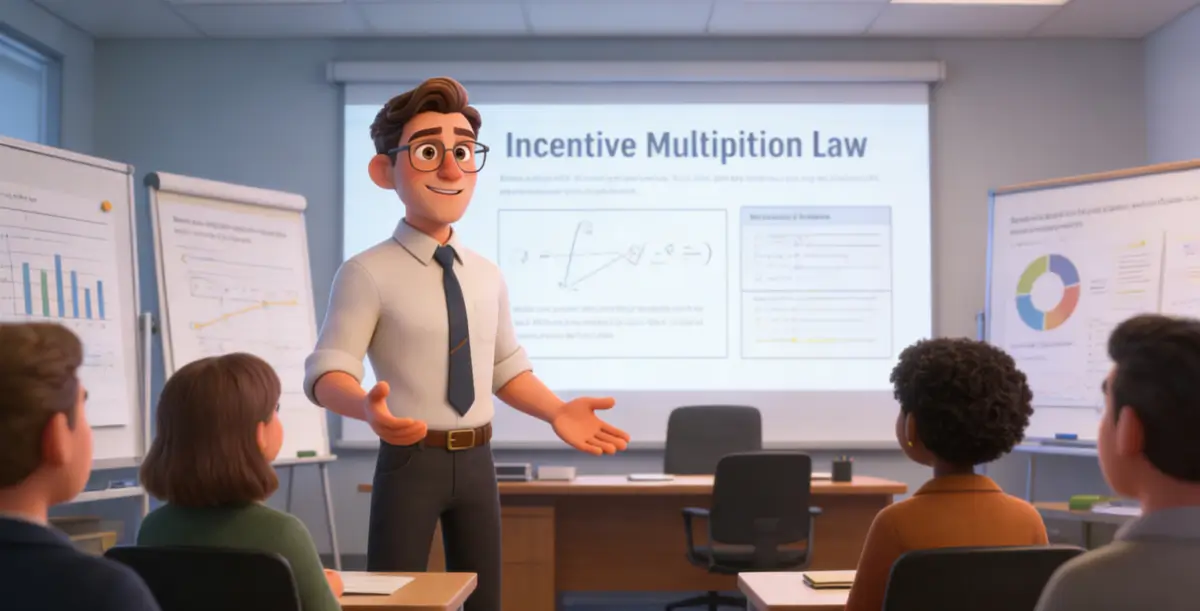
What Is the Motivation Multiplication Law?
The Motivation Multiplication Law(激励倍增法则) is not a strictly academic law, but rather a core principle that has been widely disseminated and validated in management practice and leadership development. Its central tenet is that, in management practice, the enthusiasm, creativity and loyalty inspired in employees through positive motivational methods—such as praise, recognition, trust and empowerment—are far more effective than those achieved through negative methods such as criticism, punishment and control. In short, ‘praise is better than criticism, and rewards are more effective than punishments’; positive motivation can produce a ‘multiplier’ effect. This principle integrates theories from psychology—such as positive reinforcement and social recognition—with leadership concepts including servant leadership and transformational leadership.
In the context of organisational behaviour, the Motivation Multiplication Law reveals the cultural code that drives high-performing teams. It describes a highly effective management cycle: by consciously focusing on and acknowledging employees’ strengths, efforts and contributions (regardless of scale), managers fulfil employees’ deep-seated needs for respect and self-actualisation. This positive feedback—being seen and acknowledged—significantly enhances employees’ sense of self-efficacy, belonging and the meaning of their work, thereby stimulating higher levels of intrinsic motivation and engagement. This positive emotional state and level of motivation, in turn, translate into higher-quality work output, more proactive collaboration and stronger organisational commitment, ultimately forming a reinforcing cycle of ‘recognition–effort–success–further recognition’, achieving a ‘multiplier effect’ on both performance and morale.
I. The Neurological and Behavioural Foundations of the Motivation Multiplication Law
1.1 Revolutionary Discoveries Regarding the Dopamine Circuit
Breakthrough research into the Motivation Multiplication Law began with experiments conducted in 1998 by Terence Flynn, a neuroscientist at the University of Cambridge. By monitoring participants’ brain activity whilst they performed tasks using fMRI, it was discovered that monetary rewards alone activated only the striatum (the basic reward centre); whereas when the task involved ‘autonomy’ + ‘skill challenge’ + ‘sense of purpose’, the prefrontal cortex and ventral tegmental area lit up simultaneously, with dopamine secretion increasing by 300 per cent.
In 2005, behavioural economist Dan Ariely conducted a controlled experiment at MIT: Group A performed data entry on a piecework basis, whilst Group B was allowed to choose the order of tasks and was informed that the work would be used for medical research. The results showed that Group B’s efficiency was 220 per cent higher, their error rate fell by 58 per cent, and three months later, 42 per cent were still voluntarily participating in similar projects. Based on this, Flynn proposed the ‘Three Primary Colours of Motivation’ theory—the combination of Autonomy, Mastery and Purpose produces a multiplicative effect, rather than a simple additive one.
1.2 The Four-Dimensional Engine of Motivational Amplification
An effective incentive system must simultaneously drive four sources of motivation:
Cognitive Enrichment: The satisfaction derived from acquiring new knowledge during a task. A language app transformed vocabulary memorisation into a ‘civilisation jigsaw’ narrative, increasing users’ average daily study time from 7 minutes to 35 minutes.
Social Mirroring: Visible social recognition activates the brain’s reward circuitry. After a fitness community introduced a ‘Progress Map’ sharing feature, user retention rates rose by 170 per cent.
Progressive Challenges: Dynamically adjusting difficulty to maintain a state of flow. A coding learning platform monitors code error rates; when these fall below 15 per cent, it automatically pushes advanced challenges, resulting in a course completion rate of 92 per cent.
Antifragile Feedback: Transforming failure into learning value. An educational game introduced an ‘Intelligence Score’ to replace penalty points, resulting in a 400 per cent increase in students’ willingness to tackle difficult problems.
Most ingenious of all is the ‘nested incentives’ design: a courier company allows riders to choose their own routes (autonomy), displays real-time skill ratings (sense of competence), and labels deliveries of life-saving medicines as ‘Life Guardians’ (sense of purpose). This system has boosted delivery efficiency by 45 per cent, far exceeding the results achieved by simple pay rises.
1.3 Comparison of Relevant Motivation Theories
| Theoretical Model | Core Driving Factors | Mechanism of Action | Sustainability | Applicable Scenarios |
| Motivation Multiplication Law | Overlay of the three AMP primary colours | Neurotransmitter multiplier effect | Long-term self-sustaining | Complex creative work |
| Maslow’s Hierarchy of Needs | Progressive hierarchy of needs | Driven by scarcity-based motivation | Requires fulfilment of external conditions | Basic organisational management |
| Herzberg’s Two-Factor Theory | Separation of hygiene and motivators | Eliminating dissatisfaction + creating satisfaction | Requires ongoing investment | Employee satisfaction management |
| Expectancy Theory | Valence × Expectancy × Instrumentality | Cognitive computational model | Relies on rational judgement | Achievement of short-term goals |
As the comparison shows, the breakthrough of the Motivation Multiplication Law lies in the multiplier effect at the neural level. Maslow’s theory explains ‘why incentives are needed’, whilst this principle reveals ‘how to make incentives self-perpetuating’. Research into remote working during the pandemic shows that teams adopting the AMP ‘three primary colours’ design (autonomous scheduling + skill badges + charitable goals) achieved 35% higher performance than those receiving pay rises alone, whilst their turnover rate was 58% lower. Is your incentive system still stuck in ‘transactional mode’?
II. Building an Incentive Ecosystem in Everyday Life
2.1 The Engine of Intrinsic Motivation in Family Education
Replacing the reward trap with the science of motivation:
The Competence Ladder: Break down homework into an ‘Independent Completion Zone’ and a ‘Challenge Zone’, with the latter labelled ‘Must be completed within three prompts from a parent’. After an experimental class adopted this approach, the number of times pupils sought help actually fell by 76 per cent, as it activated their desire to conquer challenges.
The ‘Sense of Meaning’ Technique: Encourage children to use their maths knowledge to help their grandmother calculate her medication doses, or to organise the family’s oral history through writing. Pupils involved in solving real-world problems saw their subject interest scores rise to three times that of the control group.
The Autonomy Sandbox: Establish a ‘free exploration period’ where children can choose to study ants or take apart an old radio. Follow-up studies show that such children demonstrate exceptional innovative thinking when transitioning from primary to secondary school.
Practising the Family ‘Motivational Energy Circle’: Every Sunday evening, family members share their experiences using three-coloured sticky notes – yellow (moments of self-directed choice), blue (overcoming challenges) and red (the significance of helping others). After three months, family members’ depression scale scores fell by 47 per cent.
2.2 A Self-Sustaining System for Lifelong Learning
Turning knowledge acquisition into a source of dopamine:
Visualisation of skill maps: A foreign language learning wall charts a path from ‘asking for directions whilst travelling’ to ‘reading original texts’ to ‘negotiating in the workplace’, with cultural Easter eggs embedded at each stage. User churn is 83 per cent lower than in traditional courses.
Converting Cognitive Surplus: Transforming reading notes into community lectures, where the audience’s applause serves as the most powerful feedback. As a result, Mr Li, a retired teacher, increased his annual reading volume from 5 to 52 books.
Challenge Pact Groups: Teams of five sign a ’30-day skills challenge’, with the losers donating to a charity of the winners’ choice. A programming group using this mechanism achieved a 100 per cent project completion rate.
Perhaps it’s time to swap those gathering dust gym membership cards for a ‘skill tree logbook’—when you see your ‘squat ability’ rise from Lv1 to Lv5, the dopamine released by your brain far exceeds the satisfaction of seeing the numbers on the scales drop.
2.3 The Joy-Driven Approach to Health Management
Transforming painful perseverance into a state of flow:
Gamified metabolism: Use an AR app to chase virtual monsters whilst running, converting calories into attack power. A study showed that the exercise duration in the gaming group was 240 per cent longer than in the music group.
Social commitment pressure: Announcing a ‘daily morning run livestream’ on social media, with a 100-yuan red envelope penalty for failing to deliver. Public commitments boosted adherence rates to 97 per cent.
Meaning-binding technique: Linking fitness to charity, such as a company donating 1 yuan to a sports ground in a mountainous area for every kilometre run. Participants’ maximum oxygen uptake improved 52 per cent faster.
The ‘Health Energy Loop’ for diabetes management: achieving target blood glucose levels unlocks cookery courses; improvements in culinary skills earn opportunities to teach the community; feedback from teaching reinforces motivation to control blood sugar—forming a self-reinforcing incentive loop.

III. Fission Design for Organisational Motivation
3.1 The Multiplier Model for Talent Incentives
Restructuring the motivation system beyond remuneration:
Transparent Incentive Formula: A technology company published its algorithm: base salary × skill coefficient × project impact value. Programmers could independently choose to participate in high-impact projects, reducing the churn rate of key talent to zero.
Sense of Purpose Dashboard: Displays the number of customers affected by each task and their satisfaction levels. Upon seeing “Helped 32 people today”, the customer service team’s average call duration actually decreased by 18 per cent, as efficiency was transformed into a sense of achievement.
Auction of Autonomous Decision-Making Power: Employees in the top 10 per cent of quarterly performance receive ‘Innovation Tokens’, enabling them to initiate projects and allocate resources. Within three years, this generated 40 per cent of the company’s patents.
The ‘Skill Badge Economy’ in Manufacturing: Obtaining ‘Master of Precision Welding’ certification allows one to train others and earn credits; top skilled workers’ annual salaries exceed one million, far surpassing those in management roles.
3.2 The Three-Drive System for Team Motivation
Activating Collective Flow States:
Progress Bar Challenge: Project completion rates are projected in real time onto meeting room screens and compared against industry benchmarks. After a design team adopted this, the speed of proposal iterations tripled.
Wall of Honour for Failure: A quarterly award for the “Most Valuable Failure” recognises teams that have validated key hypotheses. The number of innovation proposals surged by 200 per cent.
Client Empathy Day: Each month, employees are assigned to user service roles to witness first-hand how the product transforms lives. Upon their return, the accuracy of demand insights improved by 90 per cent.
The ‘Virtual Power Pod’ for remote teams: A VR collaboration space visualises task progress, with floating achievement badges that can be clicked to view colleagues’ likes. As a result, weekly task completion rates reached 98 per cent.
3.3 The Self-Sustaining Mechanism of Organisational Culture
Enabling incentives to proliferate like cell division:
Narrative Network of Meaning: During new employee induction, videos of user gratitude are shown, and a ‘story torch’ is passed on—inviting new recruits to add moving moments they have witnessed themselves. This accelerates the internalisation of the culture by a factor of two.
Self-Evolving Groups: Each year, a cross-departmental ‘Future Committee’ is formed by lottery, with the authority to amend 15 per cent of policy provisions. As a result, one company abolished 67 bureaucratic processes.
Capitalisation of Social Value: Carbon emission reductions are converted into virtual currency, which can be exchanged for leave or the right to make charitable donations. As a result, a logistics company saw its annual emission reductions increase by 40 per cent.
A medical enterprise’s ‘Three Primary Colours Assessment’: Quarterly appraisals include scores for independent innovation (yellow), skills breakthroughs (blue) and social contribution (red), with the overall score determining promotion. Following its implementation, the amount of time employees spent on self-directed learning increased by 300 per cent.
IV. Methods for Applying the Motivation Multiplication Law in Organisational Behaviour
4.1 Implementing ‘Focus on Strengths’ Management Communication
In daily and weekly team meetings, managers should consciously devote the majority of the time to discussing progress, successes and individual highlights. When it is necessary to offer suggestions for improvement, they should adopt the ‘affirmation–suggestion–encouragement’ sandwich approach, always concluding on a positive note.
4.2 Establishing an Immediate, Specific and Public Recognition Mechanism
Encourage ‘spot recognition’. When exemplary behaviour is observed, point it out immediately and specifically (e.g. ‘The “feelings–findings–suggestions” framework you used just now to address the customer’s objection was very professional’). Utilise channels such as team meetings, internal communications and noticeboards to publicly acknowledge achievements, thereby amplifying the impact of recognition.
4.3 Making Non-Monetary Incentives Creative and Ceremonial
Design diverse forms of recognition, such as the ‘Monthly Values Star’, the ‘Innovation Lucky Fish Award’, lunch with the CEO, or serving as a project spokesperson. Through formal or light-hearted award ceremonies, ensure that recognition becomes an honour cherished by employees and a memorable experience.
4.4 Empowering Employees to Recognise One Another (Peer Recognition)
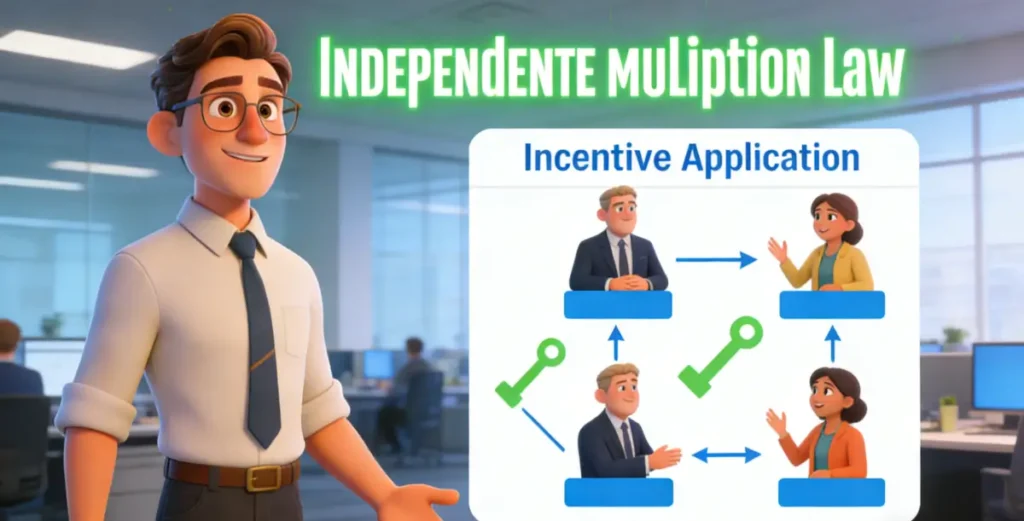
Establish channels and foster an atmosphere where colleagues can give each other ‘likes’, send thank-you cards or award virtual badges. Recognition from peers is often more frequent and timely, and can greatly enhance team cohesion, fostering a positive social incentive network.
V. Methods for Applying the Motivation Multiplication Law in Corporate Human Resources Management
5.1 Remuneration and Performance Management
Strengthening the Link Between Recognition and Rewards
Within the remuneration structure, establish clear, immediate rewards or special bonuses linked to corporate values and behaviours. In performance appraisals, treat ‘positive influence on colleagues’ and ‘behaviour that embodies the company’s values’ as key assessment criteria, assigning them significant weighting.
5.2 Talent Development and Promotion
Clearly Recognising ‘Coaches’ and ‘Talent Spotters’
In promotion criteria, focus not only on individual performance but also on the ability to develop subordinates, motivate teams and spread positive energy. ‘Coach-type’ managers who excel at identifying and developing talent should be given special recognition and rewards.
5.3 Corporate Culture Building
Institutionalising the ‘Celebration of Success’
Regardless of a project’s scale, organise brief celebratory events upon achieving milestone results or upon successful completion. This serves both as recognition of past efforts and as a means of re-energising the team. Promote and reward the practice of ‘being willing to recognise others’ as a core element of the corporate culture.
5.4 Employee Benefits and Experience
Designing a Personalised, Experiential Incentive Menu
Moving beyond traditional gift vouchers, offer incentive options such as ‘extra paid leave’, ‘sponsorship for long-desired training courses’ and ‘family day events’—which better meet employees’ individual needs and create lasting memories—ensuring that recognition resonates deeply.
The Motivation Multiplication Law reveals the scientific pathway to amplifying motivation: by activating the three neural primaries of autonomy, mastery and purpose, it generates a multiplier effect in dopamine secretion.
In daily life, this manifests as transforming homework into a detective game or turning a workout into a way to support charitable causes; in the workplace, it drives the design of transparent incentive formulas and innovations that capitalise on social value. Unlike Maslow’s theory of scarcity-driven motivation, this principle focuses on the self-reinforcing nature of intrinsic motivation; and unlike the rational calculations of Expectancy Theory, it utilises neural mechanisms to reduce the drain on willpower.
The core of its organisational application lies in building a ‘motivation flywheel’—ensuring that every decision an employee makes yields autonomy, personal growth and social value simultaneously. The resulting closed-loop incentive system will release sustained energy much like nuclear fission. In this age of scarce attention, mastering the art of multiplying motivation means unlocking the ultimate code for driving people to achieve continuous breakthroughs.

VI. The Evolution and Summary of the Motivation Multiplication Law
6.1 The Evolution of the Motivation Multiplication Law
1. Abraham Maslow’s Hierarchy of Needs Theory laid the foundations (1943)
Maslow pointed out that once basic needs are met, people will seek higher-level needs for esteem and self-actualisation. The effectiveness of ‘praise and recognition’ within the Motivation Multiplication Law stems precisely from the direct fulfilment of these two higher-level needs, providing the principle with a profound psychological and humanistic foundation.
2. Philosophical Resonance with Douglas McGregor’s ‘Theory Y’ (1960)
McGregor proposed that managers’ assumptions about human nature (Theory X: people are lazy and require control; Theory Y: people are proactive and can be motivated) determine their management style. The Motivation Multiplication Law is, in essence, a concrete manifestation of ‘Theory Y’ in terms of motivational methods; that is, trusting employees and employing positive reinforcement can unleash their full potential.
3. The Practical Application of Ken Blanchard’s ‘Situational Leadership II’ and ‘The One-Minute Manager’ (1980s)
In his leadership training, Blanchard emphasised that effective leaders must provide different levels of support and guidance according to employees’ developmental stages. For a capable and willing employee (high readiness), ‘praise’ is the most important motivational factor. In The One-Minute Manager, he further promoted the ‘one-minute praise’ technique as a core management skill, making the Motivation Multiplication Law extremely concrete and actionable.
4. Modern ‘Comprehensive Recognition’ and ‘Employee Experience’ Management
Contemporary human resources management has systematised and digitised the Motivation Multiplication Law. By establishing multi-channel, real-time, personalised employee recognition platforms (such as points systems, social ‘likes’ and peer-to-peer recognition), and deeply integrating these with benefits and development opportunities, positive incentives are able to permeate every aspect of daily work, becoming the core engine driving employee experience and performance.
6.2 Comparative Analysis and Correlation
| Theory/Theorist | Core Focus | Comparative Analysis | Correlation |
| Maslow’s Hierarchy of Needs | The universal structure and hierarchy of human motivation | Provides a top-down map of motivational development, progressing from basic to higher-level needs. It explains why the effectiveness of material incentives (satisfying lower-level needs) diminishes, whilst praise and recognition (satisfying higher-level needs) possess immense and enduring motivational potential. This is a static, structural explanatory model. | It provides the deep human psychological foundation and theoretical starting point for the Motivation Multiplication Law, explaining ‘why it works’. It highlights that ‘praise and recognition’ target the higher-order psychological needs within human nature that are the most potent drivers. |
| McGregor’s Theory Y | Meta-assumptions of management philosophy | It is not a specific motivational technique, but rather a fundamental belief regarding ‘how to view employees’. Theory Y posits that employees are, by nature, proactive, responsible and motivated; this determines that managers will naturally tend to choose positive motivational methods such as praise and delegation. This is a philosophical premise. | It provides practitioners of the Motivation Multiplication Law with a ‘foundation of mindset’. Only managers who believe in Theory Y will apply the Motivation Multiplication Law wholeheartedly and consistently; otherwise, it will merely become a formality. |
| Ken Blanchard’s Practical Application | Concretisation, Contextualisation, and Tool-Based Application | It transforms abstract motivational principles into simple stories such as ‘The One-Minute Manager’ and concrete actions such as ‘The One-Minute Praise’. By focusing on the specific contexts and methods of implementation, it brings the Motivation Multiplication Law down from its theoretical pedestal, turning it into a practical toolkit that any manager can put into practice immediately. | This marks the crucial leap from theory to practice for the Motivation Multiplication Law. It translates Maslow’s hierarchy of needs and McGregor’s philosophy into the everyday language and behavioural guidelines of ordinary managers. |
| The Modern Comprehensive Recognition System | Systematisation, Data-Driven Approach, Scalability | Utilising digital technology, it upgrades the Motivation Multiplication Law from an ‘art’ reliant on individual managers’ awareness and skills into a ‘manageable, measurable and scalable system’ integrated into organisational operations. It focuses on how to consistently, fairly and efficiently generate and distribute ‘recognition’—this motivational factor—across the entire organisation. | It represents the ultimate application of the Motivation Multiplication Law within ‘large, complex organisations’. It resolves the challenges of implementing the law on a large scale, making it an integral part of the organisation’s core competitiveness. |
6.3 Summary and Analogy
Maslow’s Hierarchy of Needs: It is as if a ‘topographical map of human psychological needs’ has been drawn, clearly indicating that the two peaks of ‘esteem’ and ‘self-actualisation’ harbour the most powerful energy (motivational potential).
McGregor’s Theory Y: is like providing managers with a pair of ‘glasses through which to view human nature as inherently good’; only by wearing them will you set out with joy to scale those two peaks and dedicate yourself to unlocking the potential of others.
Ken Blanchard’s Practical Application: This is like providing a set of ‘foolproof mountaineering equipment and a comprehensive climbing manual’ (‘One-Minute Praise’), telling you exactly how to take each step, so that every ordinary person can begin their ascent.
The Modern Comprehensive Recognition System: It is like constructing ‘a cable car, automated supply stations and a GPS navigation system leading to the summit’ within an organisation, making the process of motivation (the climb) efficient, convenient and scalable, ensuring that the entire organisation can continuously draw energy from the summit.
The understanding and practice of the Motivation Multiplication Law began with a profound revelation of its ‘foundations in human nature’ (Maslow) and was built upon the philosophical premise of a ‘positive view of human nature’ (McGregor). It was subsequently widely disseminated and applied through ‘simplified, scenario-based tools’ (Blanchard), and has ultimately evolved in the digital age into a ‘systematic engineering process embedded in the very fabric of the organisation’ (Comprehensive Recognition System). This represents a complete evolutionary path—from ‘understanding the principles’ to ‘establishing conviction’, then to ‘mastering the methods’, and finally achieving ‘systemic construction’—which is continually being concretised, instrumentalised and scaled up.
References
- Abraham Maslow – The Theory of Human Motivation.
- Douglas McGregor – The Human Side of Enterprise.
- Ken Blanchard & Spencer Johnson – The One-Minute Manager.
- Tom Rath & Donald Clifton – The Gallup StrengthsFinder 2.0 (emphasising the development of strengths rather than the correction of weaknesses).
- Flynn’s Neuro-Motivational Research (1998)
- Ariely’s Behavioural Experiment (2005)
- Journal of Educational Neuroscience (Vol. 45)
- Annual Review of Organisational Dynamics (2023)