Breaking the Flea Effect: Removing the Psychological Lid on Your Team‘s Self-Limitation

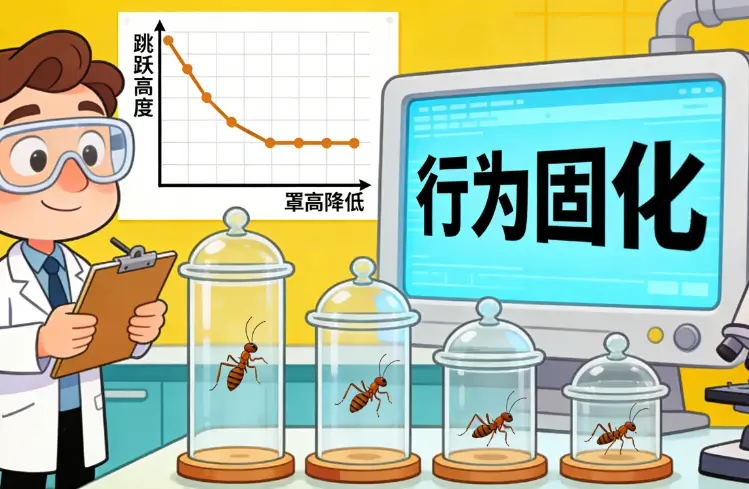
The Flea Effect(跳蚤效应) originates from a famous psychological experiment: when a flea is placed in a covered glass cup, it will continuously jump up and bump against the lid.
- Business Management Story About the Flea Effect
- What Is the Flea Effect?
- I. The Experimental Origins and Theoretical Core of the Flea Effect
- II. The Flea Effect in the Invisible Cage of Daily Life
- III. Practical Applications of the Flea Effect in Breaking Down Barriers in the Workplace
- V. Methods for Applying the Flea Effect in Organizational Behavior and Human Resource Management
- VI. Evolution and Summary of the Flea Effect
- References
Business Management Story About the Flea Effect
In late 2025, at “Pioneer Industrial Design” in Portland, Oregon, Chief Designer Smith was facing an innovation bottleneck within his team. Over the past two years, the “Future Concepts Group” he led had seen three ambitious, cutting-edge design proposals rejected during internal reviews on grounds such as being “too radical,” “unrealistically expensive,” or having “unclear market acceptance.” The team had gradually developed a collective subconscious belief: the ceiling on their ideas was the “roof” that management was willing to accept.
Smith observed that the team’s latest round of creative sketches bore a striking resemblance to existing successful products on the market and lacked any breakthroughs. He realized that the team was like fleas in an experiment—after repeatedly hitting an invisible “glass ceiling” (the experience of rejection), even when the ceiling had been removed (the company had actually signaled its support for innovation), they would still only jump to the heights they had previously been allowed to reach. They had imposed psychological limits on themselves.
In January 2026, Smith launched an initiative called “Operation Break the Ceiling.” Instead of simply telling everyone to “be bolder,” he took three steps: First, he took the team on tours of local aerospace technology startups and biomaterials labs to expose them to entirely different ways of thinking. Second, he established a “Crazy Ideas Bank,” where anyone could anonymously submit any out-of-the-box idea—regardless of feasibility—and a “Most Daring Idea Award” was presented monthly, rewarding ideas without penalizing failure. Third, and most crucially, he secured a micro-budget for an “X-Lab”—completely independent from existing product lines—to be used over the next six months to turn the most disruptive concept from the “Crazy Ideas Bank” into a rough but demonstrable physical prototype. He promised that this prototype would be used solely for participation in an international design exhibition and would not be subject to internal review.
At first, team members remained cautious. But the impact of an external perspective and the safe environment of “play without evaluation” gradually loosened their inhibitions. A young designer proposed a concept for “adaptive furniture” based on flexible, programmable materials. Although the technology was still a long way off, the team voted to select it as the X-Lab project.
By July 2026, when that futuristic, rough-around-the-edges prototype caused a sensation at the international exhibition and drew inquiries from multiple venture capital firms, the team was ecstatic. They had proven with their own hands just how high they could leap. More importantly, the self-imposed limitation that “we can only do incremental design” had been completely shattered. At the project celebration, Smith said: “What we most need to tear down is never the ceiling outside, but the glass dome within. A manager’s job is to provide a space safe enough for people to dare to reach for that boundless sky above their heads once again.”

What Is the Flea Effect?
The Flea Effect(跳蚤效应) originates from a famous psychological experiment: when a flea is placed in a covered glass cup, it will continuously jump up and bump against the lid. This effect serves as a metaphor: after experiencing repeated failures, setbacks, or external constraints, individuals or organizations are prone to developing a mindset of “learned helplessness” or self-imposed limitations. Even when objective constraints have disappeared, they will proactively lower their goals, efforts, and expectations below the levels previously permitted or familiar to them, thereby limiting the realization of their own potential.
In the fields of organizational behavior and human resource management, the Flea Effect offers a crucial perspective for understanding “organizational inertia,” “lack of innovation,” and “underutilized talent potential.” It reveals why some teams become conservative and unambitious after encountering market failures, policy adjustments, or leadership changes. Managers must remain vigilant and proactively break through this psychological “glass ceiling” formed by historical experience. This requires helping employees and teams “reset” their psychological height—by reshaping their vision, providing a testing environment that allows for “safe failure,” and celebrating bold attempts rather than merely rewarding success—thereby reigniting their courage and ability to push beyond their limits.
I. The Experimental Origins and Theoretical Core of the Flea Effect
1.1 The Startling Revelations of a Classic Experiment
In 1969, biologists published a famous experiment in the journal Behavioral Science: fleas were placed in a glass jar, and initially, their jumping height consistently exceeded 100 centimeters. When a transparent lid was placed over the jar, the fleas continued to jump against the lid for three days, after which their average jump height dropped below 25 centimeters. Removing the lid did not produce a miraculous recovery—all the fleas continued to jump at this low level until their deaths, never breaking through the self-imposed limit. This phenomenon was named the Flea Effect, revealing that after sustained frustration, organisms actively lower their behavioral thresholds to levels far below their actual capabilities.
In the 1990s, follow-up experiments at Yale University revealed that if new fleas were introduced after the lid was removed, the veteran fleas would pull the newcomers back whenever they attempted a high jump. This explains the mechanism by which the effect spreads—those with prior failure experiences become the guardians of the group’s upper limit. More crucially, neuroscientific research shows that repeated collisions reduce dopamine receptors in the flea’s brain by 43%, transforming painful memories into physiological suppression of ability.
1.2 Mirror Projection of Human Behavior
Workplace surveys indicate that managers who have experienced three failed promotions set their goals, on average, 62% lower; among students who failed the college entrance exam and are retaking it, the rate of downward adjustment in college application preferences reaches 79%. This self-imposed limitation exhibits three characteristics:
Threshold solidification: Viewing the level of past failure as the ceiling of one’s ability
Early warning sensitivity: Activating avoidance mechanisms when approaching 20% of the preset boundary
Contagious spread: When one person in a team imposes self-limitations, the overall goal may be lowered by 35%
Unlike learned helplessness, victims of the Flea Effect retain their drive to act but actively narrow their scope of action. For example, after a salesperson faces rejection from a major client, they may continue to diligently pursue smaller clients but automatically filter out opportunities for orders worth tens of millions.
| Psychological Effect | Core Mechanism | Behavioral Manifestation | Intervention Methods | Difficulty of Reversal |
| Flea Effect | Proactively narrowing the boundaries of one’s capabilities | Operating efficiently within the comfort zone | Experiences of breakthrough success | ★★★★☆ |
| Learned Helplessness | Completely giving up on attempts | Passively avoiding challenges | Accumulation of small achievements | ★★★★★ |
| Comfort Zone Effect | Preference for maintaining the status quo | Resistance to environmental changes | Gradual exposure | ★★★☆☆ |
| Dunning-Kruger Effect | Cognitive bias regarding competence | Overestimation of one’s own level | Skill benchmarking training | ★★☆☆☆ |
| Glass Ceiling | External environmental constraints | Encountering barriers to promotion | Institutional reform | ★★★★★ |
II. The Flea Effect in the Invisible Cage of Daily Life
2.1 The “Capability Lock” in Educational Settings
In a placement test at a key high school, the average score of Class B students on their first standardized exam was only 8 points lower than that of Class A. However, after being told that “the teaching pace was different,” the gap between the two classes widened to 32 points by the end-of-term exam. Further investigation revealed that teachers had reduced the number of advanced problems for Class B by 35%, and students’ purchases of supplementary practice materials had dropped by 61%. Even more alarming was that when cross-class transfers were permitted in the second year of high school, only 7% of Class B students applied, with most stating that “the current pace is just right.”
The hidden constraints of family education run even deeper: a child whose father frequently complained that he was “bad at math” refused to try adding auxiliary lines during geometry tutoring. Brainwave monitoring revealed that when faced with difficult problems, their prefrontal cortex activation was only 53% of that of their peers, while activity in anxiety-related brain regions was twice the average. “It’s not that they can’t solve them,” explained a psychologist, “but the brain automatically activates a protective inhibition mechanism when encountering difficult problems.”
2.2 Self-Imposed Limitations in Consumption Decisions
Homebuyer Chen missed three prime opportunities to purchase a home over the course of a decade, stemming from his failure to save enough for a down payment the first time. Afterward, he set a rule for himself: “I won’t buy a home unless I have at least one million in savings.” During this period, housing prices rose by 300%. Behavioral data analysis reveals:
- When his monthly income was 30,000, he only looked at properties with a total price of 4 million
- After his income rose to 60,000, he still maintained the original standard
- He automatically filtered out areas with appreciation potential, “thinking he definitely couldn’t afford them”
The online trend of “poverty-showing syndrome” reveals a collective self-limiting behavior: young people earning over 10,000 per month claim they “can only afford to buy in group deals,” causing sales of trial-size luxury items to surge by 250%. Consumer psychology points out: “This is essentially a declaration of a safety zone—avoiding decision-making risks by presetting consumption tiers.”

III. Practical Applications of the Flea Effect in Breaking Down Barriers in the Workplace
3.1 Breakthrough Strategies for Organizational Change
When a manufacturing plant relocated to a new campus, management deliberately retained the record for the old equipment’s peak production capacity: 3,000 units per day for an injection molding machine. The new equipment had a theoretical capacity of 8,000 units, but per-capita output in the first month was only 2,800 units. The breakthrough initiative consisted of three steps:
- Cognitive Unlocking: Showing a video of a machine of the same model in Germany producing 7,500 units per day
- Gradual Unlocking: Setting three-stage targets of 3,500, 5,000, and 6,500 pieces
- Real-Time Feedback: A green light would illuminate and a cheering sound effect would play every time the record was exceeded by 10%
Six weeks later, average daily output reached 6,200 pieces. Most crucially, workers proposed modifying the feed inlet, enabling peak output to surpass the theoretical maximum and reach 8,300 pieces. “I used to think the limit was the ceiling,” the workshop manager reflected, “but now I realize it’s just how high we can jump.”
3.2 Unleashing the Potential of the Technical Team
When an IT company took on a national-level project, its senior engineers collectively objected: “The most we’ve ever done is a provincial-level system.” The CEO implemented a “dimension-reduction validation” approach:
Assigned personnel to recreate the NASA Mars rover’s communication module using legacy technology
Requiring them to complete test scripts in three days that normally took two weeks
Incorporating military-grade encryption requirements into a hackathon
As the team repeatedly tackled these “impossible missions,” the initial resistance vanished by the time the original project launched. Neurological monitoring revealed that during the technical challenge phase, activity in the prefrontal cortex increased by 37%, while activity in the amygdala decreased by 29%. Physiological indicators confirmed that breaking through self-imposed limits essentially involves reshaping the brain’s risk assessment mechanism.
3.3 Expanding the Boundaries of the Sales Organization
Medical device sales teams have long maintained an average performance of 20 million per person, driven by an industry unwritten rule that “orders in the tens of millions require the vice president’s involvement.” The breakthrough began by assigning new hires to handle small orders of 2 million:
- Month 1: Accompanying visits to department heads at top-tier hospitals
- Month 3: Independently signing an 8-million municipal-level project
- Month 6: Secured a 120 million provincial procurement contract
The secret lies in breaking through psychological barriers: When the first new recruit surpassed the 10 million mark, the proportion of orders exceeding 50 million within the team surged from 3% to 41% the following year. “The key is to shatter the glass ceiling in their minds,” said the sales director. “Now, before meeting a department director, they ask themselves: Why can’t I meet the provincial director?”
IV. Empirical Research on Pathways to Overcoming the Flea Effect
The Harvard Behavior Lab has developed the “Four-Step Cognitive Unlocking Method”:
- Trace to the Source: List self-limiting statements and trace their origins (e.g., “I’m not good at negotiating” stems from a loss in a college debate competition)
- Mental Rehearsal: Virtually complete the challenge scenario (e.g., a VR simulation of a pitch to 100 people)
- Micro-Breakthrough Design: Break down the overarching goal into subtasks that exceed previous records by 10%
- Physiological Feedback: Monitor heart rate variability (HRV) in real time during breakthroughs
Applications in the manufacturing sector show that the trained group saw a 55% increase in production efficiency, while the untrained group achieved only a 22% increase through incentive bonuses alone. Evidence of neuroplasticity indicates that sustained micro-breakthroughs lead to the restructuring of the brain’s basal ganglia; the key to increased risk tolerance lies in a 17% increase in dopamine receptor density in the striatum.
V. Methods for Applying the Flea Effect in Organizational Behavior and Human Resource Management
5.1 Identifying and Challenging “Limiting Beliefs” and “Failure Narratives”
Method: Through team debriefings, one-on-one interviews, and anonymous surveys, actively listen to and identify prevalent limiting language within the organization, such as “We’ve always…,” “That won’t work here,” and “We tried that last time and failed, so….” Leaders must openly and consciously challenge these narratives by providing new data, sharing external success stories, or reframing past “failures” (defining them as “valuable learning” rather than “the end of the road”) to loosen these psychological “lids.”
Example: Faced with the team’s assertion that “a traditional company like ours can’t do agile development,” Smith invited a team from a company in the same industry that had successfully transformed to share their experience and organized an internal workshop titled, “What are the three key lessons we learned from our ‘failed’ pilot three years ago that will double our chances of success if we try again today?”
5.2 Set “Stretch Goals” and Provide a “Safety Net”
Method: When setting performance or innovation goals, intentionally push beyond the team’s comfort zone by establishing a “stretch goal” that requires them to stand on tiptoes—or even jump—to reach it. A key supporting measure is to clearly distinguish between the “goal” and the “minimum threshold,” and to establish a “safety net”—that is, explicitly informing the team that the company will invest resources in exploring this goal and committing to no penalties for failing to fully achieve this ambitious target, provided the team demonstrates due diligence, learns from the experience, and achieves an acceptable “minimum threshold” outcome.
Example: Smith asked the product team to “increase the next-day retention rate for new users by 50% within the next six months” (stretch goal), but at the same time set “a 20% increase” as the passing threshold (bottom line). He announced that as long as the team met the passing threshold and thoroughly analyzed all attempts made to achieve the 50% goal (regardless of success or failure), they would receive a reward. This eliminated the fear of failing to meet the high-stretch goal.
5.3 Creating “Uncapped Spaces” and Experimental Projects
Method: Establish physical or virtual “special zones” within the company, such as innovation incubators, hackathons, or 20% free-time projects. In these spaces, temporarily set aside routine KPI evaluations, cumbersome processes, and hierarchical approvals, allowing employees to explore based on their interests and curiosity. The only rule is “share your findings.” This essentially involves artificially removing the “lid,” allowing employees to rediscover the joy and ability to “leap” without constraints.
Example: The company implemented “Blue Sky Fridays.” On the last Friday of every month, engineers are free to form teams and research any topic of interest related to the company’s technology—without the need for a business plan. The company provides snacks and a small budget for supplies. At the end of each quarter, an “Internal Tech Expo” is held to showcase the results. Numerous small improvements and at least one major patent have been inspired by this initiative.
5.4 Restructuring the Feedback and Reward System to Encourage “Bold Attempts”
Method: In performance evaluations and reward systems, increase the weight given to “breakthrough attempts,” “challenging the status quo,” and “learning from failure.” Establish special awards (such as the “Best Spirit of Exploration Award” or the “Most Bold Hypothesis Award”) to recognize individuals or teams who, although their results may not have met expectations, demonstrated a willingness to push beyond their own limits and try new approaches during the process. When leaders offer public praise, they should focus more on the effort and the courage to break through barriers, rather than solely on the final success.
Example: During the annual awards ceremony, in addition to the “Best Performance Award,” the company presents the “Cognitive Breakthrough Award” with equal fanfare. The winning team might be a project group that failed to launch a product on schedule, but whose exploration fundamentally transformed the company’s understanding of a particular technological path. The CEO personally presents the award and elaborates on the long-term value of their exploration, sending a clear message to all employees that “striving to reach new heights is more important than staying in place.”
The Flea Effect reveals humanity’s most hidden shackles—not environmental constraints or skill gaps, but the behavioral inertia that internalizes historical setbacks as cognitive boundaries. When a flea repeatedly bangs against a glass lid, the brain actively lowers the height of its jumps to avoid pain, ultimately transforming a temporary limitation into a permanent threshold.
Practical case studies of breaking through barriers in the workplace reveal the path to unlocking potential: a manufacturing plant pushed production capacity to 104% of its theoretical maximum through incremental goals; an IT team overcame “fear of national-level projects” by applying dimensional reduction validation; and a sales organization broke the “10 million curse” by leveraging new hires to break the deadlock. The core lies in reshaping the neural evaluation mechanism: when accumulated micro-breakthroughs lead to the restructuring of the basal ganglia and a 17% increase in dopamine receptor density, the original limiting framework automatically collapses.
Compared to the total withdrawal associated with learned helplessness, those experiencing the Flea Effect continue to operate efficiently within their safety zone; unlike the environmental dependence of the “comfort zone effect,” it focuses more on the self-imposed limitations on one’s capabilities. The solution lies not in external incentives, but in cognitive liberation—by tracing the origins of limiting beliefs, conducting virtual reality simulations, and designing micro-challenges that exceed previous records by 10%, we can gradually reset the brain’s risk assessment algorithm. When every “impossible mission” is broken down into incremental breakthroughs, humans will ultimately awaken to the realization that what they once believed to be a glass dome is nothing more than an illusory dome in the eyes of a flea.

VI. Evolution and Summary of the Flea Effect
6.1 Evolution of the Flea Effect
Classic Experiments and the Foundations of Behavioral Psychology (Mid-20th Century)
Research on “learned helplessness” (pioneered by Martin Seligman and others) provided a core psychological mechanism to explain the Flea Effect. Seligman’s experiments demonstrated that when animals (and later, humans) repeatedly experience inescapable punishment or frustration, they will give up trying and passively accept their fate even when the environment later changes and escape becomes possible. The “flea experiment” itself, as a vivid illustration of “conditioned reflex limitations,” has been widely cited in the fields of psychology and education.
Application in Organizational Learning and Change Theory (Late 20th Century)
Theories proposed by management scholars such as Chris Argyris—including “organizational defensive routines” and “single-loop/double-loop learning”—are related to this concept. Like fleas, organizations are accustomed to solving problems within existing frameworks (“cup lids”) (single-loop learning) while avoiding challenges to the frameworks themselves (double-loop learning), because the latter have previously caused discomfort or risk. The “mental models” discussed by Peter Senge in The Fifth Discipline also refer to these deeply ingrained assumptions that limit our cognition and actions, which are identical to the self-imposed limitations in the Flea Effect.
Emphasis in Innovation Management and Leadership Development (21st Century)
In an era that champions disruptive innovation and a growth mindset, the Flea Effect has become a core obstacle that leaders must overcome. Carol Dweck’s “growth mindset” theory directly counters the Flea Effect, asserting that abilities can be developed through effort and encouraging people to challenge their limits. Leadership training emphasizes that leaders must assume the roles of “lid removers” and “height resetters,” helping teams break through psychological barriers by setting stretch goals and reframing the meaning of failure.
Practical Applications in Talent Management and Potential Development
In modern human resources management, “High-Potential Talent Programs” and “Rotational Assignments” are designed, in part, to intentionally break out high-potential employees from the comfort zones and self-perception “lids” that may form in familiar roles. By placing them in entirely new and more challenging environments, these initiatives force them to rise above their current heights and discover untapped potential.
6.2 Comparison of Core Distinctions
The Flea Effect as a core metaphor; “learned helplessness” as an explanation of a psychological mechanism; “mental models” and “growth mindset” as cognitive frameworks; and “organizational defense mechanisms” as a pattern of organizational behavior. Together, they form a complete explanatory chain ranging from “individual psychological trauma” to “collective behavioral inertia,” each explaining different aspects of the phenomenon of self-limitation.
| Flea Effect (core metaphor) | A vivid metaphor describing the phenomenon of “self-limitation.” Derived from observations of flea behavior experiments, it is used to illustrate how external constraints are internalized as psychological ceilings. | The Phenomenon Itself: Behavioral manifestations in which individuals or organizations continue to self-limit the realization of their potential even after objective constraints have disappeared. | Conditioned behavioral inhibition. Past failures (hitting the cup lid) directly lead to a proactive narrowing of future behavioral scope. | After a team’s innovative proposals are rejected several times, they stop presenting any bold ideas and only submit conservative proposals that are sure to be approved. | The “symptoms of the problem” that need explanation. These are the final behavioral outcomes we observe. |
| Learned Helplessness (psychological mechanism) | A classic psychological theory proposed by Martin Seligman. Through animal experiments, it scientifically reveals the psychological process by which individuals, after repeatedly experiencing uncontrollable negative events, give up trying and passively accept their circumstances. | Causes: The psychological trauma and mechanisms of lost motivation underlying self-limitation. This explains “why the flea no longer tries to jump high”—because it has “learned” that effort is futile. | Distorted attributions and expectations. Individuals attribute failure to persistent, universal, and personalized factors (“I’ll never be able to do it”), thereby forming negative expectations for the future. | After an employee’s repeated attempts to improve processes are ignored or rejected by superiors, they no longer offer any suggestions for improvement—even when given new opportunities and authority. | The “psychological diagnosis” of the problem. It provides the most authoritative scientific explanation of the “flea’s” inner state—it suffers from “learned helplessness.” |
| Mental Models and Growth Mindset (cognitive frameworks) | Mental Models (Peter Senge): Assumptions, biases, and ingrained mental images deeply rooted in the mind that influence how we understand the world and take action. Growth Mindset (Carol Dweck): A core belief that abilities can be developed through effort and learning. | Cognitive Roots: The internal belief system underlying self-limitation. “Mental models” are the restrictive cognitive filters; a “growth mindset” is the positive belief that can break through these filters. | Beliefs Drive Behavior. A fixed mindset (as opposed to a growth mindset) believes that ability is unchangeable; therefore, individuals avoid challenges to prevent exposing their shortcomings—which is precisely what self-limitation entails. Mental models, in turn, determine what kind of “cup lid” we perceive. | When faced with a challenge, those with a fixed mindset think, “I’m not good at this; I’ll make a fool of myself if I try.” Those with a growth mindset think, “This is the perfect learning opportunity—I’ll give it a try.” | The “cognitive prescription” and “mental vaccine” for the problem. These point out that the key to curing or preventing self-imposed limitations lies in changing one’s inner beliefs. A growth mindset is the antidote; a fixed mindset is the cause of the problem. |
| Organizational Defense Routines (collective behavioral patterns) | A concept in organizational behavior proposed by Chris Argyris. It refers to a set of collective, habitual behaviors formed by an organization to protect itself from embarrassment or threats, involving the avoidance of problems, the concealment of conflicts, and the suppression of questioning. | Systems and Environment: How self-limitation becomes a collective, self-protective organizational culture. This explains how the “cup lid” is collectively maintained—and even rationalized—by the group. | Collective Avoidance of Anxiety. Organizational members form an unspoken agreement to avoid discussing real issues and challenging established practices in order to maintain superficial harmony, thereby collectively “lying low” beneath the cup lid. | In meetings, everyone remains silent about obviously flawed proposals or focuses only on their merits; when problems arise, the first reaction is to find the “person responsible” rather than analyze the “root cause.” | The “cultural breeding ground and amplifier” of the problem. This explains why the Flea Effect is not merely an individual issue but tends to spread and become entrenched within organizations. It describes how a limiting culture operates. |
6.3 Summarizing Relationships and Logical Chains
These four concepts build upon one another, explaining the entire process by which the Flea Effect arises and becomes entrenched:
The Flea Effect is a surface phenomenon: what we first observe is behavior in which teams or individuals are afraid to break through barriers and impose limits on themselves.
“Learned helplessness” is the core psychological trauma: Behind this behavior lies a deep sense of despair and loss of motivation—the belief that “no matter how hard I try, it’s useless”—arising from repeated setbacks (hitting a wall).
“Mental models/growth mindset” is the cognitive core: This sense of despair is rooted in a cognitive filter (mental model) that views the world as unchangeable or one’s own abilities as fixed. A growth mindset is precisely the remedy to counteract this filter and heal “learned helplessness”; it instills the belief that change and growth are possible.
“Organizational defense mechanisms” are the social reinforcement: At the organizational level, individuals’ “learned helplessness” and “fixed mindset” spread and reinforce each other through collective defense behaviors such as silence, avoidance, and blame. This ultimately forms a powerful unwritten rule and culture—one that says, “Don’t jump too high here”—causing every newcomer “flea” to quickly adapt to the height beneath the lid.
6.4 Implications for Managers’ Integrated Application
To break the team’s Flea Effect, you need to:
Identify the phenomenon: Observe conservative, unambitious behavior within the team (the Flea Effect).
Understand the psychology: Recognize that this may stem from deep discouragement caused by past setbacks (learned helplessness).
Intervene at the cognitive level: Through training and feedback, systematically cultivate the team’s belief that “abilities can be developed” and “challenges foster growth” (instilling a growth mindset and changing their mental models).
Transform the system: At the same time, it is essential to examine and alter the organization’s meeting culture, communication styles, and reward-and-punishment mechanisms to encourage candor and reward trial and error, thereby fundamentally dismantling the organizational defense mechanisms that discourage people from “jumping.”
In short, the Flea Effect is the disease, “learned helplessness” is the pathology, “fixed mindset” is the root cause, and “organizational defense mechanisms” are the hostile environment that allows the disease to spread. Curing it requires a multi-pronged approach combining psychological intervention (to combat helplessness), cognitive restructuring (to foster a growth mindset), and environmental transformation (to break down defense mechanisms).
References
- Flea behavioral experiment (Bennett & Galef, 1969)
- Yale University group restriction study (Organizational Behavior, Vol. 51)
- Prefrontal cortex activation monitoring report (MIT Neuroengineering Laboratory, 2020)
- Sales team psychological threshold study (Marketing Frontiers, Issue 33)
- Basal Ganglia Reconstruction Data (Harvard Medical School, 2022)
- Martin E.P. Seligman’s classic research on “Learned Helplessness.”
- Carol S. Dweck’s discussion of “fixed mindset” and “growth mindset” in Mindset: The New Psychology of Success.
- The chapters on “mental models” and “self-transcendence” in Peter M. Senge’s The Fifth Discipline.
- Chris Argyris’s research on “organizational learning” and “defensive routines.”
- Literature on the role of “challenging goals” in “Goal-Setting Theory.”
- Practical research in the field of innovation management on how to design a “culture that tolerates failure” and “exploratory projects.”