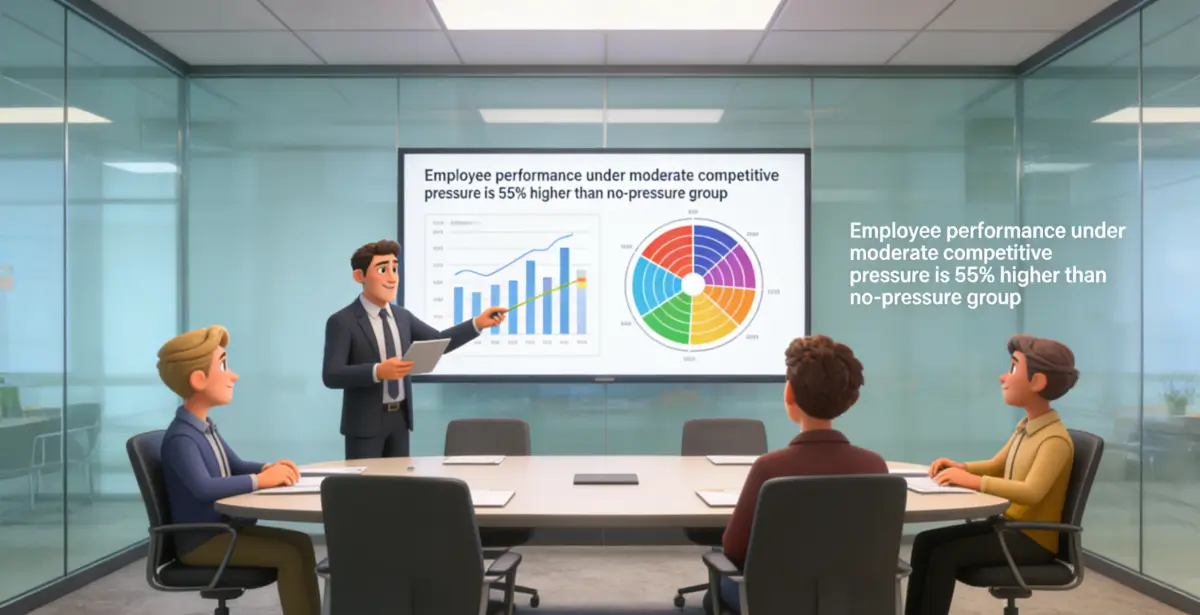
Horsefly Effect: Stimulating Talent and Organizational Potential with Moderate Stimuli

The Horsefly Effect(马蝇效应) stems from a vivid metaphor: even the laziest horse, when bitten by a horsefly, will perk up and gallop at full speed. This concept was later extended to the fields of management and psychology, and became widely known through an anecdote involving President Lincoln: he appointed an ambitious politician—who had previously criticised him—as a cabinet minister, explaining that just as a horsefly can make a horse run faster, the ambition of this ‘flawed but capable’ minister would spur both himself and the entire cabinet to work harder.
- Business Management Story: Smith's 'Catfish and Horsefly' Strategy
- What Is the Horsefly Effect?
- I. The Origins and Theoretical Basis of the Horsefly Effect
- II. The Horsefly Effect in Everyday Life
- III. Application of the Horsefly Effect in the Workplace
- IV. Comparative Analysis of Relevant Theories
- V. Key Elements for Implementing the Horsefly Effect
- VI. Case Studies of Innovative Applications of the Horsefly Effect
- VII. Potential Risks of the Horsefly Effect and Mitigation Strategies
- VIII. Methods for Applying the Horsefly Effect in Organisational Behaviour
- IX. Methods for Applying the Horsefly Effect in Corporate Human Resource Management
- 9.1 Identifying and Developing High-Potential Talent: Designing a 'Crucible-Style' Development Path
- 9.2 Remuneration and Incentive Systems: Strengthening Rewards for "Breakthrough Achievements"
- 9.3 Performance Management: Introducing 'Developmental Pressure' and Dynamic Targets
- 9.4 Team Building and Leadership Allocation: Making Good Use of "Complementary Styles" and "Role Conflict"
- X. The Evolution and Summary of the Horsefly Effect
- References
Business Management Story: Smith’s ‘Catfish and Horsefly’ Strategy
In early 2026, Smith, Vice-President of Sales at ‘Cloud Solutions’, a US-based software services company, noticed a worrying trend: the company’s star salesperson, Alan, had consistently ranked in the top 20 per cent of the team for two consecutive quarters, but had lost the drive he once possessed to race for the top spot and break records. Allen had become too complacent, content to serve existing major clients, with little interest in breaking into new markets or tackling challenging deals. He was like a fine horse that had not been bitten by a horsefly: though he was trotting, he was not galloping.
Smith knew full well that for top talent, a lack of challenge is more dangerous than facing difficulties. He decided to harness the Horsefly Effect: just as a horsefly’s bite can spur a horse to run faster, the right amount of competition, pressure or stimulation can unlock the potential of top talent, keeping them motivated and at their best.
However, Smith did not simply opt to apply pressure. In March 2026, he launched a six-month ‘Alpha Wolf Challenge’ programme. The first step he took was to introduce an ‘external catfish’—he recruited Lisa, a sales director renowned in the competitive sector for her ability to tackle tough challenges, on a high salary, and tasked her with independently leading a new, parallel business unit. Secondly, he redesigned the sales incentive scheme, establishing a substantial ‘Strategic High Ground Award’ in addition to the standard commission, specifically to reward those who secured orders from designated industry-leading clients or for innovative products. Thirdly, he had a private conversation with Alan and said frankly: “Alan, I believe the market has underestimated your potential. Lisa’s arrival is not a threat to you, but rather a way to set a new benchmark that you can see and that will inspire you to realise your true potential. I believe you can reclaim the ‘Top Wolf’ position.”
At first, Alan felt uneasy and even somewhat resistant. However, upon seeing Lisa swiftly secure several tough clients, his competitive spirit was ignited. He began proactively researching the markets Lisa had set her sights on, mobilising resources more actively, and even refining his own sales methodology. By the third quarter, Alan had not only successfully retained his title as quarterly champion but also led his team to secure the company’s largest order of the year, with his personal performance increasing by 50 per cent compared to his most comfortable period the previous year. Smith concluded: “The Horsefly Effect teaches me that the best way to manage top talent is not to provide a calm, sheltered harbour, but to carefully design an ocean full of challenges, rivals and glory. The art of management lies in finding that ‘horsefly’ which can sting him just enough to wake him up, without causing him to lose control, thereby awakening the dormant giant waves.”
What Is the Horsefly Effect?
The Horsefly Effect(马蝇效应) stems from a vivid metaphor: even the laziest horse, when bitten by a horsefly, will perk up and gallop at full speed. This concept was later extended to the fields of management and psychology, and became widely known through an anecdote involving President Lincoln: he appointed an ambitious politician—who had previously criticised him—as a cabinet minister, explaining that just as a horsefly can make a horse run faster, the ambition of this ‘flawed but capable’ minister would spur both himself and the entire cabinet to work harder. At the heart of this effect lies the principle that moderate external stimuli—such as competition, pressure, a sense of crisis or challenging objectives—can effectively unlock the intrinsic potential and fighting spirit of individuals or organisations, preventing complacency and thereby enhancing overall performance.
In the context of organisational behaviour, the Horsefly Effect serves as a key lever for stimulating the dynamism of high-performing talent and fostering a sense of organisational urgency. It illustrates a managerial insight: in the absence of external pressure, even outstanding individuals or teams may become complacent and settle into a ‘comfort zone’, leading to a stagnation of innovation and the failure to fully realise their potential. Astute managers will consciously introduce or create ‘constructive tension’, for example by establishing mechanisms for healthy internal competition, introducing external benchmarks, assigning highly challenging tasks, or tolerating—or even encouraging—a capable yet ‘restless’ challenger. This ‘horsefly’-style stimulus is not intended to create internal friction, but rather to disrupt the equilibrium, forcing the system out of its comfort zone to achieve higher levels of growth and adaptation through dynamic competition.
I. The Origins and Theoretical Basis of the Horsefly Effect
1.1 Lincoln’s Political Wisdom
During the 1860 US presidential election, when a journalist asked Lincoln why he had retained his political rival Chase in his cabinet as Secretary of the Treasury, Lincoln recounted a story: ‘When I was a boy, my family’s horse used to walk very slowly, until a horsefly bit it, and then the horse began to run faster. Chase is my ‘horsefly’.’ This analogy was later included by Harvard Business School as a classic management case study. In 1998, John Kotter, a professor of organisational behaviour, found that maintaining 15–20 per cent competitive pressure within a team could boost overall performance by 35–40 per cent.
1.2 Validation by neuroscience
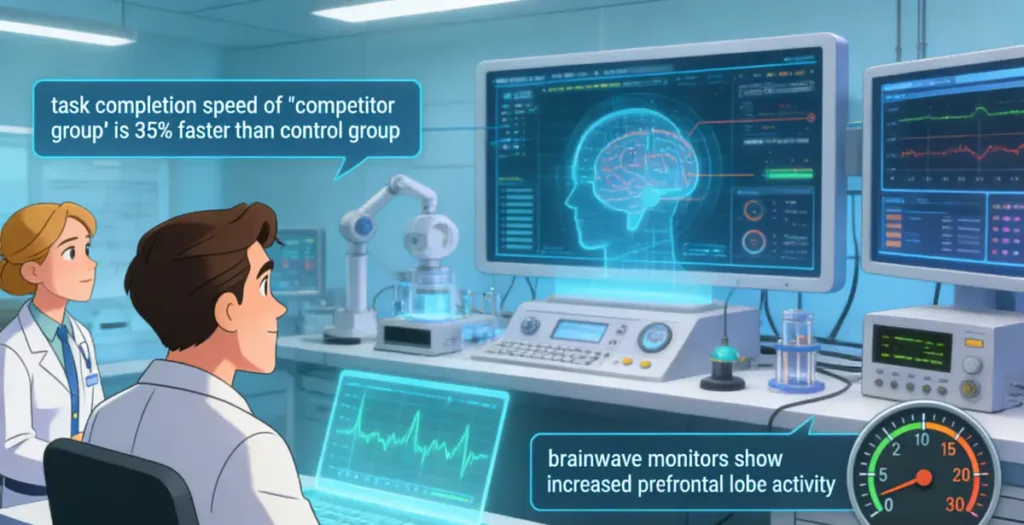
In 2015, the University of Zurich used fMRI scans to discover that moderate competitive pressure increases activity in the prefrontal cortex by 28 per cent and boosts noradrenaline secretion by 40 per cent. These physiological changes can significantly enhance concentration and problem-solving abilities. However, the study also indicated that when pressure exceeds a certain threshold, cognitive function actually declines by 15–20 per cent. In 2020, the University of Cambridge further discovered that the optimal range for competitive pressure lies between 120 per cent and 150 per cent of an individual’s comfort zone; creativity peaks within this range.
II. The Horsefly Effect in Everyday Life
2.1 Healthy Competition in Children’s Education
A comparative experiment at a leading primary school in Beijing showed that classes which established a ‘study partner’ system (where pairs of pupils were paired up to support and compete with one another) achieved an average mark 12.5 points higher in their end-of-term examinations than standard classes. However, psychologists caution that such competition must adhere to the ‘three-equality principle’: equal starting points, equal goals and equal progress. Ms Li, a parent, shared her experience: she encouraged her son to compete with a neighbour’s child to see ‘who could finish their homework first’. As a result, both children’s homework efficiency improved, and they even organised a study group of their own accord.
2.2 Maintaining Motivation for Fitness and Exercise
Data analysis from a fitness app revealed that 68 per cent of users who joined the ‘Challenge’ feature maintained their exercise routine for over three months, far exceeding the 23 per cent rate among regular users. Personal trainer Wang Qiang devised a ‘rank system’: upon completing the training objectives for each stage, members could challenge other members of the same rank, with the winner qualifying for the next level. ‘This is far more effective than simply having the trainer urge them on,’ said Wang Qiang. ‘The number of members voluntarily doing extra training has tripled.’
2.3 Stimulating Community Engagement
Following a ‘Most Beautiful Balcony’ competition organised by a community in Hangzhou, the standard of plant care among participating households improved significantly. Mr Zhou, the community director, said: ‘At first, only a dozen or so households signed up, but as they saw their neighbours’ balconies becoming more attractive, more and more families joined in.’ The following year, the community launched a ‘Gardening Expert’ mentoring scheme, in which award winners provided guidance to beginners, creating a virtuous cycle of healthy competition.

III. Application of the Horsefly Effect in the Workplace
3.1 Designing a Dynamic Sales Team
An insurance company reformed its sales team structure, replacing the previous regional system with a ‘three-person task force’ model. Each team’s performance was assessed not only by absolute figures but also by relative improvement. Data showed that following the reform, sales staff’s average number of client visits increased by 47 per cent, whilst policy conversion rates rose by 28 per cent. However, the Director of Human Resources emphasised: “We have established a ‘red line rule’—no competitive behaviour may harm the interests of clients.”
3.2 Incentivising Innovation in the R&D Department
A technology company in Shenzhen implemented a ‘dual-track system’ for project initiation: allowing two teams to develop similar products simultaneously, with the more promising project retained for further investment following a mid-term assessment. Technical Director Zhang said: ‘Initially, some were concerned about a waste of resources, but the actual result was that both teams progressed faster than if they had developed the product alone.’ Data shows that this model shortened the average product development cycle by 30 per cent and increased patent output by 65 per cent.
3.3 Improving Efficiency in Production and Manufacturing
An automotive components factory has introduced ‘visualised skill levels’ on the shop floor: workers wear different coloured caps to indicate their skill level. A ‘Champion Challenge’ is held every month, with winners receiving training opportunities and priority for promotion. Six months after implementation, the defect rate on the production line fell by 58 per cent, and the number of employees voluntarily working overtime to improve their skills doubled.
IV. Comparative Analysis of Relevant Theories
| Motivation Theories | Core Mechanism | Applicable Scenarios | Differences from the Horsefly Effect |
| Catfish Effect | Introducing external stimuli to energise the team | Periods of organisational rigidity | The Horsefly Effect emphasises internal competition |
| Broken Window Theory | Minor problems lead to major problems | Environmental management | The Horsefly Effect involves constructive pressure |
| Expectancy Theory | Motivation = Expectancy × Value | Goal-setting | The Horsefly Effect does not rely on expectations |
| Social Facilitation Effect | The presence of others enhances performance | Simple task scenarios | The Horsefly Effect requires actual competition |
This set of theories constitutes a comprehensive motivation system: the ‘Broken Window Effect’ highlights the influence of the environment; Expectancy Theory explains the driving force of goals; the Social Facilitation Effect describes the impact of an audience; the ‘Catfish Effect’ provides a solution for external activation; whilst the Horsefly Effect focuses on unlocking potential through moderate internal competition. A certain e-commerce company integrated these theories: it used the Horsefly Effect to design a sales team competition mechanism, set reasonable targets based on expectancy theory, and introduced new business models utilising the ‘catfish effect’, resulting in quarterly GMV growth that exceeded the industry average by 42 per cent.
V. Key Elements for Implementing the Horsefly Effect
5.1 The Optimal Range for Competitive Intensity
Research by management consultancy firms has found that optimal competitive pressure should be maintained between 120% and 150% of the comfort zone. A certain design firm employs a ‘pressure dashboard’: the green zone (healthy competition), the yellow zone (requires adjustment), and the red zone (excessive competition). When the system detects that a team’s stress level has entered the yellow zone, it automatically initiates stress-relief activities.
5.2 Diverse Design of Evaluation Criteria
Education experts recommend adopting a ‘three-dimensional assessment’: absolute marks, rate of improvement, and contribution to collaboration. A primary school’s ‘star rating system’ not only considers marks but also includes an ‘Award for Greatest Improvement’ and an ‘Award for Best Teamwork’, fostering a more harmonious classroom atmosphere.
5.3 Safety Mechanisms to Protect Against Failure
Technology companies have established a ‘soft landing’ system: teams that lose competitions can receive specialised coaching and resource support. Engineer Xiao Li said: ‘Knowing that there is a safety net even if we lose actually gives us the courage to innovate freely.’ Data shows that this mechanism has led to a 55 per cent increase in the number of innovation proposals.

VI. Case Studies of Innovative Applications of the Horsefly Effect
6.1 Improving the Efficiency of Public Services
An administrative service centre in a certain city has introduced a ‘Window Efficiency Leaderboard’, which quantifies and displays indicators such as processing efficiency and service evaluations. Mr Chen, a service officer, remarked: ‘Seeing my colleagues’ scores naturally makes me want to do better.’ After one year, the average processing time was reduced by 38 per cent, and public satisfaction rose to 99.2 per cent.
6.2 Positive Promotion of Healthcare Quality
The Third Hospital implemented a ‘public comparison of surgical quality’, whereby, whilst protecting patient privacy, doctors could view data on their colleagues’ surgical durations and complication rates. Dr Wang, Head of Cardiac Surgery, remarked: ‘This is not merely a competition, but a means of encouraging everyone to share their experiences.’ Two years after implementation, the department’s average surgical duration was reduced by 25 per cent, and the post-operative infection rate fell by 60 per cent.
6.3 Stimulating Vitality in Public Welfare Initiatives
An environmental organisation designed a ‘carbon reduction ranking competition’, allowing participants to view their position within the community. Mrs Lin, a housewife, remarked: ‘I just wanted to give it a go at first, but once I saw my ranking rise, I couldn’t stop.’ During the campaign, the accuracy rate of waste sorting in the community rose from 45 per cent to 89 per cent.
VII. Potential Risks of the Horsefly Effect and Mitigation Strategies
7.1 Prevention of Cut-throat Competition
A sales company established a ‘Competition Ethics Committee’ to respond within 24 hours to any reports of unfair competition. The Director of Human Resources said: ‘We encourage healthy competition, but we absolutely do not tolerate sabotaging one another.’ Following the implementation of this system, the team complaint rate fell by 85 per cent.
7.2 Alleviating Psychological Stress
An internet company employs ‘stress management specialists’ to provide regular psychological assessments and counselling for staff. Zhang, a programmer, said: ‘The monthly mental wellness sessions help us maintain a healthy competitive spirit.’ Company data shows that the voluntary resignation rate has consequently fallen by 40 per cent.
7.3 Correcting Short-Term Behaviour
Financial institutions have adopted a performance appraisal system that ‘combines short- and long-term cycles’: whilst monthly performance comparisons are held, greater emphasis is placed on annual overall performance. Account manager Mr Zhou remarked: ‘This ensures that staff do not compromise client interests for the sake of short-term rankings.’ As a result, the client renewal rate has risen by 28 per cent.
VIII. Methods for Applying the Horsefly Effect in Organisational Behaviour
8.1 Establishing a Positive Internal Competition and Benchmarking Mechanism
Establish transparent ‘honour boards’ or ‘challenge competitions’ based on key performance indicators (KPIs) between teams or departments. Introduce external industry benchmark data for comparison, ensuring teams are always aware of the gap between their performance and best practice, thereby fostering an atmosphere of ‘competing, learning, catching up and surpassing’.
8.2 Assigning “Impossible Missions” and Exploring the “Second Curve”
Temporarily remove high-potential teams or individuals from their familiar and already successful “first curve” business operations, and empower them to pioneer an entirely new, high-risk innovative project or market. This “zero-to-one” challenge represents the most intense form of the Horsefly Effect.
8.3 Tolerating and Making Good Use of “Constructive Challengers”
Identify and protect those employees who are capable and imaginative, but who may not be particularly “compliant”. Assign them to roles where they can utilise their critical thinking and innovative abilities, and even allow them to challenge established strategies. Their very presence serves as a beneficial stimulus to existing processes and fixed mindsets.
8.4 Fostering a Culture of Crisis Awareness: ‘Remaining Vigilant in Times of Peace’
Regularly share information with all staff regarding market threats, breakthroughs by competitors and the potential risks of technological disruption. Through scenario simulations, war games and similar methods, help teams recognise that external ‘horseflies’ are ever-present, thereby encouraging them to proactively seek evolution rather than passively waiting to be bitten.
IX. Methods for Applying the Horsefly Effect in Corporate Human Resource Management
9.1 Identifying and Developing High-Potential Talent: Designing a ‘Crucible-Style’ Development Path
When formulating development plans for high-potential talent, deliberately arrange for them to experience high-pressure scenarios such as ‘handling a major customer complaint crisis’, ‘leading a cross-cultural virtual team’ or ‘launching a new project under resource-constrained conditions’. These ‘horsefly’-style challenges serve to test and forge their resilience, leadership and creativity.
9.2 Remuneration and Incentive Systems: Strengthening Rewards for “Breakthrough Achievements”
When designing remuneration structures, introduce substantial special bonuses or long-term incentives directly linked to overcoming strategic challenges or achieving breakthrough growth. Ensure employees clearly recognise that rising to the challenge and tackling “horsefly” challenges can yield significant rewards.
9.3 Performance Management: Introducing ‘Developmental Pressure’ and Dynamic Targets
During performance reviews, for high-performing employees whose performance is stable but tending towards mediocrity, set ‘developmental targets’ of a sufficiently challenging nature in collaboration with them, whilst providing the necessary resources and support. The role of the manager should shift from that of a ‘judge’ to that of a ‘challenging partner’, working together to tackle the ‘horseflies’.
9.4 Team Building and Leadership Allocation: Making Good Use of “Complementary Styles” and “Role Conflict”
When forming project teams or appointing leadership teams, consciously bring together members with different thinking styles and backgrounds. Appropriate cognitive conflict and the clash of perspectives—much like a “horsefly” within the team—can stimulate more comprehensive thinking and lead to better decision-making.

X. The Evolution and Summary of the Horsefly Effect
10.1 The Evolution of the Horsefly Effect
1. The Lincoln Anecdote and the Spread of Folk Wisdom
(19th century)
The story of Lincoln is the most classic source of this effect; it vividly illustrates, in the form of political leadership wisdom, the simple idea of ‘using opponents or troublesome figures to motivate the whole’. This was more a manifestation of practical wisdom and the art of leadership, and had not yet taken the form of a theory.
2. The Correlation between ‘Arousal Theory’ and ‘Yerkes-Dodson Law’ in Psychology
(1908)
Psychological research has revealed that an individual’s performance follows an inverted U-shaped curve in relation to their physiological and psychological arousal levels. Moderate arousal (stress, stimulation) can optimise performance. This aligns closely with the core principle of the Horsefly Effect—that ‘moderate stimulation enhances performance’—providing a psychological basis for the concept.
3. Parallel Explanations of the ‘Catfish Effect’ in Management Studies
(Modern)
The ‘catfish effect’ refers to the phenomenon whereby introducing a catfish (a natural predator) into a school of sardines activates the entire school’s survival instincts, thereby increasing their survival rate. This is highly consistent with the core concept of the Horsefly Effect in stimulating group vitality and preventing complacency; the two are often used complementarily to describe the activation of organisations through the introduction of external stimuli.
4. ‘Challenging Tasks’ and ‘High-Potential Talent Accelerators’ in Modern Talent Management
In contemporary human resource management, the Horsefly Effect has been translated into specific development strategies for high-potential talent. Accelerating their growth and testing their mettle by deliberately placing them in ‘stretch roles’, entrusting them with ‘turnaround’ projects, or involving them in ‘executive-level’ challenging tasks constitutes a proactive and systematic application of the Horsefly Effect in talent development.
10.2 Contrast and Correlation Analysis
| Person/Theory | Core Focus | Contrast | Correlation |
| The Lincoln Anecdote (The Art of Leadership) | Using a ‘troublesome figure’ to drive the whole | Derived from political practice, this focuses on how a leader can skilfully manage and utilise a specific, challenging individual (such as an ambitious political rival) to act as a ‘horsefly’ that motivates the entire team. This is a highly context-dependent art of personnel management. | It serves as the ‘narrative archetype’ and source of ‘humanistic wisdom’ for the Horsefly Effect. Through the most vivid of case studies, it demonstrates the essence of leadership in transforming ‘trouble’ into ‘motivation’. |
| Yerkes-Dodson Law (Psychological Principle) | The universal relationship between arousal levels and performance | Derived from rigorous psychological experiments, this reveals an inverted U-shaped relationship between performance and physiological/psychological arousal levels in all individuals undertaking tasks. It provides a universal scientific explanation for ‘why moderate stimulation is effective’, not limited to specific contexts or subjects. | It provides the ‘underlying psychological principle’ and ‘scientific validation’ for the Horsefly Effect. It demonstrates that there is an optimal point in the ‘stimulus–performance’ relationship, providing a scientific basis for managers seeking to apply a ‘moderate’ level of ‘horsefly’ stimulation. |
| The Catfish Effect (Group Dynamics) | Introducing an external stimulus to activate the entire group | It emphasises altering the overall behaviour and survival status of a group tending towards inertia (sardines) by introducing an external, heterogeneous element (catfish) with competitive or threatening attributes. This perspective places greater emphasis on systemic activation at the group level. | It is entirely consistent with the Horsefly Effect in terms of its core objective of ‘stimulating vitality and preventing inertia’, and can be regarded as a parallel metaphor and extended application of the latter at the group level. Together, they constitute a ‘repertoire of stimulation strategies’ for activating both individuals and organisations. |
| Modern High-Potential Talent Development (Management Practice) | Systematic, Proactive Stress-Induced Forging of Top Talent | This transforms the concept of the Horsefly Effect into a set of talent management processes that are designable, replicable and assessable. It proactively tailors ‘challenging experiences’ for high-value talent, aiming to accelerate their growth, test their limits and maximise their contributions; this represents a refined application of the effect in the knowledge economy era. | This represents the evolution of the Horsefly Effect from an ‘art of leadership based on improvisation’ to a ‘systematic talent strategy initiative’. It transforms the ‘deployment of the horsefly’ into a scientific form of talent investment, rather than an occasional expedient measure. |
10.3 Summary of Metaphors
Anecdote about Lincoln (The Art of Leadership): Like a seasoned horseman who discovers a spirited horse (a talented but unruly subordinate) that, whilst capable of kicking him, can also spur the entire herd to run faster, he decides to take the risk of riding it.
The Yerkes-Dodson Law (Psychological Principle): Like an ‘instruction manual for the human engine’, it clearly states that the engine (the person) operates most efficiently at moderate revs (moderate pressure); revs that are too low (no pressure) or too high (excessive pressure) will lead to a decline in performance or damage.
The Catfish Effect (group dynamics): Just as introducing a black fish (an external competitor) into a calm pond (a complacent team) causes all the fish to remain alert and start swimming, the entire ecosystem of the pond actually becomes more vibrant and healthier.
Modern High-Potential Talent Development (Management Practice): Much like a top-tier special forces training camp, rather than waiting for soldiers to be ‘bitten’, a series of extremely gruelling ‘Hell Week’ training sessions (challenging tasks) are proactively designed, aimed at screening and forging the very best combat elite with the utmost efficiency.
Understanding of the Horsefly Effect began with a vivid story exemplifying political leadership wisdom (Lincoln); the underlying universal psychological principles were subsequently revealed and verified by scientific experiments (the Yerkes-Dodson Law). Parallel concepts of group activation were also summarised and disseminated (the catfish effect), ultimately evolving in contemporary corporate management into a systematic, forward-looking development and incentive strategy for core talent (High-Potential Talent Development). This represents a process of continuous abstraction, expansion and deepening application—moving from ‘specific anecdotes’ to ‘universal science’, from ‘individual motivation’ to ‘group activation’, and then returning to ‘in-depth individual development’.
References
- Historical records of the formation of Lincoln’s 1860 Cabinet
- Harvard Business School’s 1998 study on team dynamics
- University of Zurich’s 2015 report on brain science research
- Longitudinal study in organisational behaviour (2020–2023)
- Collection of Case Studies on Innovation in Corporate Competitive Mechanisms (2024)
- Robert Yerkes & John Dodson – Psychological research on the ‘Yerkes-Dodson Law’.
- Jim Collins – Discussions on ‘Level 5 Leaders’ and ‘Facing Brutal Truths’ in Good to Great.