In-group Effect: Breaking Down Silos and Building a Collaborative “We”

The In-group Effect(自己人效应) is a core manifestation of social identity theory within social psychology. It refers to the tendency for individuals to instinctively feel greater trust, stronger identification, a heightened willingness to cooperate, and more positive evaluations toward those perceived as belonging to the same social category, group, or camp as themselves (i.e., “in-group” members), and to be more receptive to their influence.
- Management Story About the In-Group Effect
- What Is the In-Group Effect?
- I. Theoretical Development and Neural Basis of the In-Group Effect
- II. Practical Applications in Daily Life
- III. Strategic Applications in the Workplace
- IV. Comparison of Relevant Social Psychological Effects
- V. Application Methods of the In-Group Effect in Organizational Behavior and Human Resource Management
- VI. Methods for Applying the In-Group Effect in Marketing and Consumer Behavior
- VII. Introduction to and Evolution of the In-Group Effect
- References
Management Story About the In-Group Effect
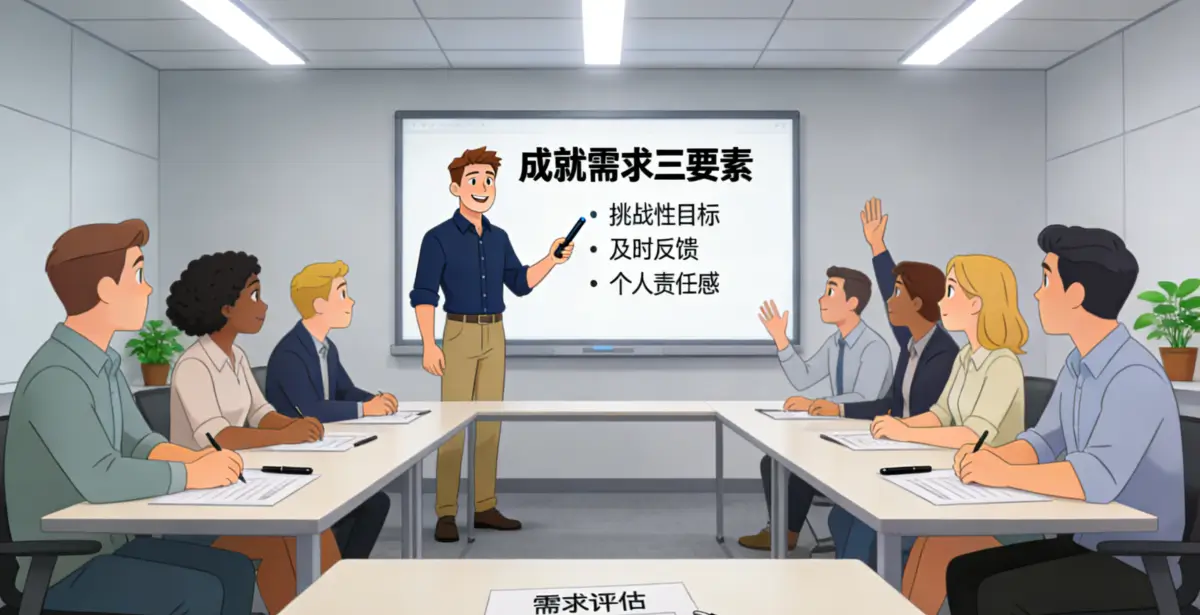
In early 2024, the Customer Success and Product Development departments at a San Francisco-based SaaS company were locked in a relationship so tense they resembled two opposing factions. Customer Success Manager Smith continually received complaints from clients describing the product as “user-hostile,” yet whenever he relayed this feedback to the development team, he was met with dismissive responses such as “under evaluation” or “this does not align with our technical architecture.” After one particularly heated exchange, the head of R&D snapped, “All you do is pander to customers—you have no idea how complex the technical implementation really is!”
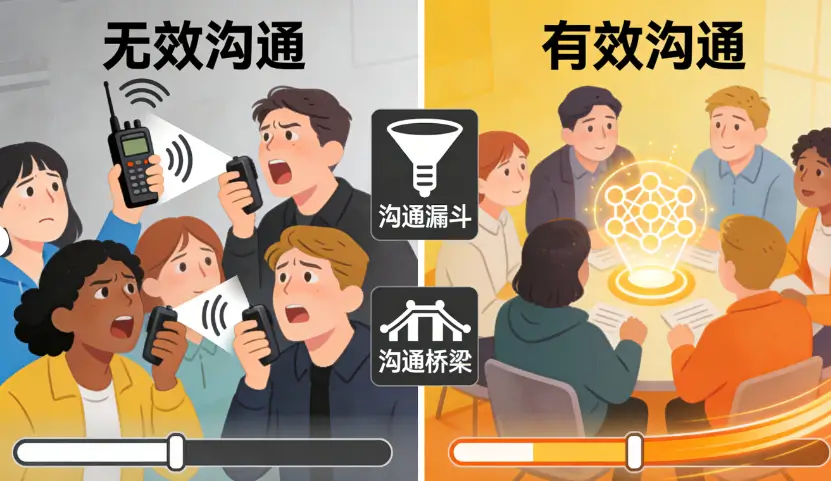
Smith understood that applying more pressure would only build higher walls. He recalled the “In-group Effect” from social psychology—the tendency for people to be more willing to accept, trust, and assist those they perceive as belonging to the same group (i.e., “insiders”). The core of the problem was that, psychologically speaking, the two departments did not view each other as “insiders.”
In March, Smith launched a three-month “Identity Reconstruction Initiative.” First, he partnered with the R&D director to select three individuals from each department to form a temporary team called the “Customer Escort Squad,” tasked with jointly managing the company’s five most strategically valuable—and most demanding—clients. Their sole shared KPI was the “Customer Health Score.” Second, he organized monthly “Exchange Days”: customer success representatives sat in on code reviews alongside engineers, while engineers attended customer feedback sessions to hear complaints firsthand.
Changes began to surface during the second month. At one Escort Squad meeting, an engineer who had previously opposed a particular feature request listened carefully as a customer success colleague described the client’s specific workflow. He then volunteered, “Looking at it from that perspective, that ‘unintuitive’ button really does need to be changed. I have a straightforward solution…” By the end of the third quarter, the turnaround time for feature requests between the two departments had been cut in half, and the number of innovation proposals rooted in shared understanding had doubled. Smith concluded, “When people share the same name, the same goal, and the same experience, ‘their’ problems naturally become ‘our’ challenges.”

What Is the In-Group Effect?
The In-group Effect(自己人效应) is a core manifestation of social identity theory within social psychology. It refers to the tendency for individuals to instinctively feel greater trust, stronger identification, a heightened willingness to cooperate, and more positive evaluations toward those perceived as belonging to the same social category, group, or camp as themselves (i.e., “in-group” members), and to be more receptive to their influence. The inverse of this effect is the alienation, suspicion, or even prejudice directed toward “out-group” members.
In the context of organizational behavior, the In-group Effect is a pivotal psychological mechanism for understanding and dismantling departmental silos, driving cross-team collaboration, and shaping a robust organizational culture. It starkly reveals that internal friction within an organization often arises not from personal animosity, but from narrowly defined group identities (e.g., “us in Marketing” versus “them in Sales”). Exceptional managers skillfully and consciously transform “them” into “us” by cultivating shared overarching goals, shared experiences, and a unified, higher-order identity, thereby channeling group cohesion toward the achievement of the organization’s broader objectives.
I. Theoretical Development and Neural Basis of the In-Group Effect
1.1 Academic Origins
The concept of the In-group Effect derives from social identity theory and was established by British psychologist Henri Tajfel in his seminal 1971 minimal group paradigm experiment. The experiment demonstrated that even with arbitrary random grouping (e.g., Group A versus Group B), participants allocated 27% more monetary rewards to members of their own group. Subsequent research by American neuroeconomist Paul Zak found that when individuals confirm that another person belongs to the same group, oxytocin secretion increases by 32%, and the incidence of trusting behavior rises by 58%.
1.2 Cognitive Neural Mechanisms
The brain exhibits characteristic activation patterns when processing information about “in-group” members: 1. Activity in the dorsomedial prefrontal cortex decreases by 35%, thereby increasing the influence of emotional factors in decision-making. 2. The response intensity of the mirror neuron system increases by 42%, enhancing empathic resonance. 3. The amygdala’s reaction time for identifying potential threats from out-group members is reduced by 0.3 seconds. Functional near-infrared spectroscopy (fNIRS) monitoring indicates that during interactions with in-group members, changes in cerebral oxygenated hemoglobin concentration are 19% smaller than during interactions with out-group members, suggesting a reduced cognitive load.

II. Practical Applications in Daily Life
2.1 Marketing
When automotive sales consultants emphasize, “I’m also a father of two,” the closing rate among family buyers increases by 23%. A tea brand that labeled its packaging “Directly Sourced from Wuyi Mountain Tea Farmers” saw its repurchase rate climb from 18% to 37%. In live-streaming e-commerce, region-specific products presented by hosts using local dialects generate 2.7 times the sales volume of standard products.
2.2 Interpersonal Relationships
Data from dating platforms reveal that users tagged as “alumni” or “fellow townsfolk” experience a 41% higher match success rate. In community mediation, panels composed of retired teachers resolve neighborhood disputes with a 28% higher success rate than legal teams, as the parties involved are more inclined to trust the authority of “one of their own.”
2.3 Public Policy
In a municipal waste sorting initiative, training retired community officials to serve as “environmental supervisors” resulted in a 19% higher sorting accuracy rate in residential complexes compared to oversight by professional environmental firms. During the pandemic, “temporary building managers” appointed from among residents achieved a 37% higher efficiency in distributing supplies than property management staff.

III. Strategic Applications in the Workplace
3.1 Building Team Cohesion
An internet company implemented a “cultural gene matching” recruitment strategy, comparing applicants’ values assessment results with those of existing team members. New hires with a match rate of 75% or higher saw their three-month retention rate rise to 92%. A manufacturing facility adopted a “three-generation apprenticeship system,” which increased the efficiency of technical knowledge transfer by 41% and reduced equipment failure response times by 58%.
3.2 Customer Relationship Management
In B2B sales, transforming client contacts into “co-innovation partners” shortened the average project signing cycle by 22 days. A consulting firm required its consultants to identify three commonalities (such as shared alma mater or hobbies) during initial client meetings, increasing the proposal approval rate from 31% to 67%.
3.3 Cross-Departmental Collaboration
A technology company established the role of “Technology Evangelist,” rotating personnel from the R&D department through business units, which increased the accuracy of requirements interpretation from 54% to 89%. A consumer goods company implemented a “shadow board” system, involving frontline employees in strategic discussions, thereby accelerating the progress of cross-departmental projects by 37%.
3.4 Crisis Public Relations Management
When a food company encounters a public relations crisis concerning product quality, having veteran production line employees film videos of the inspection process proves 63% more effective at restoring trust than a formal apology from the CEO. Following a financial product default, institutions that deployed localized customer service teams to communicate with affected clients saw the rate of withdrawn complaints rise to 41%.
IV. Comparison of Relevant Social Psychological Effects
| Theory Name | Proponent | Mechanism of Action | Differences from the In-Group Effect | Typical Scenarios |
| In-Group Bias | Henri Tajfel | Preference for members of one’s own group | Behavioral manifestation of the In-Group Effect | Resource allocation decisions |
| Law of Similarity | Donn Byrne | Preference for individuals with similar traits | Does not rely on formal group membership | Formation of interpersonal attraction |
| Social Identity Theory | Henri Tajfel | Establishing self-identity through group affiliation | Theoretical foundation of the In-Group Effect | Group conflict studies |
| Empathy Gap | Paul Bloom | Differential empathy toward in-group and out-group members | Explains the emotional underpinnings of the In-Group Effect | Charitable giving behavior |
The In-group Effect reveals the underlying logic of how group identity shapes decision-making. This mechanism, deeply rooted in evolutionary psychology, has spawned complex applications in modern society. Neuroeconomic research indicates that when the brain identifies another individual as an in-group member, dopamine secretion in the nucleus accumbens increases by 28%, which helps explain why people are more willing to take risks for “their own.”
Data suggest that judicious application of this effect can boost business conversion rates by 19% to 63%. However, one must remain vigilant against the exclusionary tendencies that arise from overly rigid group boundaries—experiments show that when the intensity of group identification exceeds a threshold (typically 5.8 on a 7-point scale), the incidence of exclusionary behavior toward out-groups surges by 47%. Unlike the Law of Similarity, the In-group Effect places greater emphasis on the subjective construction of shared identity. For instance, an international brand increased product acceptance among non-eco-conscious users by 39% by cultivating a “sustainable living community.”
In organizational management, striking a dynamic balance between in-group cohesion and openness to outsiders has become paramount. A multinational corporation’s “Cultural Bridge Officer” program, for example, specifically develops key employees who hold multiple group identities, thereby reducing cross-cultural team conflicts by 58%. Digital transformation has furnished new platforms for this effect. One social media platform leveraged algorithms to highlight “shared interests” between users and brands, boosting ad click-through rates to 2.3 times the industry average. This intelligent application of group identity is reshaping the paradigms of both business ecosystems and social connection.

V. Application Methods of the In-Group Effect in Organizational Behavior and Human Resource Management
5.1 Creating Cross-Boundary “Super Task Forces”
Method: To address key strategic objectives, deliberately dismantle departmental silos by drawing personnel from different departments to form temporary or permanent “special task forces,” “project teams,” or “tiger teams.” Assign the team a distinctive name, dedicated resources, and a set of shared, clearly defined outcome metrics (OKRs), thereby shifting members’ primary sense of identity from their original departments to the new team.
Example: Establish a “Customer Experience Task Force” composed of members from R&D, Product, Marketing, and Customer Service, who collectively assume responsibility for the “Net Promoter Score (NPS)” and share project-based bonuses.
5.2 Designing “Shared Experiences” to Foster Integration
Method: Consciously organize activities that necessitate close cross-departmental collaboration, such as cross-departmental job rotations, joint client visits, collaborative innovation workshops, or team-building retreats. Shared challenges and collective successes serve as potent bonding agents for cultivating a sense of “we’re in this together.”
Example: The “Exchange Day” and “Customer Escort Squad” initiatives orchestrated by Smith created valuable shared experiences that enabled both sides to gain firsthand understanding of each other’s work contexts and challenges.
5.3 Strengthening the Organizational-Level Narrative and Symbols of “Shared Identity”
Method: Leaders must consistently reinforce inclusive language such as “our company” and “our mission” in all communications. By sharing specific stories that exemplify successful cross-departmental collaboration, publicly recognizing outstanding cross-team cooperation, and designing rituals (e.g., company-wide annual meetings, anniversary celebrations) and visual symbols that represent the entire organization, leaders can steadily diminish sub-group identities and fortify the overarching identity of “one company.”
Example: During a quarterly town hall, the CEO dedicates time to recount a story about “an R&D engineer who stayed late to help customer service resolve an urgent client issue,” characterizing it as “an embodiment of our company’s spirit.”
5.4 Institutional Guidance Within the Human Resources System
Method: Assess candidates’ collaborative spirit and altruism during the recruitment process; incorporate cross-departmental communication and project management modules into training curricula; within performance evaluation and incentive systems, establish “support and contributions to other departments” as a key assessment criterion, and create team-based rewards that are contingent upon successful cross-departmental collaboration.
Example: A portion of annual bonuses is strongly linked to overall company performance or the outcomes of cross-departmental collaborative projects, rather than being tied solely to individual departmental results.
VI. Methods for Applying the In-Group Effect in Marketing and Consumer Behavior
6.1 Building Brand Communities and Fan Culture
Method: Elevate consumers from mere purchasers to brand “co-creators” and “insiders.” This is accomplished by establishing exclusive online communities (e.g., in-app forums, fan WeChat groups), hosting offline fan events, launching member-exclusive products, and granting community members special designations (e.g., “Apple Fans,” “Mi Fans”), identifiers, and privileges that foster a sense of belonging and exclusivity.
Example: A sports brand leverages running clubs and limited-edition member-exclusive products to encourage consumers to identify with the identity of “runner”—a role intimately associated with the brand—rather than simply viewing themselves as product purchasers.
6.2 Utilizing “Subcultural Language” and Value Resonance
Method: In marketing communications, employ the “jargon,” cultural symbols, and narrative styles familiar to the target audience to signal that the brand “gets you” and is one of your own. Publicly advocate for values or social causes that closely align with the target audience, thereby making consumers feel that the brand is “on their side” and fostering a deep emotional connection.
Example: An outdoor brand eschews overly polished models in its advertising, instead showcasing real users’ muddy yet exhilarated adventure stories and employing the specific terminology of the outdoor community to resonate powerfully with core enthusiasts.
6.3 Implementing User Co-Creation and Brand Ambassador Programs
Method: Invite loyal users to participate in product design, testing, or content creation, and publicly acknowledge their contributions. Develop formal or informal “brand ambassador” programs, providing these “insiders” with early access to new offerings, exclusive perks, and promotional tools, thereby transforming them into trusted nodes that amplify the brand’s influence outward.
Example: A beauty brand invited long-time users to test new products and provide feedback, subsequently using their authentic reviews (both positive and constructive) as official promotional content. This significantly enhanced persuasiveness among potential consumers.
6.4 Personalized Communication and “Privileged” Service
Method: Harness data to deliver precise, personalized recommendations and communications that make consumers feel the brand “truly understands me.” Offer high-value members or long-standing customers “privileged” services that exceed standard expectations (such as dedicated customer support, complimentary upgrades, and birthday perks). This preferential treatment reinforces their perception of being “insiders.”
Example: Airlines provide frequent flyers with priority check-in, access to VIP lounges, and upgrade opportunities. These privileges consistently remind travelers of their “elite” status, thereby solidifying their loyalty.

VII. Introduction to and Evolution of the In-Group Effect
7.1 Evolution of the In-Group Effect
The Foundations of Social Identity Theory (1970s–1980s)
The “Social Identity Theory” advanced by Henri Tajfel and John C. Turner provided the core theoretical framework for this effect. Their renowned “minimal group paradigm” experiment demonstrated that even when randomly assigned to groups based on the most trivial criteria (such as a preference for certain paintings), individuals immediately exhibit in-group favoritism, thereby uncovering the profound psychological roots of the “insider/outsider” distinction.
The Emergence of the Common In-Group Identity Model (1990s)
Building upon this foundation, Samuel Gaertner, John Dovidio, and their colleagues proposed the “Common In-Group Identity Model.” This model posits that by redefining group boundaries to integrate previously adversarial subgroups into a more inclusive superordinate category (e.g., reframing “Department A” and “Department B” as the “XX Project Team”), it is possible to effectively mitigate bias and foster cooperation. This framework offers managers a direct operational pathway for applying the effect in practice.
Applications in Organizational Behavior and Leadership (Early 21st Century to Present)
Leadership research, particularly scholarship on “transformational leadership,” underscores that leaders cultivate a robust sense of “we” by articulating an inspiring shared vision, modeling desired behaviors, and providing individualized consideration. Through these actions, they transform employees into “insiders” who are committed to a common cause. Research on “organizational identification” and “psychological safety” further indicates that a strong sense of belonging is foundational to team members’ willingness to voice ideas and innovate proactively.
Extensions to Cross-Cultural Management and Brand Marketing
The effect has been widely applied in the realms of global corporate management (e.g., fostering a shared organizational identity among a multicultural workforce) and brand building. Brands actively strive to convert consumers from “outsiders” into brand “insiders” (fans, community members) through community engagement and user co-creation, thereby securing exceptionally high levels of loyalty.
7.2 Distinctions of the In-Group Effect
The “evolution” described above does not consist of separate, independent “effects,” but rather represents a progressive and applied relationship: “Core Theory” → “Operational Model” → “Leadership Practice” → “Domain Expansion.” Collectively, they constitute a comprehensive system that spans from understanding human nature to mastering its dynamics.
The distinctions among them are as follows:
| Comparison Dimensions | Social Identity Theory (Foundational Scientific Theory) | Common In-Group Identity Model (Strategic Intervention Framework) | Transformational Leadership and Organizational Identity (Leadership Practice) | Cross-Cultural Management and Brand Marketing (Domain Application) |
| Essence | The fundamental scientific principles explaining why the In-group Effect exists. | A “social engineering” blueprint, derived from these principles, designed to reduce intergroup bias. | The “art and techniques” by which individual leaders apply the first two to shape organizational identity through everyday behavior. | The “cross-boundary practices” that transplant insights from the first three into global corporate management and consumer relationship building. |
| Core Focus | The universal psychological processes by which humans categorize, compare, and identify (i.e., why we instinctively divide the world into “us” and “them”). | How to purposefully reshape group boundaries through cognitive restructuring, effectively turning “them” into “us.” | How leaders can serve as catalysts and symbols of a “sense of ‘us'” through vision, example, and individualized care. | How to systematically construct a “we” community across cultural divides or within commercial relationships. |
| Key Contributions | Answers the “Why”: Reveals that the “insider/outsider” distinction is hardwired into human nature, rooted in fundamental needs for self-esteem and belonging. | Answers the “How to change it theoretically”: Provides “creating a higher-order identity” as a concrete and potent lever for psychological intervention. | Answers the “What leaders should do specifically”: Translates abstract theories and models into observable, learnable leadership behaviors. | Answers “How to apply this in other complex scenarios”: Demonstrates the principle’s universality and its formidable cross-domain explanatory and creative capacity. |
| Relationship to the In-Group Effect | It is its “genetic blueprint” and “first principles.” | It is its “surgical solution” or “social prescription.” | It is its “daily regimen” and “personification.” | It is its successful colonization and flourishing in the “New World.” |
| Typical Questions | “Why do people form cliques, circles, and discriminate against outsiders?” | “If two departments are at odds, how can we psychologically unify them as one team?” | “How does an exceptional CEO make tens of thousands of employees feel like ‘one of us,’ united in pursuit of a shared dream?” | “How can we get employees of diverse nationalities worldwide to identify with the company? How can we turn customers into passionate brand advocates?” |
7.3 Core Connection: An Applied Science Chain “From Discovering Patterns to Creating Reality”
These four components form a complete closed loop, moving from understanding the world to changing it:
Revealing Patterns (Social Identity Theory): This serves as the scientific cornerstone of all subsequent practice. It dispassionately and precisely reveals the psychological underpinnings of human social organization and conflict—we derive identity by dividing ourselves into groups, and in doing so, we inevitably generate biases. This constitutes a diagnosis of human nature.
Designing Interventions (Common In-Group Identity Model): Having diagnosed the “cause” (in-group favoritism leading to out-group bias), this model prescribes a precise “treatment plan”: by designing a “shared overarching goal” (e.g., winning a competition, completing a critical project), it merges previously conflicting group identities (such as “Lakers fans” and “Celtics fans”) into a larger, more inclusive identity (such as “basketball enthusiasts” or “Team USA supporters”). This represents the translation of scientific principles into social technology.
The Art of Implementation (Transformational Leadership and Organizational Identity): With a “treatment plan” in place, skilled “practitioners” are required to execute it. Transformational leaders fulfill this role. By articulating an inspiring shared vision (creating overarching goals), leading by example (establishing shared behavioral norms), and demonstrating genuine care for individuals (strengthening emotional bonds), they continuously “infuse” a sense of community into daily interactions. This is the process of humanizing, personalizing, and normalizing the technology.
Expanding Horizons (Cross-Cultural Management and Brand Marketing): Once this principle is validated within organizational contexts, its application naturally extends outward. Managing cultural conflicts in a globalized enterprise or cultivating consumer loyalty in the marketplace essentially boil down to the same fundamental challenge: how to foster a sense of “we” within larger, more diffuse, and more heterogeneous groups. This, in turn, attests to the principle’s power and universality. It is the ultimate proof of the theory’s vitality.
This represents a complete journey of innovation and expansion: “discovering the laws of human nature → inventing methods to modify those laws → cultivating individuals who can adeptly apply these methods → applying the methods to an entirely new domain.”
7.4 Summary Metaphors
Social Identity Theory (Fundamental Scientific Theory): This is akin to Newtonian mechanics revealing the existence of “universal gravitation” among all objects—it is the foundational theory that explains why the world operates as it does (why objects coalesce and collide).
The Common In-Group Identity Model (Strategic Intervention Framework): This is analogous to “spacecraft docking technology” designed based on the principles of universal gravitation—it harnesses gravity and orbital mechanics to guide us on how to safely and precisely unite two independent objects (such as a spacecraft and a space station) into a single, integrated entity.
Transformational Leadership and Organizational Identity (Leadership Practice): This resembles the specific operations, team coordination, and mission-driven conviction of astronauts in space—they not only possess technical expertise but also execute the docking maneuver flawlessly through exceptional skill, mutual trust, and a shared passion for a common goal, thereby fostering an atmosphere of “we are one crew” aboard the station.
Cross-Cultural Management and Brand Marketing (Domain Applications): This is akin to applying space docking technology to construct the “International Space Station” that transcends national boundaries, or even to establish future Martian colonies. It demonstrates that the principles of “docking” and “community building” are applicable not only in near-Earth orbit but also in grander, more diverse interstellar contexts.
For managers, understanding this chain means that breaking down departmental silos or building brand loyalty cannot be accomplished solely through administrative mandates or advertising blitzes (such approaches often run counter to human nature). One must first grasp “social identity”—this fundamental human code (theory)—then learn to design a “shared overarching identity” (model), and consistently instill it through deliberate leadership behaviors (practice). Only then can one ultimately cultivate a genuinely cohesive “we” across different domains (expansion).
References
- Journal of Social Psychology – Minimal Group Experiment (2020 Replication)
- Neuroeconomics – Oxytocin Research (2021)
- China E-commerce Development Report (2023)
- LinkedIn Recruitment Efficiency Study (2022)
- McKinsey Organizational Collaboration Case Library (2023)
- Public Relations Society of America Crisis Management White Paper (2023)
- Management Science – Cross-Departmental Collaboration Study (2021)
- Henri Tajfel and John C. Turner – Social Identity Theory.
- Samuel Gaertner and John Dovidio – Common In-Group Identity Model.
- Robert Cialdini’s discussion of the “Liking” principle in Influence, which is highly relevant to the In-Group Effect.